Victorian Spiritualism and the Reinvention of Halloween
How the Fox Sisters, seances, spirit photography, and Gothic literature transformed Halloween into a sophisticated social occasion.
On the night of March 31, 1848, in a small house in Hydesville, New York, two sisters named Kate and Margaret Fox claimed to communicate with a spirit through a series of rappings. Within months, they were famous. Within years, they had helped launch a religious movement that would claim millions of adherents. And within their lifetimes, they would confess to fraud.
The story of Spiritualism matters to the history of Halloween because it did something no medieval bonfire or soul cake ever managed: it made the supernatural fashionable.
The Rapping Heard Round the World
Kate Fox was eleven. Margaret was fourteen. The sounds they produced (later revealed to be the cracking of toe joints, a skill Kate reportedly discovered by accident) were interpreted as communication from a murdered peddler supposedly buried in their basement. Their older sister Leah, who had a sharper sense of commercial opportunity, became their manager. By 1850, the Fox Sisters were performing for paying audiences in New York City.
They were not the first people to claim contact with the dead. But they arrived at exactly the right moment. The 1840s were a period of intense religious experimentation in America, the same era that produced Mormonism, the Millerites, and the Oneida Community. The Second Great Awakening had primed millions of Americans to expect direct spiritual experience. And the recent deaths of so many children (infant mortality in mid-nineteenth-century America hovered around 25%) created a vast audience of bereaved parents desperate for reassurance.
Spiritualism gave them what they wanted. The dead weren’t gone. They were right here, and they had things to say.
The Seance as Social Institution
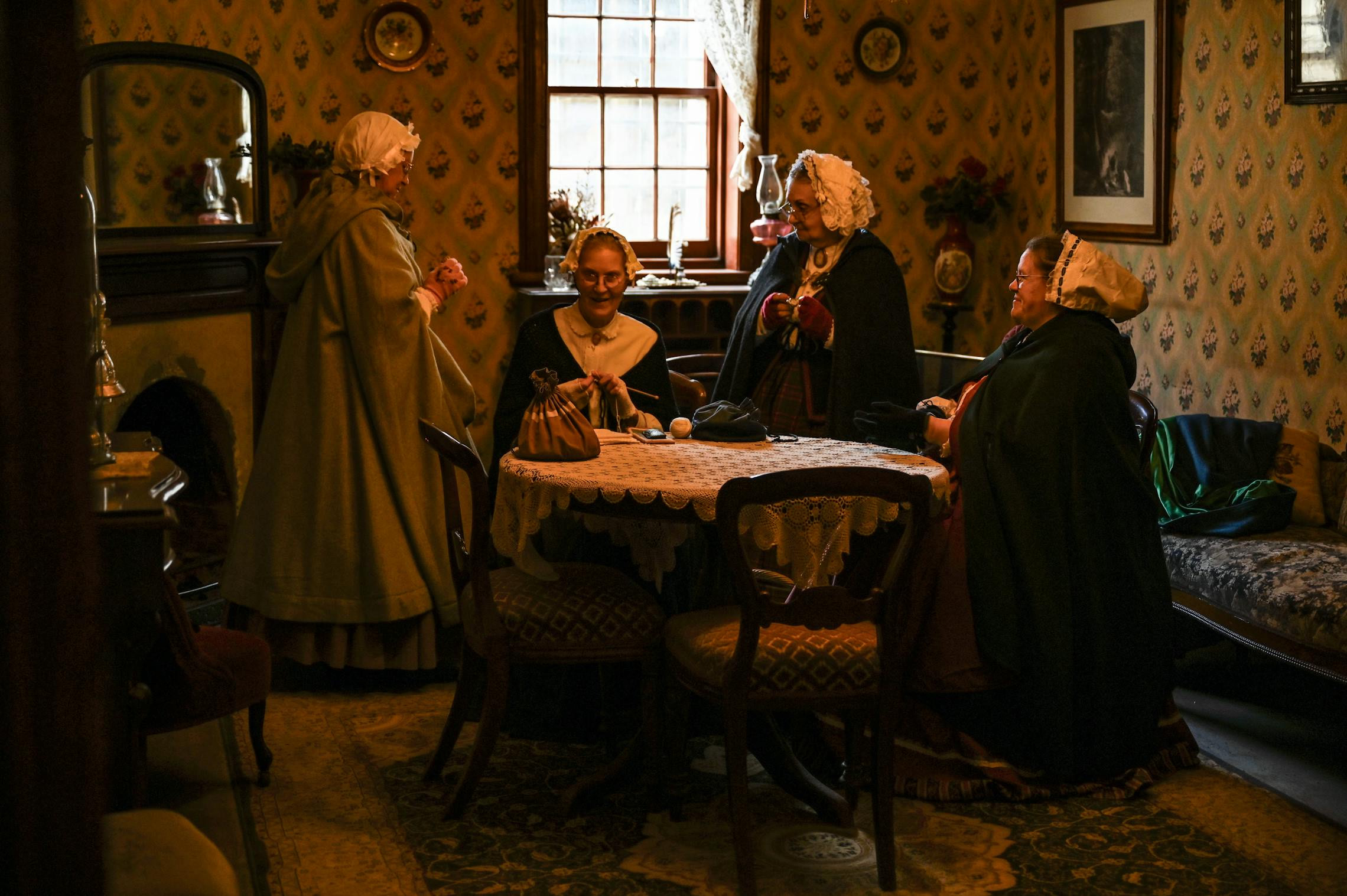
By the 1850s, seances were everywhere. Drawing rooms across America and Britain hosted mediums who produced an escalating array of phenomena: table tipping, automatic writing, materialized spirits, levitation, and ectoplasm (a substance that looked suspiciously like cheesecloth in the photographs). The practice crossed class boundaries. Mary Todd Lincoln held seances in the White House. Queen Victoria reportedly attended sessions after Prince Albert’s death in 1861.
The seance was, at its core, a parlor entertainment, and it merged easily with the existing tradition of Halloween parlor games. Victorian Americans and Britons already gathered on Halloween night for divination, storytelling, and mild spookery. Spiritualism gave these gatherings a new vocabulary and a new intensity. Why pretend to contact spirits when you could (supposedly) actually do it?
Spirit Photography and Technological Ghosts
William Mumler, a Boston jewelry engraver, produced the first known “spirit photograph” in 1861, an image that appeared to show the ghostly figure of his deceased cousin hovering behind him. He was almost certainly a fraud (he was tried for it in 1869 and acquitted only because the prosecution couldn’t prove exactly how the trick was done), but spirit photography became enormously popular.
The technology mattered. Photography was new enough that most people didn’t understand its mechanics, and the idea that a camera could capture what the eye couldn’t see felt plausible. Double exposures, long exposures, and darkroom manipulation produced convincing images of translucent figures hovering near the living. These photographs became treasured keepsakes for the bereaved and, not coincidentally, profitable products for the photographers.
This intersection of technology and the supernatural set a pattern that would repeat throughout Halloween’s history. Every new visual technology (photography, film, television, digital effects, projection mapping) has been quickly adopted to produce ghosts.
Halloween in the Victorian Parlor
The Victorian era reinvented Halloween as a social occasion for adults. Magazines like Godey’s Lady’s Book and Ladies’ Home Journal published elaborate guides for Halloween entertaining, complete with decorating instructions, menu suggestions, and games. The emphasis was on romance and fortune-telling rather than fear. Eligible young women bobbed for apples, peeled them in single strips, and performed elaborate rituals to divine the identity of their future husbands.
The decorations were sophisticated: black cats, witches, and jack-o’-lanterns rendered in crepe paper and die-cut cardstock. German manufacturers produced exquisite embossed Halloween postcards that are now collector’s items. The aesthetic was whimsical and elegant, closer to a masquerade ball than a haunted house.
This was also the era that gave Halloween its most enduring visual vocabulary. The witch on the broomstick, the black cat, the grinning jack-o’-lantern, the crescent moon, all of these became standard Halloween imagery during the Victorian period, codified through postcards, party decorations, and magazine illustrations.
Gothic Literature and the Halloween Imagination
The Victorian supernatural wasn’t confined to seances. Gothic literature was experiencing a golden age, and its influence on the cultural meaning of Halloween was profound. Bram Stoker published Dracula in 1897, adding the vampire to the Halloween cast of characters. Robert Louis Stevenson’s Strange Case of Dr Jekyll and Mr Hyde (1886) explored the horror of the divided self. Henry James’ The Turn of the Screw (1898) made the ghost story psychologically respectable.
Earlier in the century, Washington Irving’s The Legend of Sleepy Hollow (1820) had already established the American literary Halloween, complete with a headless horseman and a superstitious schoolteacher. Edgar Allan Poe’s tales of premature burial, murders, and madness (published from the 1830s through the 1840s) created an atmosphere of Gothic dread that would infuse Halloween for generations.
These weren’t children’s stories. They were written for adults, and they treated the supernatural with a seriousness that elevated Halloween from rural folk custom to cultural event.
The Fraud Confession
In 1888, Margaret Fox publicly confessed that the spirit rappings had been produced by cracking her toe joints. Kate, by then an alcoholic, supported the confession. Margaret later recanted, but the damage was done. Spiritualism survived the confession (true believers dismissed it as coerced), but its mainstream credibility never fully recovered.
The confession didn’t matter as much as you’d think, though. By 1888, the cultural work had been done. Halloween had been transformed from a rural folk observance into an urban social occasion, complete with manufactured decorations, published party guides, and an aesthetic that treated the supernatural as entertaining rather than threatening. The Fox Sisters’ real legacy wasn’t a religion. It was a mood, and that mood was perfect for Halloween.