The Art of the Jump Scare Part 1: Psychology
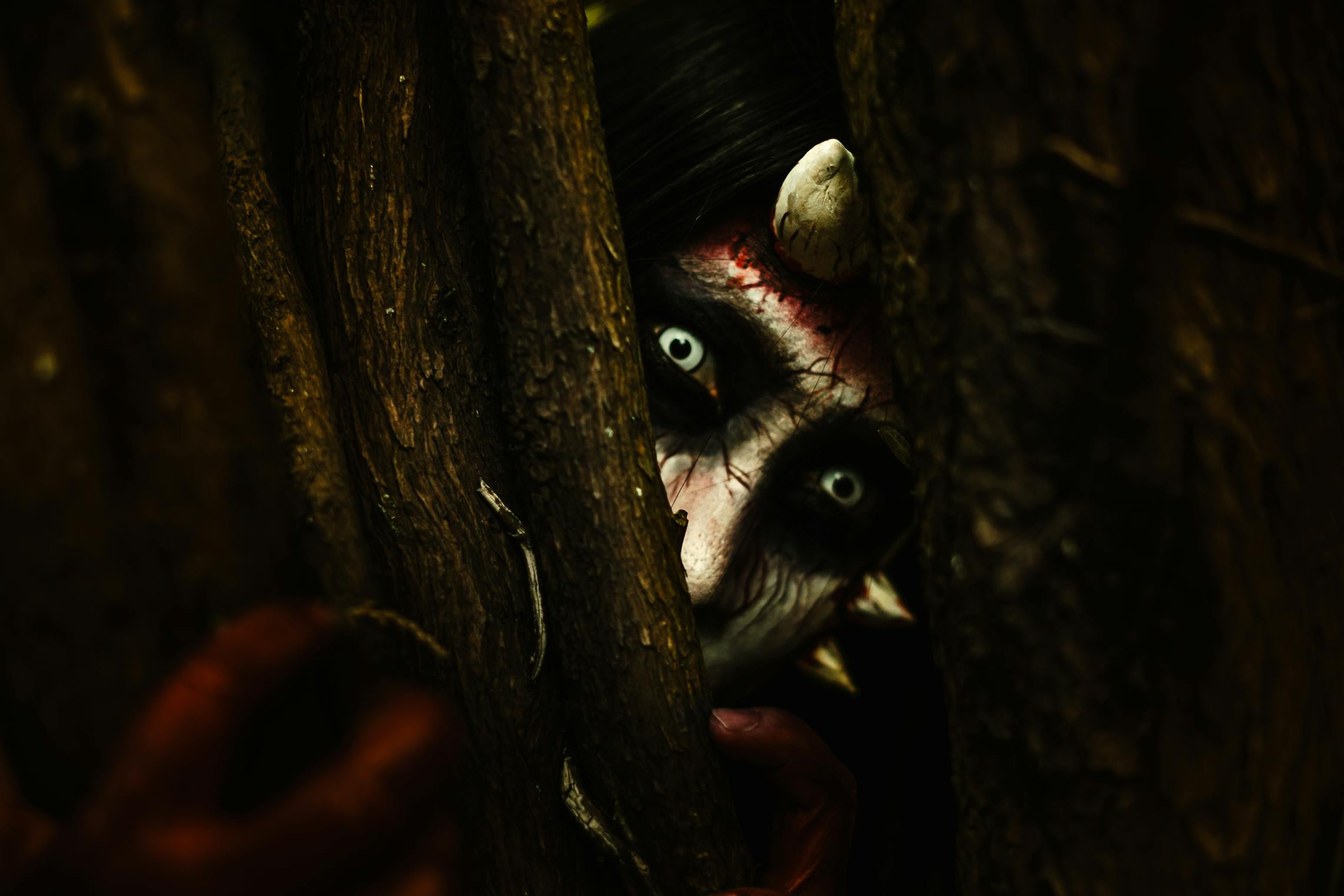
Anyone can make a person flinch. Hide behind a door and yell. That’s a startle, not a scare. A good scare is a layered experience that begins minutes before the actual event. It lives in the anticipation, the wrongness, the growing certainty that something is about to happen. The flinch is just the punctuation mark at the end of a much longer sentence.
Understanding the psychology behind fear lets you design scares that stay with your guests long after they leave your haunt. This isn’t about being mean. It’s about giving adults the specific thrill they came for.
The Startle Reflex vs. Dread
The startle reflex is involuntary. A sudden loud noise or unexpected movement triggers it regardless of context. It’s fast, it’s reflexive, and it fades in seconds. A car backfiring produces the same startle as a monster jumping out of a closet.
Dread is something else entirely. Dread is the slow, building awareness that you are not safe. It’s cognitive, not reflexive. It accumulates. And it makes the eventual startle hit much harder.
The formula: Dread + Startle = Scare.
Dread without a payoff is frustrating. Startle without dread is forgettable. Together, they create the full-body, adrenaline-flooding, laugh-afterward experience that people crave from a haunt.
The Role of Anticipation
Anticipation is the engine of dread. Your guests need to know (or strongly suspect) that something is coming. The longer they wait while certain that a scare is imminent, the more effective the scare will be when it arrives.
Obvious setup is fine. A dark corridor with a door at the end? Everyone knows something is behind that door. The 30 seconds of walking toward it, imagining what it might be, does more work than the actual reveal.
The gap between expectation and reality. Guests prepare for a specific kind of scare. They steel themselves. Then you give them something different. They braced for a monster and got silence. Or they expected a noise and got a visual. The mismatch between preparation and experience resets their defenses and makes the next scare more effective.
Why Darkness Works
Darkness eliminates your primary sense. Roughly 80% of the information humans use to navigate the world comes through vision. Remove most of it and the brain compensates by amplifying everything else: sound, spatial awareness, peripheral vision, and (most importantly) imagination.
In a dark room, the brain starts projecting threats onto ambiguous shapes. A coat on a rack becomes a figure. A shadow shifts and the brain says “movement.” None of this requires any effort from you. The guest’s own nervous system is doing the work.
The key is partial darkness, not total darkness. Total darkness is paralyzing. Guests stop moving, feel frustrated, and reach for their phones. You need just enough light for the brain to detect shapes and movement without being able to identify them clearly. That threshold, where shapes exist but details don’t, is where the imagination takes over.
Low-level lighting in cold blues or deep reds preserves the dark atmosphere while keeping guests mobile and engaged.
Sensory Deprivation and Overload
Fear responses intensify when sensory input is either stripped away or pushed to overwhelming levels.
Deprivation. A silent, dark space with no visual or auditory reference points triggers hypervigilance. The guest’s brain turns up its sensitivity to maximum, scanning for any input. In this state, the tiniest stimulus (a whisper, a breath of cold air, a barely visible movement) hits like a sledgehammer.
Overload. The opposite approach: simultaneous loud noise, flashing light, fog, and movement from multiple directions overwhelms the brain’s ability to process. The guest can’t identify the threat, can’t choose a response, and panics. This is the strobe-and-scream approach, and it works because the brain’s pattern-recognition system crashes under the load.
The sequence matters. Start with deprivation to wind the spring, then hit with overload to release it. A quiet, dark hallway followed by a sudden burst of light, noise, and movement is more effective than starting at maximum intensity.
The Uncanny Valley
Humans have an evolved sensitivity to things that look almost human but not quite right. A poorly animated CGI face, a mannequin in the wrong position, a figure that moves at the wrong speed. This is the uncanny valley, and it produces a specific flavor of revulsion that differs from startle fear.
Practical applications:
Mannequins and masks. A row of mannequins in a dark room. All are stationary. One of them is a person standing very still. The guest walks past, suspicious of every one. When the live actor moves, the scare is profound because the guest has been scanning for exactly this threat and still wasn’t ready.
Wrong movement. A figure that moves too slowly, or at irregular intervals, or with a stuttering gait. The brain recognizes it as human-shaped but the movement pattern is wrong. This produces unease that pure jump scares can’t match.
Wrong proportions. Stilt walkers, oversized heads, elongated limbs (achieved with prosthetics or costumes). The guest recognizes a human form but the proportions are off. The uncanny valley response is immediate and instinctive.
Sound mismatches. A child’s voice from an adult-sized figure. Animal sounds from a human form. The mismatch between visual and auditory input creates cognitive dissonance that reads as deeply wrong.
Consent and Calibration
Adult haunt guests are there voluntarily. They want to be scared. But “want to be scared” doesn’t mean “want to be traumatized.” Good haunt design reads the room.
Provide intensity cues. Professional haunted attractions post warnings and offer multiple intensity levels. You can do the same at a home haunt. A sign that says “This path is intense” lets guests opt in with full awareness.
Never touch. Unless you’re running a specific touch-permitted attraction (which requires waivers and training), the rule is absolute: scares are visual, auditory, and environmental. Physical contact crosses a line that destroys trust and can escalate badly.
Watch for distress. Someone screaming and laughing is having fun. Someone silent and rigid or backing away with their hands up is not. Have a plan for escorting overwhelmed guests out of the haunt quickly and discreetly.
The psychology is your foundation. Next, learn where and when to deploy scares for maximum impact.
Next up: Part 2: Timing and Placement