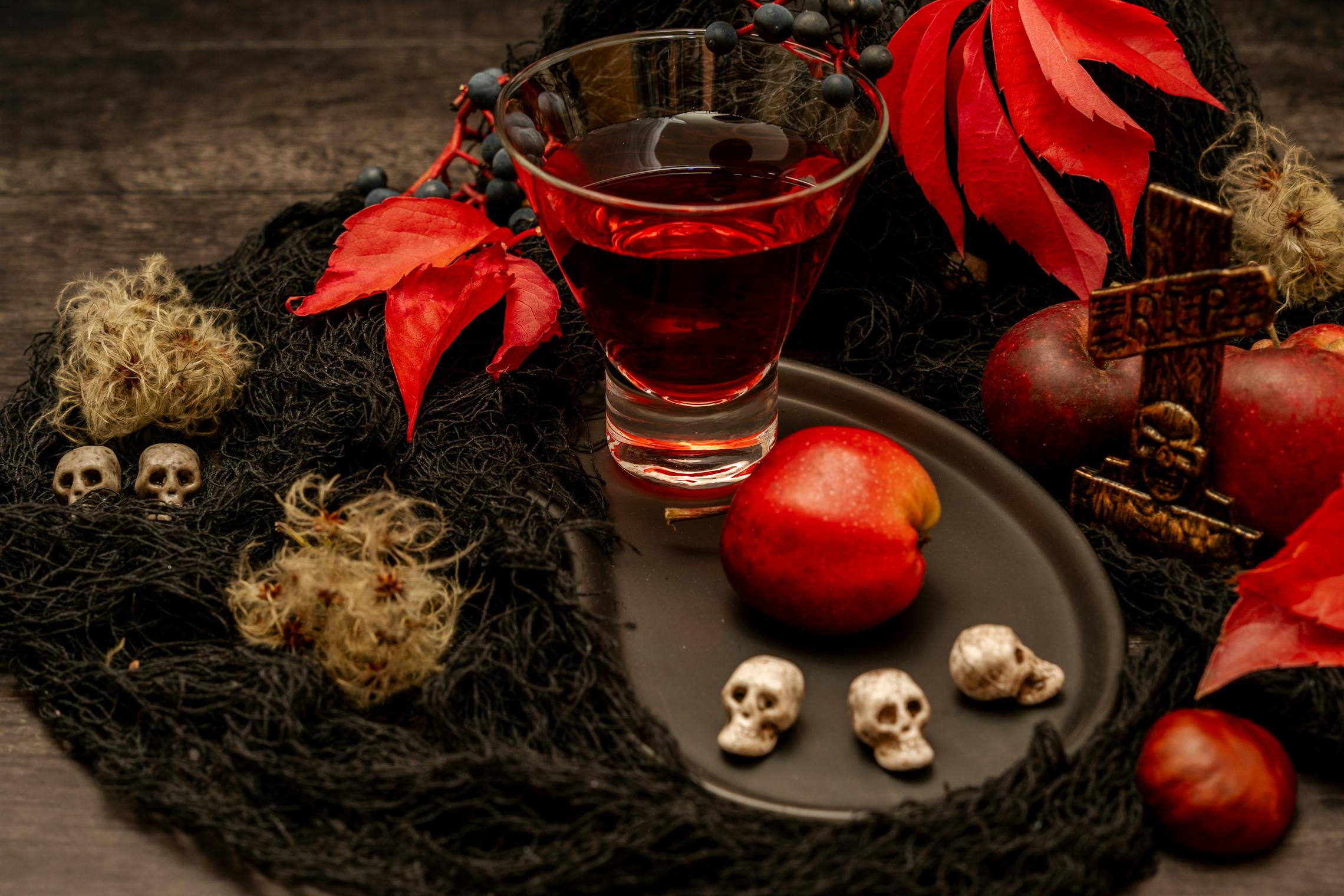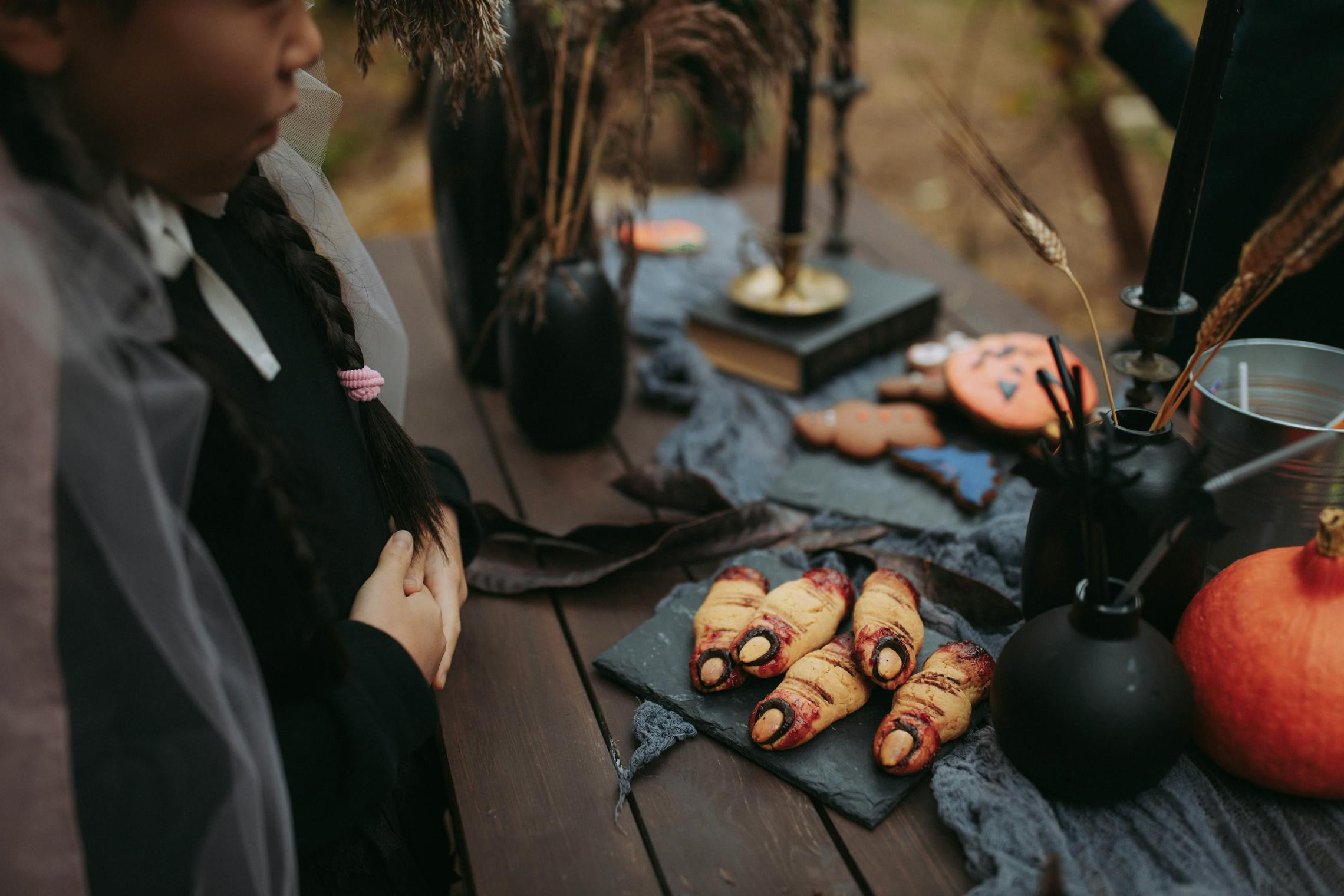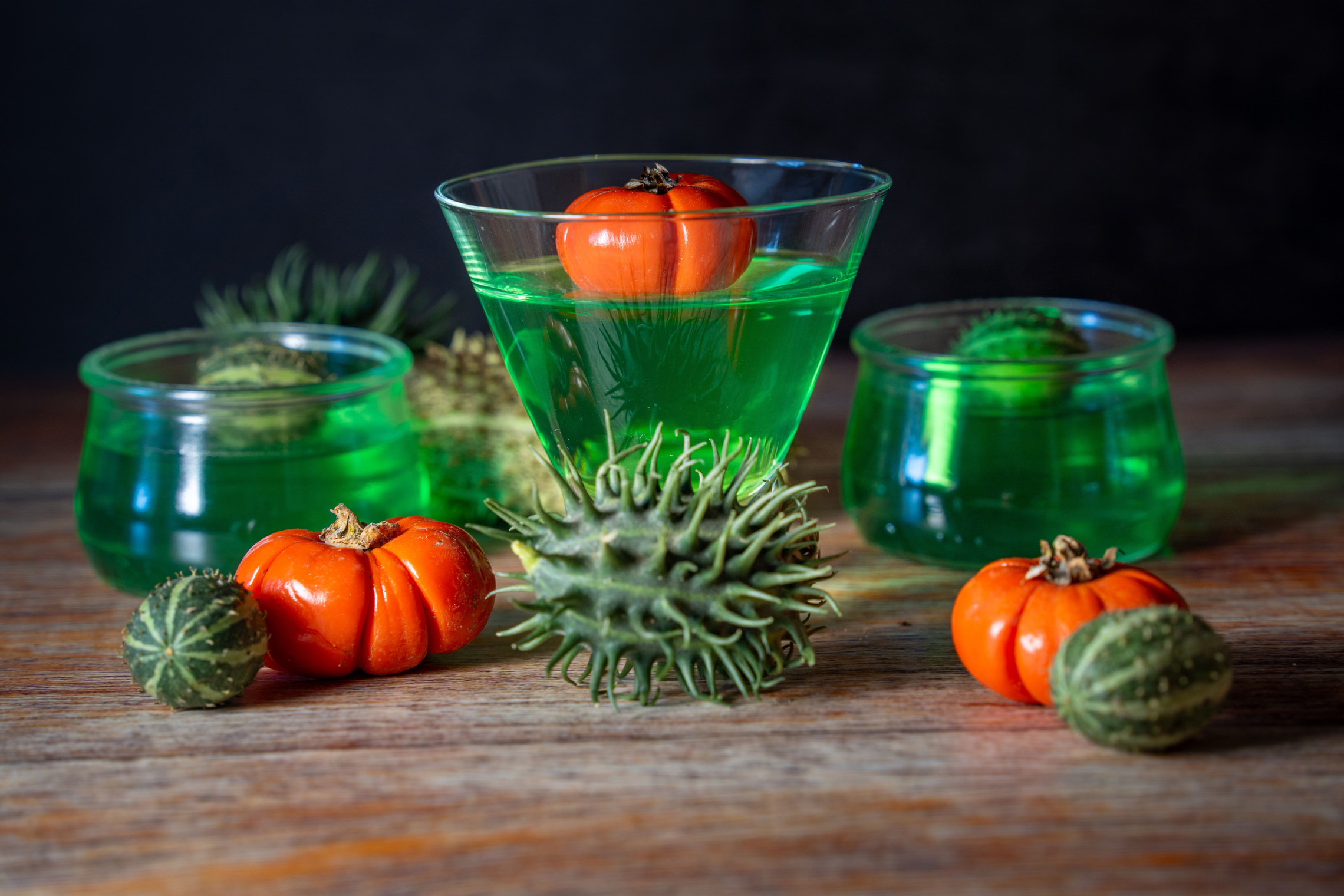
A jello shot fails in one of three ways. It never sets, because the liquor went in hot or there was too much of it. It sets but slumps into a puddle on a warm table. Or it sets, looks fine, and the guest who eats four of them has no idea how much vodka that was.
Adults 21 and over only. Jello shots look exactly like the alcohol-free gelatin cups kids eat, and researchers who studied them found that gelatin “masks the bitter taste of alcohol, making it less apparent how much alcohol is being ingested.” Put them on their own labeled tray, keep any alcohol-free batch visibly different, and count the drinks per cup before you pour.
The Base Ratio
Our base recipe uses 2 cups of liquid per 3-ounce box of flavored gelatin: 1 cup boiling to dissolve it, 1 cup cold. The cold cup is where the liquor goes. It makes twelve shots in 2-ounce cups with lids:
- Pour 1 cup of boiling water over one 3-ounce box of flavored gelatin and stir 2 minutes, until it’s completely dissolved (Kraft’s dissolving step).
- Let it cool until it’s no longer hot to the touch.
- Stir in 3/4 cup of cold 80-proof vodka and 1/4 cup of cold water.
- Pour into the cups and refrigerate at least 4 hours, or overnight.
For milder shots, cut the vodka and make up the difference with cold water so the cold portion stays at 1 cup. The drinks-per-shot math for each version is below.
America’s Test Kitchen (ATK) Espresso Martini Jello Shots follow a similar order with unflavored gelatin, but add the vodka while the mixture is still steaming: bloom 3 tablespoons in 1 cup of cold water for 5 minutes, heat until dissolved and steaming, then transfer to a bowl and whisk in the sugar, espresso, 1 cup of vodka, and 3/4 cup of coffee liqueur. The pan cools an hour at room temperature before it goes in the fridge. By the USDA figure below, adding liquor to hot liquid keeps about 85 percent of its alcohol. ATK’s stated goal is “enough alcohol for a burn that’s pleasant, not overpowering, and enough gelatin so the shots hold their shape yet stay soft enough to melt in your mouth.”

Freshware Plastic Portion Cups with Lids, 2 oz, 200 Sets
Two hundred 2-ounce cups with snap-on lids, the size every jello shot recipe here is written for. Freshware says the cups are food-grade polypropylene and the lids PET. Lids matter: they let a tray stack in the fridge for days.
Why the liquor waits until the end
Heat costs alcohol. USDA’s nutrient retention table, built on a study that measured it, puts alcohol retention at 85 percent when it’s added to a boiling liquid. Food that sat overnight with no heat at all kept 70 percent. Simmering is far worse: 40 percent after 15 minutes, 25 percent after an hour. Cooling the gelatin before the vodka goes in protects the booze, and lidding the cups gives it less chance to escape overnight. That second point is our reading of the 70 percent figure; the table doesn’t say whether the food was covered.
Heat costs gel strength too. The Gelatin Manufacturers Institute of America (GMIA), the trade body for gelatin makers, says gel strength is “gradually weakened on prolonged heating in solution above approximately 40° C.” A few minutes at a boil to dissolve the powder is fine; holding it there isn’t.
Why there’s a ceiling
GMIA’s handbook lists gelatin as insoluble in “primary alcohols.” Ethanol is one. The gelatin dissolves in the water, and the vodka is along for the ride, so every ounce of liquor you add is an ounce of liquid the gel has to hold without help. That’s also why you never try to dissolve gelatin in straight liquor.
No source we trust gives a tested maximum. The ratios in the table below run from about 10 to 20 percent alcohol by volume in the finished shot (our arithmetic), with our base recipe at 15. Swapping the whole cold cup for vodka is the top of that range, and the one to try in a small batch before you commit a party’s worth. The “never more than 50 percent” rule that circulates online traces back to no test we could find.
Boost It With One Knox Envelope
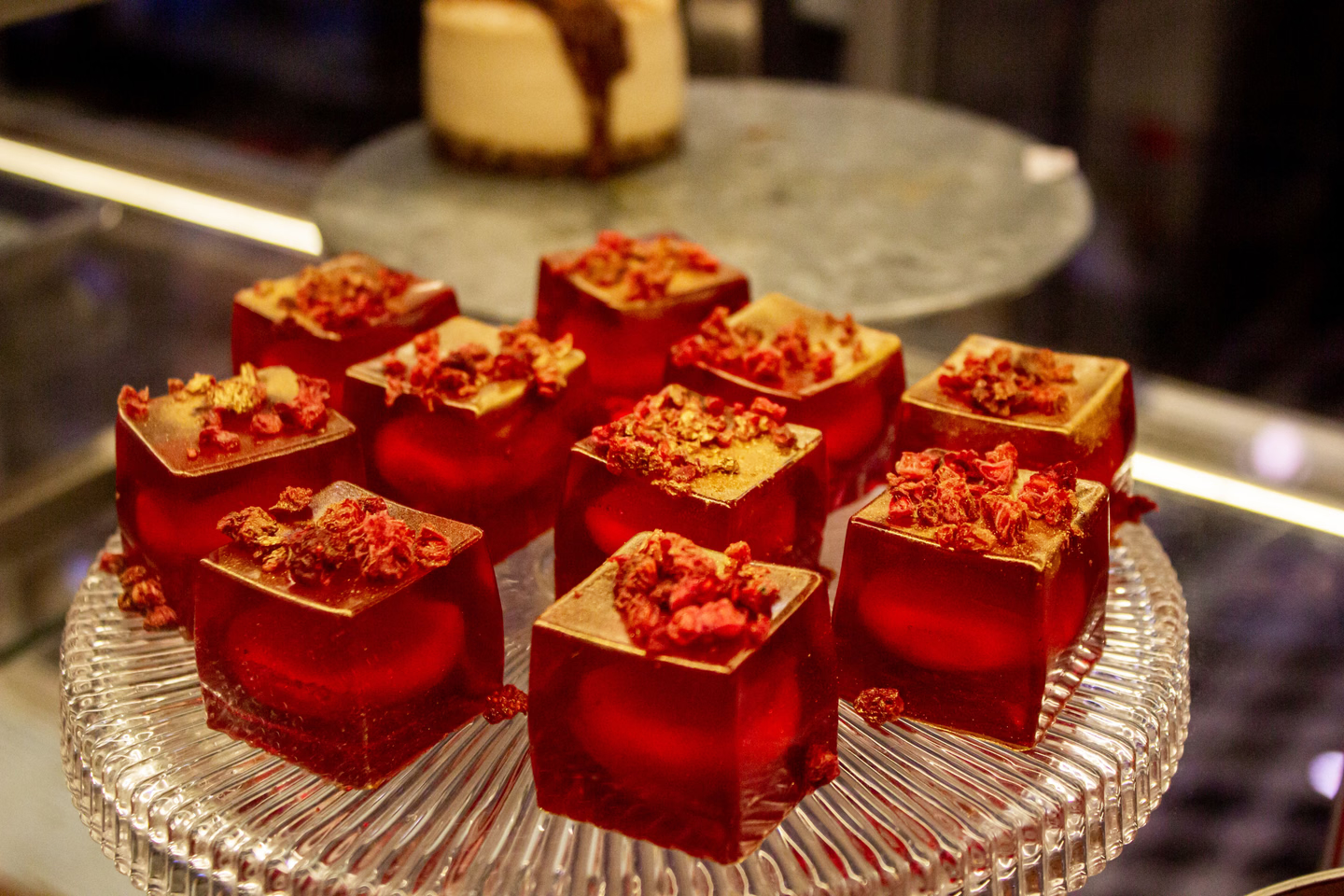
Unflavored gelatin is how you get a shot firm enough to unmold, stand up in a brain, or survive a warmer room.
The arithmetic. Kraft Heinz doesn’t publish how much gelatin is in a box of Jell-O. GMIA gives a typical dessert-mix formula of 9 percent gelatin, and 9 percent of a 3-ounce (85-gram) box is about 7.7 grams. King Arthur Baking puts one envelope of unflavored gelatin at about 2 1/2 teaspoons, or 7 grams. So a box of flavored gelatin holds roughly one envelope’s worth of gelatin. That’s our calculation from a generic formula, not a Kraft specification, but it means one added envelope roughly doubles the gelatin in the batch.
Kraft’s own Jiggler cubes, the finger-food format, work on the same principle from a different direction: two 6-ounce boxes in 2 1/2 cups of boiling water, about three times the box strength (12 ounces of powder in 2 1/2 cups, against 3 ounces in 2 cups), set 3 hours before unmolding.
How to add it. Stir the envelope into the dry flavored gelatin before the boiling water goes in. Kraft does the same thing in a Knox cheesecake recipe: “Mix gelatine and sugar in small bowl. Add boiling water; stir 5 minutes or until gelatine is completely dissolved.” Flavored gelatin is mostly sugar, which keeps the plain gelatin from clumping.
Use the extra envelope for firmness, not for extra vodka. No source we found tested how much more liquor a boosted batch will hold, and the standard-drink math below assumes the ratios above.
King Arthur Baking, quoting pastry chef David Lebovitz, gives the capacity: one envelope “will firmly set 2 cups of liquid” and “softly set 3 cups.”

Knox Original Unflavored Gelatine, 32 Packets
Plain gelatin in single envelopes, one per box of flavored gelatin when you want a firmer set for molds, layers, and cubes. The envelopes also make clear or cream layers that don't taste of fruit.
Four Halloween Styles
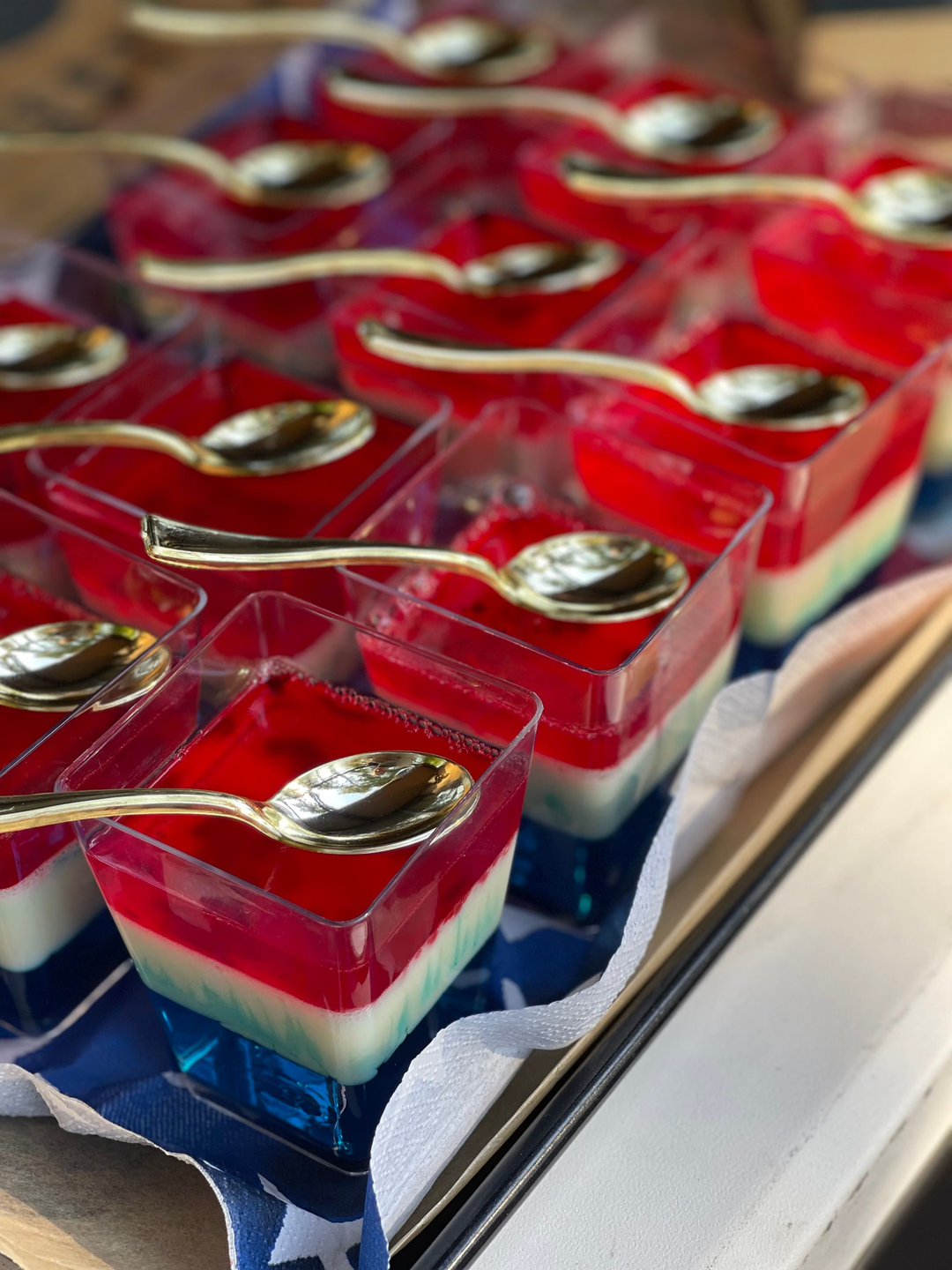
Layered shots
The layers stay separate because each one goes on at the right moment. Kraft’s word for that moment is “set but not firm,” and its test is specific: the gelatin “should stick to finger when touched and should mound.” In Kraft’s Rainbow Cups, each layer gets about 15 minutes in the fridge to reach it. GMIA lists bonding “layered confections together” among gelatin’s jobs, and a tacky layer is what lets the next one grip instead of sliding off.
- Make each color as its own small batch, liquor stirred in after cooling.
- Pour the first layer and chill until it passes the finger test, about 15 minutes in a small cup.
- Pour the next layer cool, and slowly. Kraft’s layered Jigglers cool the second batch “until ready to use,” then pour it “slowly” over the first. A warm layer melts the one underneath.
For an opaque layer, Kraft’s Peaches ’n Cream Jigglers dissolve one envelope of Knox in boiling water, stir in a 14-ounce can of sweetened condensed milk, and chill it “25 to 30 min. or until set but not firm” before the flavored layer goes on top. Orange over that cream layer, then purple or black cherry, reads as candy corn gone wrong.
If a layer has gone fully firm before the next one is ready, the new layer can slide off it when you unmold. Keep the next batch cooled and waiting so you can pour at the tacky stage.
The brain
Kraft’s Oozing Brain is the reference recipe, made in a brain mold sprayed with cooking spray:
- Dissolve two 6-ounce boxes of peach gelatin in 1 3/4 cups of boiling water. Stir in a 5-ounce can of evaporated milk and 3/4 cup of cold water. The milk turns the peach a fleshy pink-gray.
- Pour into the mold and refrigerate “1 hour or until gelatin is set but not firm.”
- Mix a 3-ounce box of strawberry gelatin with 2 tablespoons of cornstarch and 1 cup of cold water, microwave 3 minutes, and drizzle 1/2 cup of it between the peach gelatin and the edge of the mold. Chill 2 hours.
- Unmold “just before serving,” then warm the rest of the strawberry mixture and spoon it over as the ooze.
Kraft’s recipe has no alcohol. The 3/4 cup of cold water in step 1 is the only place liquor can go without changing the milk ratio, and we haven’t found a tested boozy version, so try a half batch first. If you do swap it all for 80-proof vodka, the whole brain carries about 4 standard drinks (our math: 6 ounces of vodka at 40 percent is 2.4 ounces of alcohol). Serve it in slices on small plates and put that number on the label.
To release Jigglers, Kraft dips the bottom of the tray in warm water for 15 seconds.

UWILLION Silicone Brain Jello Mold with Support Base
A 9.6 by 7 inch silicone brain, a bit over 3 inches deep, with a rigid base so it doesn't sag when full. Silicone peels away from the folds instead of tearing them. The listing says silicone and dishwasher safe but doesn't claim food-grade, so wash it before first use.
For individual brains or eyeball domes, small silicone cavities do the same job as cups and unmold with a push from underneath.

Lerykin 15-Cavity Semi Sphere Silicone Molds, 2 Pack
Thirty small half-sphere cavities that turn a box batch into eyeballs or bite-size domes. Lerykin says the silicone is 100% food-grade and fridge and freezer safe. Boost the batch with a Knox envelope so the domes hold their shape out of the mold.
Eyeballs
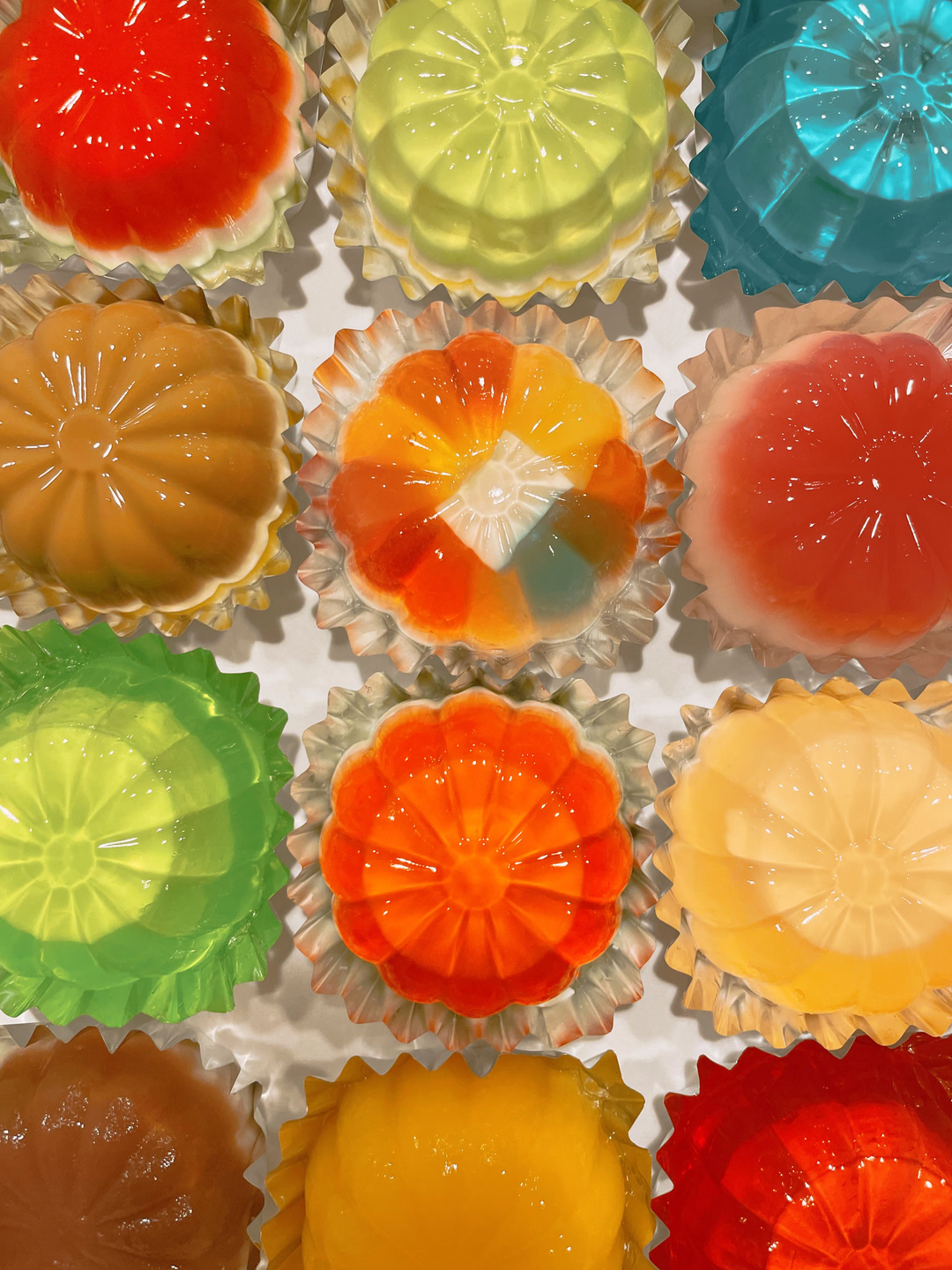
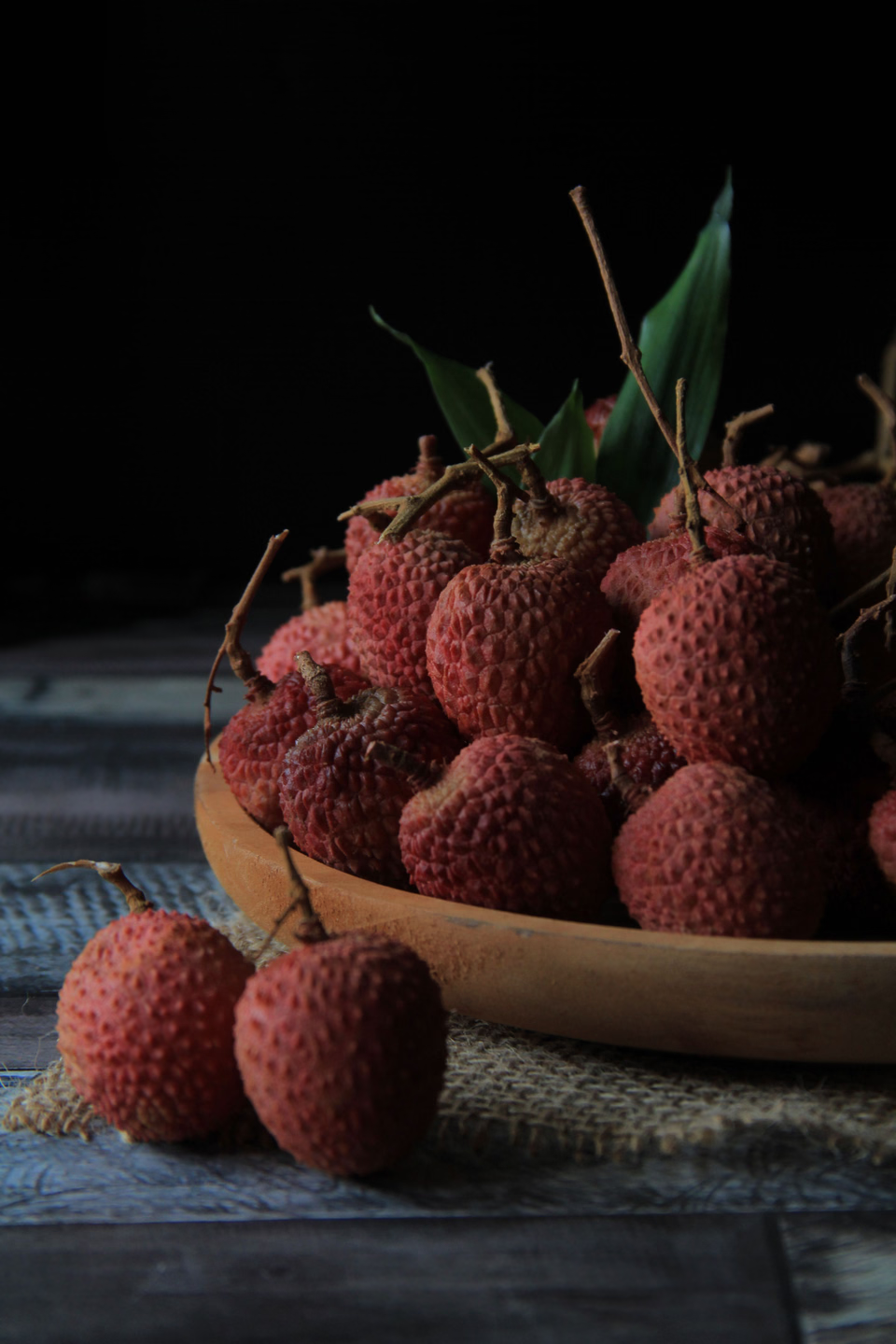
Drain canned lychees in syrup and push a blueberry or two into the cavity where the pit was. That’s the whole eyeball. We freeze them for about an hour on a lined sheet to firm them up for handling; if they go on top of a shot frozen, let them thaw a bit before anyone eats one, because a whole frozen fruit is a choking risk.
To put one in a shot, pour a clear or pale gelatin (lime, or an unflavored Knox base with a splash of lychee syrup) into a 2-ounce cup, let it reach the tacky stage, and press an eyeball in blueberry side up. Use canned lychees; the reason is in the fruit section.
Blood drizzle
The blood goes on at serving time, not in the fridge. Our cocktail guide has the grenadine: simmer equal parts pomegranate juice and sugar until thick. Cool it, put it in a squeeze bottle, and run a thin line down the inside of each cup just before the tray goes out. Kraft’s alternative is the thickened strawberry ooze from the brain recipe above, which clings rather than runs.

Ninsula 4 oz Squeeze Bottles, 5 Pack
Small squeeze bottles with red twist caps for grenadine blood, one per color. The narrow tip gives you a drip line down the inside of a cup instead of a puddle on top. Ninsula says they're food-grade plastic and top-rack dishwasher safe, not for the microwave.
The Fresh Fruit Problem
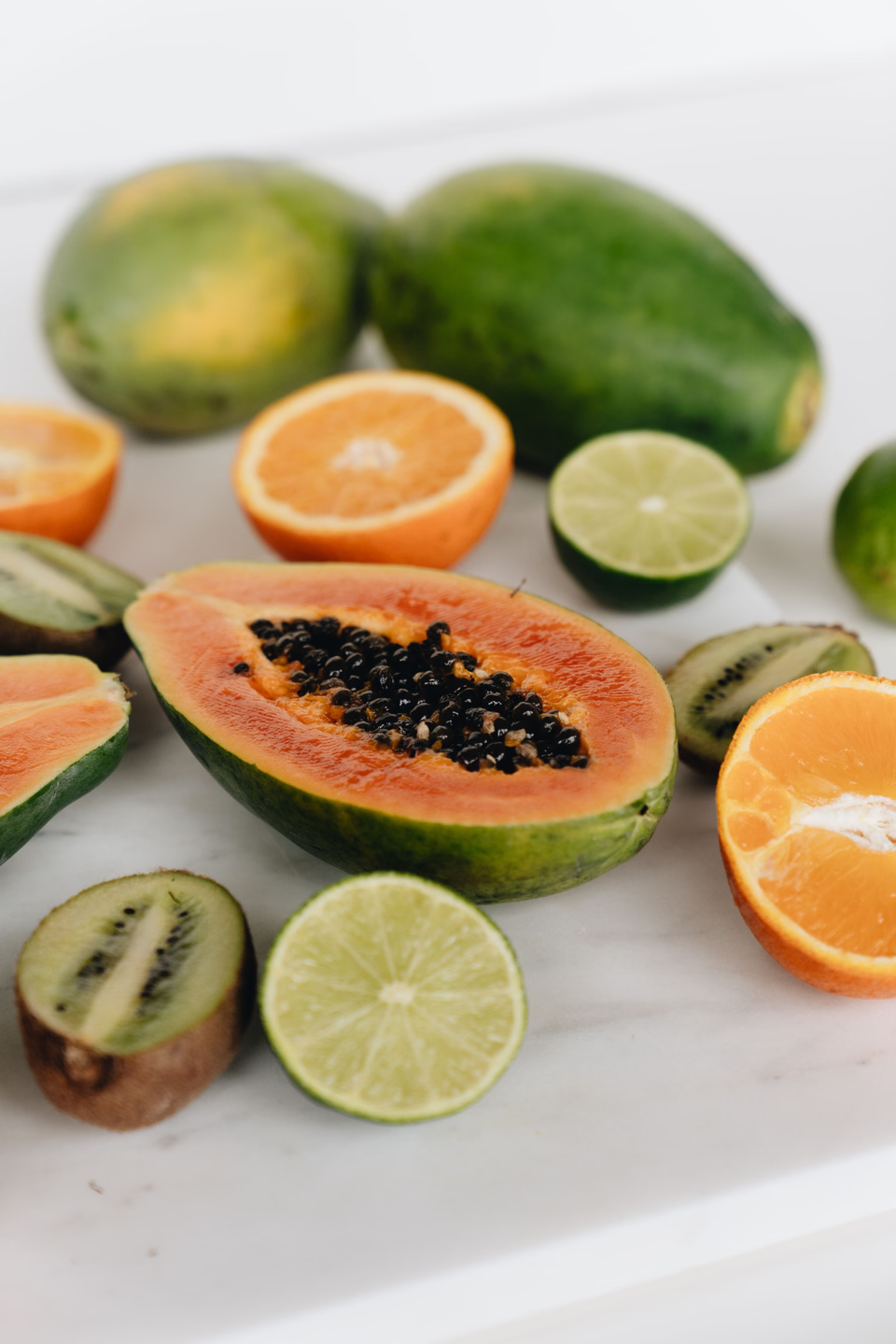
A green “slime” shot made with fresh kiwi or a tiki shot with fresh pineapple juice won’t set. Chemist Joe Schwarcz of McGill University’s Office for Science and Society explains why: “Bromolain in pineapple, papain in papaya and actinidin in kiwi are all enzymes capable of breaking down proteins,” and gelatin is protein. GMIA says gelatin is “hydrolyzed by most proteolytic enzymes.”
- Canned is safe. Schwarcz: “canned fruits are fine because the pasteurization process they undergo destroys the proteolytic enzymes.” We found no test of fresh lychee in gelatin, so we’re not saying fresh lychee fails; canned is simply the known quantity.
- The list is longer than pineapple. The Culinary Institute of America names “kiwi, pineapple, papaya, honeydew melon, and banana.” King Arthur Baking lists figs, kiwi, papaya, and pineapple.
- Fresh can be fixed, with a caveat on kiwi. The CIA says to simmer the fruit or purée “for 2 to 3 minutes to destroy all of the protease enzymes before adding the gelatin.” King Arthur boils the peeled, cut fruit for around 5 minutes, and excludes kiwi from that fix. For kiwi, use canned or skip it.
Make-Ahead Timing
How long to set. The sources disagree, and the disagreement is real:
| Source | Set time |
|---|---|
| Kraft Jiggler cubes | 3 hours “or until firm” |
| Kraft molded gelatin | 4 hours “or until firm” |
| ATK espresso martini shots | at least 8 hours |
| King Arthur Baking, quoting David Lebovitz | at least 8 hours, “but twenty-four hours is best” |
GMIA explains why all of them can be right: under ideal conditions “the strength of the gel increases with time as more crossbonds are formed.” A shot that is firm enough to eat at 4 hours is still getting firmer the next morning. Treat 4 hours as the minimum and overnight as the target, and give brains and unmolded shapes the overnight.
How far ahead. ATK refrigerates its espresso martini shots at least 8 hours and up to 2 days. We found no USDA or extension figure for prepared gelatin, and the “7 to 10 days per USDA” line online doesn’t appear in any USDA material we could find.
A timeline for Saturday, October 31:
- Thursday or Friday. Make cup shots and layered shots. Lid them.
- Friday night. Make the brain and any molded shapes so they get the overnight set.
- Saturday morning. Freeze lychee eyeballs if they’re going on top rather than in the set gelatin.
- Just before the tray goes out. Unmold the brain, add the blood drizzle, label the trays.
Keep Them Cold on the Table
Gelatin gels melt when they warm; GMIA calls them “thermoreversible.” It also warns that gelatin “is an excellent growth medium for bacteria” and that gelatin in solution “should be left in this state only if kept very cold, or hot enough to destroy or inhibit bacterial growth.”
Serve from a tray set over ice, or bring out a dozen at a time from the fridge. Shots that have gone soft and glossy on the table have been out too long.
Agar: The Gelatin-Free Option
Agar is a seaweed gel, so vegetarian and vegan guests can eat it. It also behaves very differently.
- It has to boil. Hispanagar, an agar maker, says “To dissolve agar, it is necessary to reach the boiling temperature.” Cook’s Country’s test kitchen soaked agar flakes 10 minutes, then boiled them another 10. The liquor goes in after the boil, as late as you can, and per the USDA figure you’ll still lose some of it.
- It sets fast. Hispanagar: “the gel will form when the temperature drops below 40 degrees” Celsius. Pour promptly, and expect less time between layers than gelatin gives you.
- It won’t melt on the table. Hispanagar says agar gels melt again only at 85 to 90°C. That makes agar the better choice for a warm room or an outdoor party.
- How much. Cook’s Country found “3⁄4 teaspoon of the flakes firmed a cup of water to the same consistency as a level teaspoon of gelatin did,” and notes strength can vary between brands.
- No cream layer. Cook’s Country: “agar agar won’t thicken cream or milk-based liquids.” Skip the condensed-milk layer and the evaporated-milk brain.
How Much Alcohol Is in One Shot
The National Institute on Alcohol Abuse and Alcoholism (NIAAA) defines a standard drink as one containing “0.6 fl oz or 14 grams of pure alcohol,” the amount in a 1.5-ounce shot of 80-proof spirits. NIAAA adds that standard drink amounts “may not reflect customary serving sizes.” A jello shot is a good example.
| Batch (one 3 oz box, 80-proof vodka) | Vodka | Approx. ABV | Per shot, 12 per batch (about 1 1/3 oz) | Per full 2 oz cup |
|---|---|---|---|---|
| Half the cold water swapped | 1/2 cup | 10% | 0.22 drinks | 0.33 drinks |
| Our base recipe (3/4 cup vodka, 1/4 cup water) | 3/4 cup | 15% | 0.33 drinks | 0.5 drinks |
| All the cold water swapped | 1 cup | 20% | 0.44 drinks | 0.67 drinks |
Our assumptions: the batch totals 2 cups of liquid; we ignore the volume the powder adds and any alcohol lost to warmth or storage (both lower the real figure slightly); one standard drink is 0.6 fluid ounces of pure alcohol. A different spirit changes the numbers with its proof. ATK’s espresso martini pan works out to about 0.1 standard drink per 1-inch square, or roughly 9 squares to a drink, if the vodka is 80 proof and the coffee liqueur is 20 percent alcohol (ATK doesn’t name a brand or proof for either). A study of jello shot drinking used 0.75 ounces of liquor as its estimate for a typical shot, which works out to half a standard drink at 80 proof.
At our base ratio, three shots are one standard drink, and one box batch holds four.
Serving them responsibly
NIAAA defines binge drinking as reaching a blood alcohol concentration of 0.08 percent, typically “five or more drinks (male), or four or more drinks (female), in about two hours.” By the table above, a woman reaches that threshold at 12 base-recipe shots in about two hours, a man at 15.
In a 2016 national study of 1,031 underage drinkers (Siegel and colleagues, Journal of Child & Adolescent Substance Abuse), 20.4 percent had eaten jello shots in the past 30 days, and those who had were “approximately 1.5 times more likely to binge drink.” One concern the authors raise: “gelatin masks the bitter taste of alcohol, making it less apparent how much alcohol is being ingested.”
- Label the tray with the spirit and the drinks per cup, for example “Vodka. 3 shots = 1 drink.”
- Separate the alcohol-free batch. Different tray, different cup or lid color, and a different shape if you can (the brain for adults, plain cups for everyone else). Kraft’s alcohol-free Jigglers and Rainbow Cups look identical to shots.
- Nobody under 21. NIAAA also lists people who are pregnant or may become pregnant, people taking medications that interact with alcohol, people recovering from alcohol use disorder, and anyone planning to drive among those who shouldn’t drink at all.
- Make a set number, not an open supply. One or two box batches for a dozen guests puts them alongside the bar instead of replacing it.
- Keep them away from the driving guests, and plan rides the way our party safety guide lays out.
If a dry ice cauldron punch shares the table, keep the dry ice in the punch setup; regular ice under the jello tray is all the shots need.
Frequently Asked Questions
Why didn’t my jello shots set? The usual causes, in order: too much liquor for the gelatin, liquor added while the mixture was still hot, fresh pineapple, kiwi, or papaya in the batch, or not enough time. Give them overnight before you call it a failure, then add a Knox envelope to the next batch.
Can I use rum, tequila, or flavored vodka instead? Yes, at the same volume. A 70-proof flavored vodka lowers the numbers in the table; 100-proof raises them, and a full cold-cup swap at 100 proof (about 25 percent ABV) is past the range above, so test a small batch. Cream liqueurs belong in the opaque layer, not a clear one.
How do I get shots out of the cups? Run a fingertip or a small offset spatula around the inside edge, then squeeze the cup. Firmer, Knox-boosted shots release more cleanly.
Can I make them the week before? ATK’s limit is 2 days, and we found no federal guidance for prepared gelatin, so make them no more than two days out.
Related Resources
For the drinks around the jello shots, start with our Halloween cocktails and mocktails, work out a batch in the Cocktail Lab, and print the cocktail recipe cards for the bar. The dry ice cauldron punch covers the fog-pouring centerpiece. For the full menu, see Halloween party food ideas, and before anyone arrives, read the party safety tips.