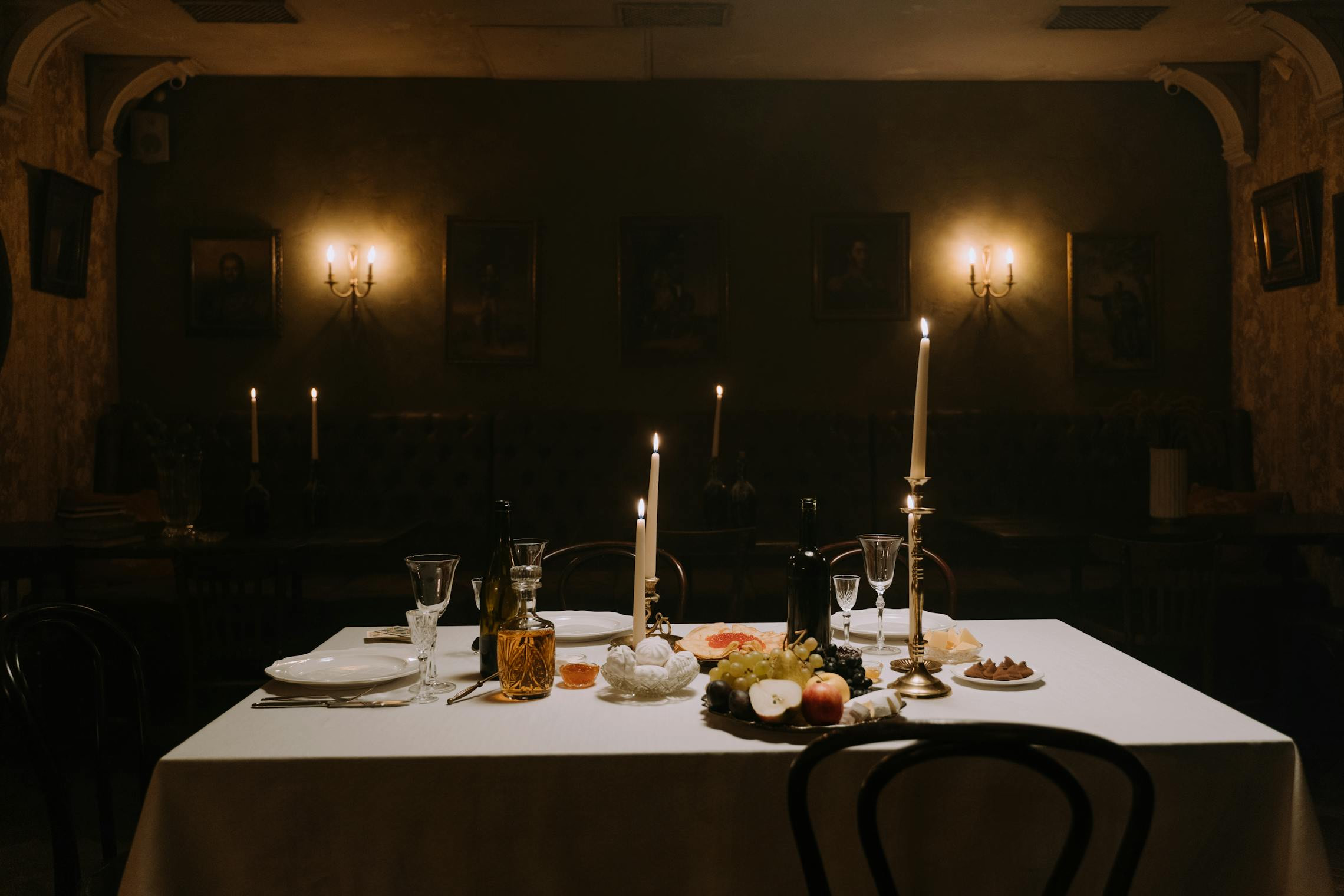
A Halloween dinner party is not a regular dinner party with plastic spiders on the table. It is a full sensory experience, and the difference between “that was fun” and “that was the best night of the year” comes down to how deliberately you plan the details.
This guide covers everything from first concept to morning cleanup. Use it as a framework, not a rigid formula.
Choose Your Level of Commitment
Before you buy a single candle, decide what kind of evening you are building. There are three tiers, and each one is a great party if you commit to it fully. The mistake people make is aiming for Tier 3 with a Tier 1 budget and two days of prep time.
Tier 1: Ambient Halloween. Your regular dinner party, elevated. Black linens, candlelight, a curated playlist, maybe a signature cocktail with a dark name. The food is not themed. The decor is atmospheric but restrained. This is the sophisticate’s choice, and it works beautifully for groups of 6-8.
Tier 2: Themed Evening. You pick a concept (Gothic Victorian, Hitchcock film noir, witches’ sabbath) and carry it through the invitation, the table setting, the menu names, and the dress code. The food is still good food first, but it gets creative presentation. Think blood-red beet soup served in black bowls, not hotdogs wrapped in crescent rolls.
Tier 3: Full Immersion. This is dinner theater. The house is transformed. There might be a murder mystery. Courses are timed to dramatic reveals. You have been planning this since August. God speed.
Check out our party blueprints for complete plans at every level.
The Invitation Sets the Tone
Your invitation tells guests exactly what kind of night to expect, and you want them preparing for it in the right headspace.
For a dinner party (as opposed to a drop-in), send invitations 3-4 weeks in advance. Physical invitations printed on dark cardstock make a statement. If you go digital, at least use a dedicated platform like Paperless Post rather than a group text.
What to include beyond the basics: dress code specifics (“dark formal” or “come as your favorite literary villain”), whether you are serving a full sit-down meal (so people don’t eat beforehand), and a firm RSVP deadline. For a dinner party, you need exact headcounts.
Atmosphere: The Three Senses That Matter
Lighting
Kill the overhead lights. Every single one. Your entire lighting plan should use candles (real or LED pillars), string lights on dimmer switches, and maybe one or two colored uplights behind furniture. The goal is pools of warm light separated by shadow.
A 60-watt equivalent bulb in a lamp with an amber shade can serve as your “working light” for the kitchen or bar area. Everywhere else, go as dark as you can while still letting people see their plates.
Sound
Do not underestimate this. Ambient sound changes a room faster than any decoration. Layer a low-volume atmospheric soundtrack (wind, distant thunder, creaking wood) underneath your music playlist. Our sound mixer lets you build custom ambient layers, and the playlist builder handles the music side.
Start the evening with something understated. A jazz-noir playlist at conversation volume. As the night moves into cocktail hour and beyond, you can push the energy up gradually.
Scent
The forgotten sense. A room that smells like pumpkin spice says “fall craft fair.” A room that smells like woodsmoke, leather, and dried leaves says something else entirely.
Skip the novelty candles. Instead, burn unscented candles for the visual effect, and place one or two high-quality scented candles (cedarwood, tobacco, amber) strategically in corners where air circulates. Simmering a pot of water with cinnamon sticks, cloves, and orange peel on the stove works too.
Planning the Menu
Here is the cardinal rule: good food first, themed second. Nobody remembers the clever name you gave the salad if the salad was bad. They remember food that tasted incredible and happened to be served in a Halloween context.
Plan your menu the way you would for any dinner party, then look for opportunities to add atmospheric presentation. Dark ingredients (squid ink pasta, black sesame, activated charcoal in bread dough, beets, blackberries) let you build a moody plate without compromising flavor.
Serve courses. Even if it is just three (appetizer, main, dessert), the pacing of a coursed meal creates the structure your evening needs. Guests sit, eat together, talk, and transition as a group.
See our Halloween party food guide for specific recipes and menu ideas.
The Arc of the Evening
Great dinner parties have a shape. Here is a timeline for an 8-guest dinner with a 7:00 PM start:
6:45 PM — You are dressed, the house is lit, and the first playlist is playing. Everything that needs to be in the oven is in the oven.
7:00-7:30 PM — Arrivals. Guests get a welcome drink (have it pre-batched and ready to pour). Light appetizers are out. This is mingling time.
7:45 PM — First course is on the table. You call everyone to sit. If you are doing assigned seating (and for 8+ guests, you should), place cards are already out.
8:15-9:00 PM — Main course. This is when conversation deepens. Keep the music low enough to talk across the table.
9:15 PM — Dessert, plus a digestif or dessert cocktail. If you have planned a game or activity (tarot reading, murder mystery reveal, ghost story round), this is the moment.
10:00-10:30 PM — The evening relaxes. Move from the table to a living room if you have one. Put on something interesting (a classic horror film with the sound off, projected on a wall, is a great background). Let the night find its own ending.
What to Do When Things Go Wrong
Because something will.
The main course is running late. Stretch the appetizer phase. Put out more cheese. Open another bottle of wine. Nobody minds a longer cocktail hour.
A guest brings an unexpected plus-one. Set another place. You are a gracious host. Figure out the chair situation quietly.
The fog machine sets off the smoke detector. (This has happened to every single one of us.) Disable the detector in that room temporarily, but only if you remember to re-enable it before bed. Better yet, test this a day early.
The power goes out. You already have 40 candles lit. You are fine. This is actually the best possible thing that could happen to your Halloween dinner party.
The Morning After
Do future-you a favor: before guests arrive, line your trash cans with double bags, set out a bus tub in the kitchen, and put a damp towel near any high-traffic candle area for wax drips.
At the end of the night, blow out every candle (count them), load what fits in the dishwasher, toss perishables in the fridge, and leave the rest for morning. The cleanup will take about 90 minutes the next day. Put on a podcast. It goes fast.
The real reward is the group text the next morning, full of photos and “when are we doing this again?” That is the sign of a dinner party done right.