How Halloween Became a $12 Billion Industry
The commercialization of Halloween, from homemade masks to mass-produced costumes, and how a folk holiday became retail's second-biggest season.
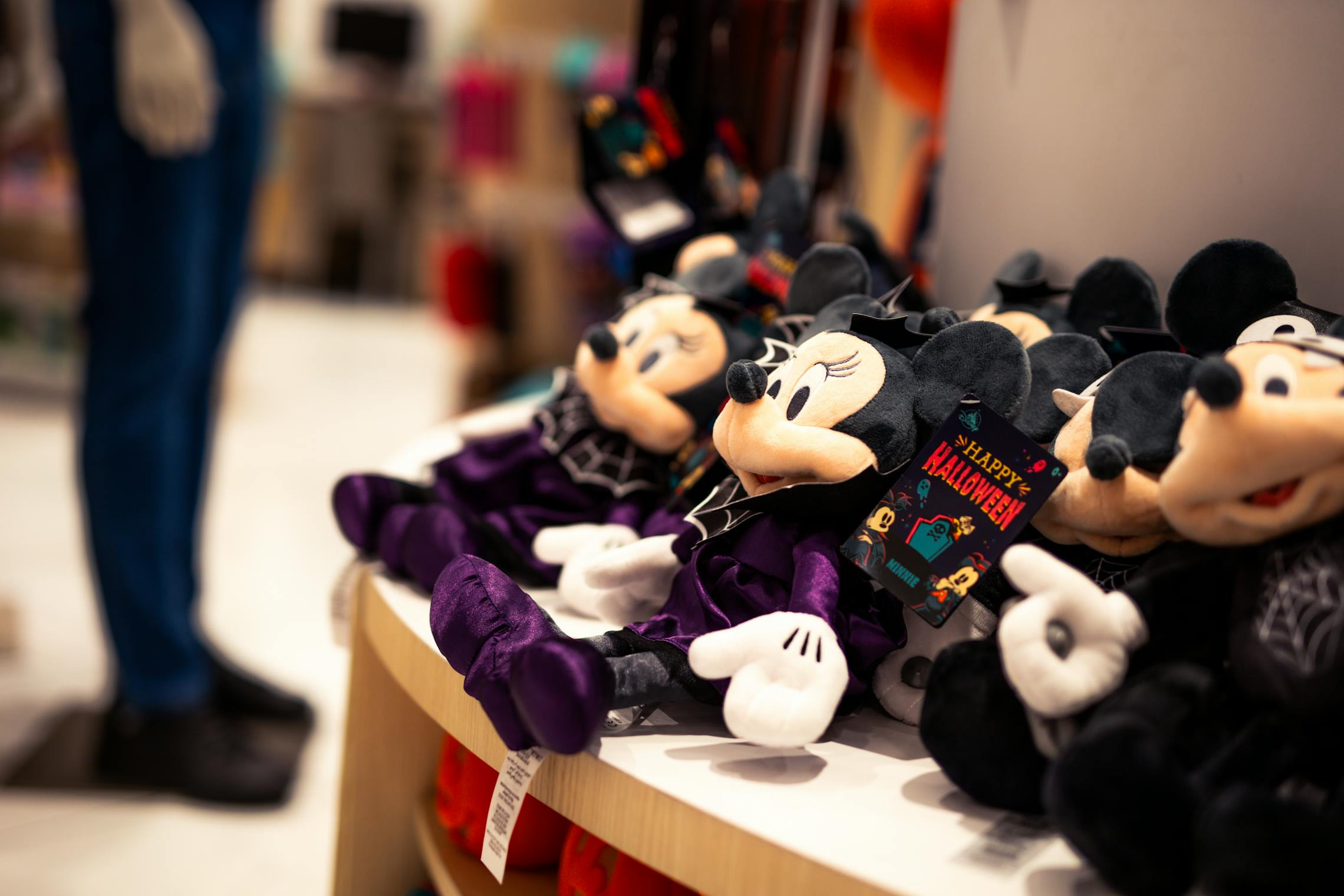
In 1950, a Halloween costume meant raiding the attic. Your mother’s old dress, some face paint, a bedsheet with eye holes. By 2024, Americans were spending roughly $12.2 billion on Halloween, making it the second-largest commercial holiday after Christmas. That transformation took about seventy years, and it reshaped not just how we celebrate but what Halloween means.
The Costume Revolution
Commercially manufactured Halloween costumes existed before World War II, but they were simple affairs: molded gauze masks, basic smocks, and crepe paper accessories sold through novelty shops and catalogs. The real shift began in the early 1950s when Ben Cooper, Inc. and Collegeville Flag and Manufacturing Company started mass-producing licensed character costumes.
These were cheap, disposable, and wildly popular. The format was standardized: a thin vinyl “jumpsuit” printed with an image of the character you were supposedly dressed as (because nothing says Batman like wearing a picture of Batman on your chest), paired with a rigid plastic mask held on by a thin elastic band. The mask had a single slit for breathing and tiny eye holes that guaranteed you’d trip on something.
They were terrible. Children loved them. By the late 1950s, licensed costumes dominated the market, and the characters tracked popular culture with precision. Whatever was on television that year would be on the costume racks by October.
Candy Gets Organized
The candy industry’s relationship with Halloween predates the commercial costume era, but the 1950s marked the moment when the two became fully intertwined. Candy companies began packaging products specifically for Halloween distribution: small bars, individually wrapped pieces, and bags designed for trick-or-treat handouts. Mars, Hershey, and Brach’s competed fiercely for the Halloween market.
The economics were significant. For many candy manufacturers, the Halloween season (September through October) represented 25% or more of annual sales. This concentration of revenue gave the industry powerful motivation to promote and protect trick-or-treating. When safety scares threatened the practice in the 1970s, the candy industry funded campaigns reassuring parents and promoting organized trick-or-treat events.
By the 1990s, Halloween candy sales in the United States exceeded $2 billion annually. The products had become more varied (adding toys, stickers, and novelty items to the mix) but the core transaction remained unchanged: buy bags of individually wrapped treats, distribute them to costumed visitors.
Decorations: From Simple to Spectacular
Halloween decorations followed a similar trajectory from homemade to manufactured, but the timeline was longer and the results more interesting. Through the 1960s and into the 1970s, most Halloween decorating was modest: cardboard cutouts of witches and black cats, a carved pumpkin, maybe some crepe paper streamers. The materials were inexpensive and the displays were temporary.
Two developments changed this. First, the “harvest decoration” trend of the 1980s brought corn stalks, hay bales, and decorative gourds to suburban front porches, extending the Halloween display season from one night to an entire month. Second, the Christmas decoration arms race, which had been escalating since the 1960s, created a template for competitive residential display that Halloween enthusiasts would eventually adopt.
By the 2000s, the outdoor Halloween decoration market had exploded. Inflatable yard displays appeared in the late 1990s and spread rapidly. Projection lights, animated figures, fog machines, and elaborate lighting rigs followed. The Home Depot’s introduction of the twelve-foot skeleton in 2019 (more on that in the yard haunt movement) marked a cultural tipping point, but the trend had been building for two decades.
Today, the average American household that decorates for Halloween spends roughly $100 on decorations, and the overall decoration market exceeds $3 billion annually.
The Adult Takeover
Perhaps the most significant commercial shift has been the rise of adult Halloween spending. For most of the twentieth century, Halloween was understood as a children’s holiday. Adults might host a party or hand out candy, but they weren’t the primary consumers.
That changed in the 1980s and accelerated through the 1990s and 2000s. Adult costume sales now regularly exceed children’s costume sales. Adult Halloween parties have become a major social occasion, driving sales of decorations, food, alcohol, and elaborate costumes. The rise of “sexy” costume variants for adults (sexy nurse, sexy pirate, sexy literally anything) became a reliable annual news cycle story starting in the early 2000s, but the broader trend was about adults claiming Halloween as their holiday.
The economic data reflects this. In the National Retail Federation’s annual Halloween spending survey, adult costumes, adult entertaining, and home decoration consistently account for the majority of spending. Children’s costumes and trick-or-treat candy, the categories that defined commercial Halloween for decades, are now minority segments.
The Retail Calendar
Halloween’s commercial footprint has expanded relentlessly on the calendar. In the 1970s, Halloween merchandise appeared in stores in early October. By the 2000s, it was showing up in August. Major retailers now begin their Halloween rollouts in July, and “Christmas creep” has been matched by an equally aggressive “Halloween creep” that pushes seasonal displays earlier each year.
Spirit Halloween, the seasonal retailer that occupies vacant storefronts from August through November, has become a cultural phenomenon in its own right. Founded in 1983, it now operates over 1,500 locations annually and has become a reliable marker of the season’s commercial arrival. Its business model (short leases on empty retail space, massive inventory of costumes and decorations, temporary seasonal workforce) is both ingeniously efficient and slightly melancholy, a reminder that American retail produces a lot of empty buildings.
What the Money Means
The $12 billion figure is worth pausing on. It means that Americans spend roughly $35 per person on Halloween, from infants who don’t know what a pumpkin is to elderly people who turn off their porch lights. For the segment of the population that actually celebrates actively, spending is much higher.
This spending reflects something real about what Halloween has become: a major creative outlet for adults who want to build, design, perform, and host. The commercial infrastructure (costumes, decorations, party supplies, candy, food, experiences) supports a holiday that has grown more participatory and more ambitious with each decade. You can criticize the consumerism, and plenty of people do. But the money follows genuine enthusiasm. Nobody spends $300 on a yard display because an advertisement told them to. They do it because they love this holiday, and the market has gotten very good at giving them tools to express that love.