Gothic Tablescaping Part 1: Centerpieces
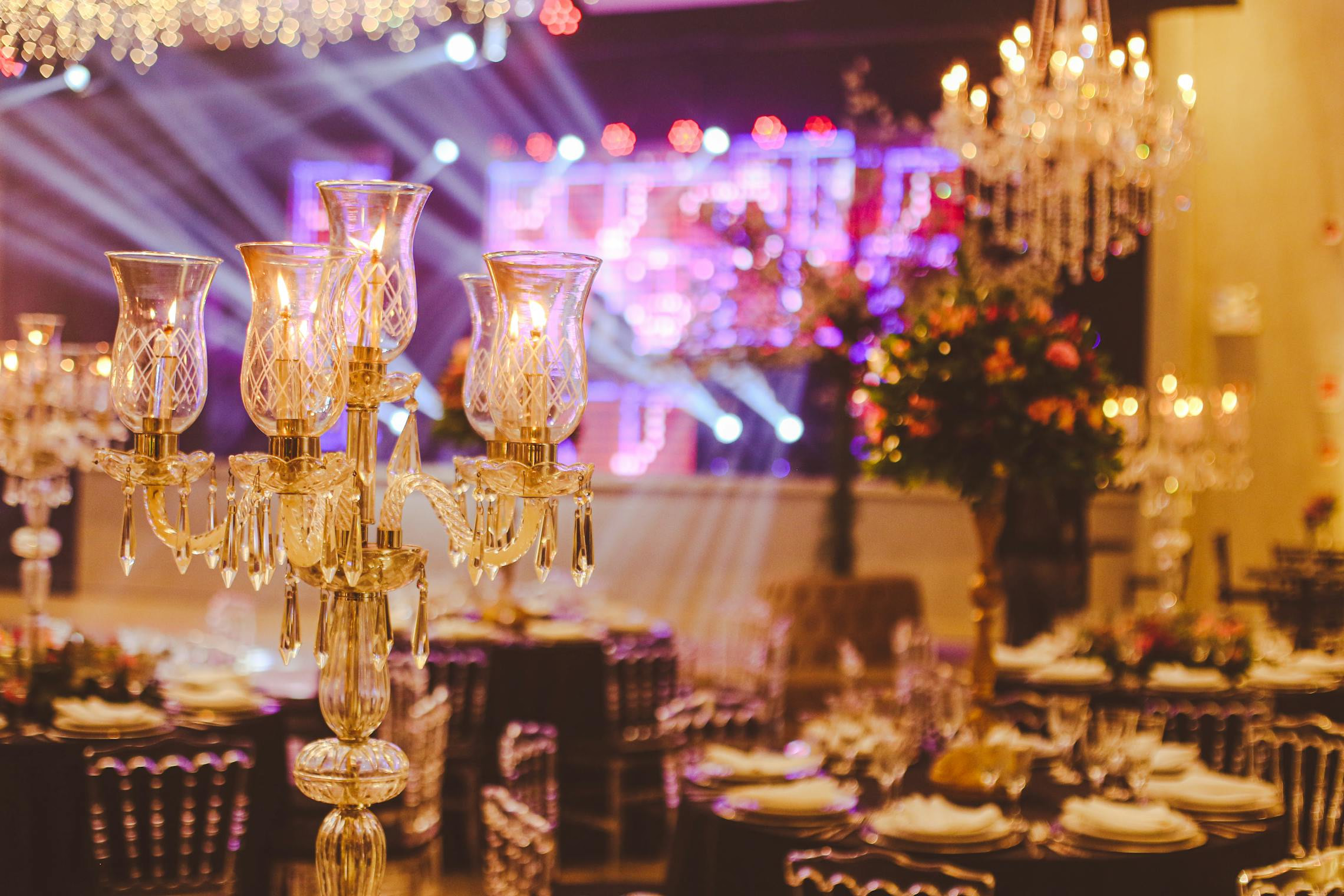
A centerpiece sets the tone for the entire table. Get it right and guests photograph it before they sit down. Get it wrong (too small, too themed, too obviously from a party store) and it disappears into the background. Gothic tablescaping isn’t about buying a plastic skull and calling it a day. It’s about composing a visual story that feels like it’s been accumulating in a dark manor for decades.
Scale and Proportion
The number one mistake in centerpiece design is going too small. A centerpiece needs to command the table without blocking sightlines across it. For a standard dining table (30 inches wide), the centerpiece should be:
- Width: 8-14 inches (roughly one-third the table width)
- Height: Under 14 inches if guests sit across from each other, or dramatically tall (24+ inches) if you’re using a buffet or side table where sightlines don’t matter
- Length: For rectangular tables, the centerpiece can extend along the center, occupying up to half the table’s length
A too-small centerpiece looks like an afterthought. A too-large one crowds the place settings. Lay out your plates and glasses first, then build the centerpiece in the remaining space.
The “Collected, Not Purchased” Principle
The difference between a gothic centerpiece and a Halloween decoration is provenance, or at least the illusion of it. A shiny new skull from Target reads as a seasonal purchase. A slightly distressed skull on a stack of old leather-bound books, surrounded by dried flowers and dripping candle wax, reads as an artifact from someone’s eccentric estate.
How to achieve this:
Mix materials. Combine metal (candelabras, trays), organic matter (dried flowers, branches, produce), stone or ceramic (urns, small busts), and fabric (velvet runner, lace). No single material should dominate. The variety suggests accumulation over time.
Age your props. Spray new items with a matte black or dark brown base coat, then dry-brush with metallic gold, silver, or verdigris green. Rub brown shoe polish into crevices. Sand edges. A new $8 resin skull treated this way looks like a $60 antique shop find.
Avoid matching sets. Nothing kills the collected look faster than three identical skulls or a matched pair of candlesticks from the same product listing. If you’re using multiples of anything, vary the sizes, finishes, or ages. Thrift stores are your best friend here: mismatched brass candlesticks for $2 each look far more authentic than a boxed set.
Candelabra Arrangements
A tall candelabra is the anchor of most gothic centerpieces. It provides height, drama, and (with real candles) the warm, flickering light that makes everything else on the table look better.
Choosing a candelabra: Wrought iron, tarnished brass, or distressed black metal all work. Avoid chrome, bright gold, or anything that looks modern. The more ornate the better, but if you’re starting with a simple design, you can dress it up with trailing artificial ivy, draped cobwebs, or small hanging crystals.
Candle choice matters. Black taper candles are the default for gothic and they work well, but dark burgundy, deep purple, and ivory with drip wax are equally effective and less expected. Mix colors for a more layered look.
The candle drip technique: Light black tapers over the candelabra an hour before guests arrive. Let the wax drip freely down the arms and onto the base. Blow them out, replace with fresh tapers, and relight. The accumulated drip wax adds texture and history that you can’t fake with a shortcut.
Placement: Position the candelabra slightly off-center rather than dead-center on the table. Off-center arrangements feel more natural and less formal, which suits the “collected” aesthetic.
Skull + Floral Combinations
The skull-and-flowers combination is a classic memento mori composition that dates back centuries in Western art. It works because the contrast between death (the skull) and life (the flowers) creates visual tension.
Approach 1: Skull as vase. Remove the top of a decorative skull (or buy one designed as a planter). Fill it with dried flowers, dark-colored silk flowers, or fresh flowers in deep autumn tones (burgundy dahlias, dark purple anemones, black calla lilies, dried blood-red roses). The skull becomes both container and composition element.
Approach 2: Skull among flowers. Arrange a low, wide floral spread (in a shallow tray or directly on the table runner) and nestle a skull partway into it, as if it’s emerging from the growth. Add trailing ivy or moss to blur the boundary between skull and flowers.
Approach 3: Flanking. Place the skull on a small pedestal (a stack of old books works perfectly) and flank it with two smaller floral arrangements in dark vessels. The skull is the focal point, the flowers are the frame.
Floral color palette: Stay in the dark range. Black, burgundy, deep plum, forest green, burnt orange. Avoid bright colors (pink, yellow, bright red) unless you’re deliberately breaking the palette for contrast. White flowers work only if they’re wilted, dried, or obviously dead.
Seasonal Produce as Decor
October produce is inherently gothic. Dark squashes, gnarled gourds, pomegranates, black grapes, figs, and artichokes all have the right color palette and organic texture to slot into a centerpiece without looking like a harvest festival.
Mini pumpkins and gourds: The warty, dark-skinned varieties (Knucklehead, Black Futsu, Galeux d’Eysines) look diseased in the best possible way. Scatter them around the base of your centerpiece or cluster them in groups of three.
Pomegranates: Cut one open and place it on a small plate as a visual accent. The dark red seeds spilling from a cracked shell read as both beautiful and slightly sinister.
Dark grapes: Drape a bunch of black grapes over the edge of a tray or winding through the arrangement. They add organic flow and catch candlelight beautifully.
Dried elements: Dried artichoke heads, thistles, seed pods, and dried citrus slices add texture without any risk of spoilage. Collect them weeks in advance and let them dry naturally, or buy them from craft suppliers.
Building the Composition
Start with the largest element (candelabra or tall floral) and work outward and downward.
- Place the anchor. Your tallest element goes slightly off-center.
- Add the secondary focal point. A skull, a large gourd, or a dramatic floral arrangement. Place it on the opposite side from the anchor, lower in height.
- Fill the middle. Smaller items (votives, small gourds, scattered flowers, old books) fill the space between the two focal points. Vary heights. Nothing should be exactly the same height as its neighbor.
- Trail outward. Ivy, trailing fabric, scattered rose petals, or small votive candles extend the composition beyond its central mass. This connects the centerpiece to the table rather than letting it sit as an isolated island.
- Step back and edit. Remove one element. Nearly every composition improves by subtraction. If it looks “complete,” take something away until it looks “right.”
The centerpiece is set. Next, build the place settings that surround it.
Next up: Part 2: Place Settings