Sound Design for Haunts Part 2: Directional Audio
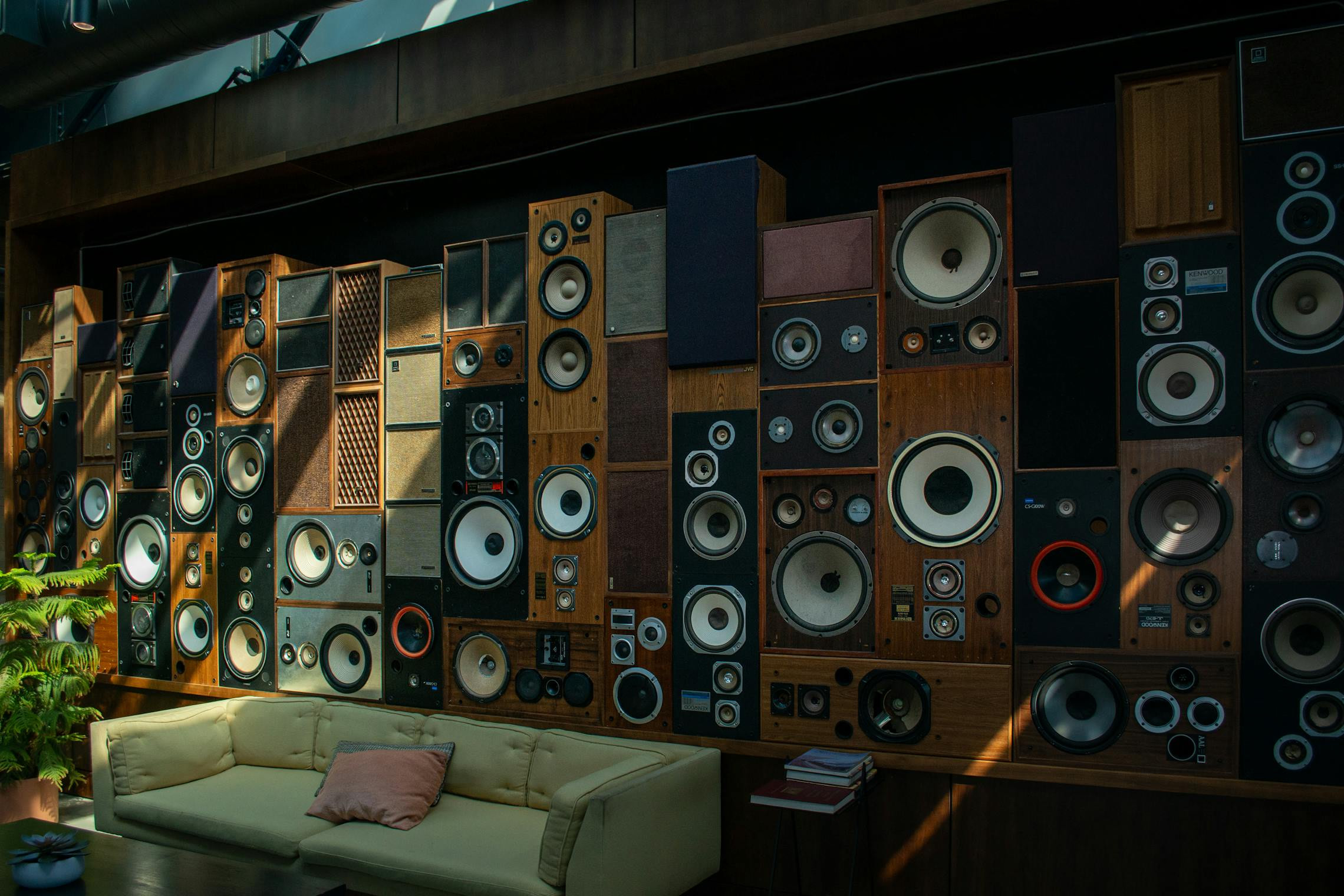
A sound coming from the right direction is twice as effective as the same sound from a random speaker. Footsteps behind you are alarming. Footsteps from a speaker on the shelf in front of you are background noise. Where the sound appears to originate matters enormously for immersion, and you can control it with simple placement techniques that don’t require expensive equipment.
Speaker Placement Fundamentals
Height
Human ears locate sounds primarily on the horizontal plane. We’re less accurate at judging whether a sound comes from above or below. Use this to your advantage:
Floor level for footsteps, creaking boards, and anything that should feel like it’s in the room with the guest. A speaker on the floor aimed along the baseboards creates an incredibly convincing “something is moving in here” effect.
Head height for whispers, breathing, and voice-based sounds. Position the speaker where a human’s mouth would be. Behind a mask on the wall, inside a hollow prop head, tucked behind a curtain at roughly five feet off the ground.
Overhead for rain, thunder, wind, and anything atmospheric. Mount a small speaker above a ceiling tile, in a vent opening, or on top of a tall shelf. Overhead sounds are processed as environmental rather than immediate, so they contribute to mood without drawing direct attention.
Distance
A speaker close to the guest creates intimate, localized sound. A speaker far from the guest creates diffused, environmental sound. Match the distance to the effect:
- Within 3 feet: Whispers, breathing, heartbeat. The guest should feel like the sound source is right next to them.
- 6-12 feet: Footsteps, door creaks, chains. The guest should feel like the source is in the room but not next to them.
- 15+ feet: Wind, thunder, distant screams. The guest should feel like the source is far away or outside.
Stereo Tricks
With two speakers, you can create the illusion of movement. A sound that starts in the left speaker and fades to the right speaker sounds like something moving across the room. The brain tracks the apparent source and fills in the gap between speakers with phantom movement.
The cross-fade pan. Record (or edit) an accent sound so it plays from left speaker, fades out, and simultaneously fades in from the right speaker over 2-3 seconds. Footsteps crossing a room, a whisper moving past the guest’s ear, a shadow sliding along the wall. The movement is illusory but convincing.
How to set it up: Place two speakers on opposite sides of a corridor or room, roughly 8-15 feet apart. Pan the sound in your audio editor so it moves from one channel to the other. Play through a stereo source (a phone or laptop with the left and right audio channels routed to separate speakers).
The behind-you effect. Place a speaker behind the guest’s expected position (behind their back as they face a scare ahead). Play a soft sound (a breath, a single footstep, a faint voice) from this rear speaker. The guest’s instinct is to spin around. Nothing is there. Meanwhile, the scare in front of them fires while they’re turning. This is a variant of the distraction scare technique.
Hidden Speaker Techniques
Sound should arrive without a visible source. Every exposed speaker is a reminder that the experience is manufactured.
Inside props. A hollow skull, a cauldron, a coffin, a pumpkin. Cut a small hole in the back (away from the guest’s view), place a small Bluetooth speaker inside, and the sound emanates from the prop itself. A skull that whispers. A coffin with scratching sounds coming from inside. The prop becomes the sound source and the effect is immediate.
Behind walls. In a constructed haunt (garage, shed, temporary walls), mount speakers behind the wall panels. Sound travels through thin materials (plywood, plastic sheeting, fabric) with minimal loss. The result: sounds that genuinely seem to come from inside the walls.
Under floors. If your haunt has a raised floor, crawlspace, or stage, a speaker underneath produces sounds that feel like they’re coming from below. Scratching, thumping, and muffled voices from underfoot are deeply unsettling.
Inside furniture. A speaker inside a closed drawer, under a chair cushion, or behind the back panel of a bookshelf. The sound feels like it’s coming from the object itself, which makes normal furniture feel possessed.
Using Walls and Corners
Hard surfaces reflect sound. Soft surfaces absorb it. You can use this to direct sound around corners and focus it in specific areas.
Corner loading. Place a speaker in a corner where two walls meet. The walls act as a natural horn, amplifying and directing the sound outward into the room. Bass frequencies benefit the most, so low rumbles and deep drones placed in corners feel much larger and more enveloping.
Reflection aiming. Aim a speaker at a hard wall at an angle. The sound bounces off the wall and arrives at the guest from a direction different from the speaker’s actual location. This lets you place the speaker in one location and make the sound appear to come from another.
Fabric dampening. If a room is too reverberant (sound bouncing everywhere and becoming muddy), hang heavy fabric (blankets, curtains, rugs on walls) to absorb reflections. A controlled acoustic environment lets you place sounds more precisely because the reflected copies aren’t masking the direct sound.
Outdoor Audio Projection
Outdoor sound presents unique challenges. There are no walls to contain and reflect sound, so it dissipates rapidly. Wind carries it away from your intended audience. And neighbors have limits.
Aim speakers, don’t broadcast. Point speakers directly at the area where guests will be, not at the sky or toward the street. Directional horn speakers (the cone-shaped variety used for PA systems) have a narrower dispersion pattern than standard speakers, concentrating sound where you need it.
Ground placement for bass. Low frequencies travel farther and are less affected by wind. Place a speaker on the ground for your base layer and let the earth reflect the bass energy upward. The low rumble will carry across the yard even in a breeze, while higher frequencies from elevated speakers provide localized mid and accent layers.
Volume management. Outdoor haunts need to be louder to compensate for the open space, but there’s a hard ceiling: your neighbors’ tolerance and, in some areas, noise ordinances. Measure from your property line. If you can hear your haunt clearly from the neighbor’s front door, turn it down.
Strategic silence. Not every zone needs sound. An outdoor haunt with sound in some areas and complete silence in others uses the contrast. Walking from a zone with ambient sound into a silent dark area is disorienting in a way that continuous sound can’t achieve.
Multi-Zone Audio Architecture
For a multi-room or multi-zone haunt, each zone should have independent audio that transitions smoothly from one to the next.
Zone overlap. Where two zones meet, the sound from each should be faintly audible, creating a gradual crossfade as the guest moves between them. If the transition is abrupt (loud in one room, silent for two steps, then a completely different sound), the effect is jarring rather than immersive.
Volume fade. Position the speakers in each zone so the volume naturally decreases toward the edges of the zone. This happens automatically with distance. A speaker in the center of a room is loudest in the center and quieter at the doorways, which creates a natural fade.
Thematic consistency. Your base layer (low drone, distant rumble) can be shared across zones for continuity. The mid and accent layers change zone to zone to establish distinct atmospheres. The continuous base thread ties the experience together while the changing layers make each room feel different.
With your soundscape built and your speakers placed, the final lesson covers the critical skill of synchronizing sound with your scares, lighting, and fog.
Next up: Part 3: Syncing with Scares