Haunted Hotel
A grand hotel after closing, rebuilt from National Register files and Library of Congress photographs: check-in at the Office with a brass bell and key tags, a cleared ballroom with Poe's clock, room-service trays from a 1919 hotel cookbook's October 31 menu, a bottle of Manhattans, and a Room 13 that isn't on the board.
Decor Checklist
- Solid Brass Victorian Style Service Desk Bell Essential
The call bell for the check-in table at the Office, rung by each guest on arrival
Shop on Amazon → - Hardbound Visitors Register (120 Pages) Essential
The hotel register every guest signs at check-in, with a column for the room number on their key tag
Shop on Amazon → - Vintage Skeleton Key Charms (30) Nice to have
One tied to each key tag place card, and a spare few hanging from the board behind the desk
Shop on Amazon → - 5-Arm Taper Candelabra Nice to have
For the lobby and the room-service table, holding LED tapers only
Shop on Amazon → - Flameless LED Taper Candles with Remote (6) Essential
Black wax-look LED tapers that fit the candelabra; the remote dims the whole lobby at once
Shop on Amazon → - Flameless LED Tea Lights (12) Optional
Along the hall floor outside the numbered doors, and inside Room 13
Shop on Amazon → - Dust sheets, potted palms and cardboard door numbers Essential
Old sheets over the furniture nobody should sit on, borrowed palms for the lobby, and numbers taped to every door in the hall
Menu
Playlist
Listen on Hallowmix →
Costumes
Host
- The desk clerk: a waistcoat, shirtsleeves and a pen behind the ear, running the Office
- The bellboy: a short fitted jacket with a stand collar, brass buttons and braid on the cuffs, from a 1910 Library of Congress photograph
Guests
- The guest who never checked out: evening clothes a hundred years out of date, and a key tag on a string
- A masquer from Poe's ballroom, in a mask and whatever colour of room they came from
- The chambermaid, the bootboy or the room-service waiter, carrying a tray
- A 1920s guest in a beaded or silk evening dress
- A traveller with a trunk, arriving late at the inn in the snow
Party Timeline
- 6:00 PM: Soup in the slow cooker, Waldorf salad and pie in the fridge, Manhattans in the freezer. Key tags hung on the board.
- 7:00 PM: Check-in at the Office. Ring the bell, sign the register, collect a key.
- 7:30 PM: The bellboy walks guests through the lobby and the hall of numbered doors.
- 8:00 PM: First room service: soup, rolls, salad and the cheese board, on small trays.
- 9:00 PM: The ballroom opens. The clock stops the music on the hour.
- 10:00 PM: Second room service: fresh trays and the Boston cream pie.
- 11:00 PM: Someone finds Room 13.
- Midnight: The last dance, stopped by the twelve strokes. Poe's last line is read.
Shopping List
- Brass desk bell, a hardbound register, skeleton keys and twine
- Invitations and key tag place cards (free printables), 110 lb cardstock, a 1/4-inch hole punch
- LED taper candles and a candelabra, LED tea lights
- Old sheets, borrowed palms, cardboard and marker for door numbers, painter's tape
- Cauliflower (2 heads), leek, onion, butter, flour, whole milk (1 quart per batch), cream
- Apples (Granny Smith and Gala), celery, golden raisins, walnuts, mayonnaise, cider vinegar, honey
- Flour, instant yeast, potato flour or potato flakes, milk, butter, an egg, sliced ham
- Roquefort, crackers, watercress
- Boston cream pie (King Arthur): all-purpose flour, sugar, eggs and yolks, vegetable oil, butter, whole milk, baking powder, cornstarch, vanilla, heavy cream, dark chocolate
- Rye (two 750 ml bottles), sweet vermouth, aromatic bitters, cocktail cherries, two 1-liter glass bottles
- Cold brew, dark chocolate syrup, oat milk, cinnamon; coffee
The Premise
The hotel closed for the night hours ago, and the guests are still arriving. Every one of them checks in at the Office, rings the bell, signs the register and takes a key. Nobody checks out. The house is divided the way a grand hotel was: the Office at the front door, a lobby, a hall of numbered doors, a ballroom, and a room-service table that keeps refilling.
The idea of the hotel comes from real ones. The decor, the menu and the costumes below come from the National Park Service’s landmark files on three grand hotels, photographs the Library of Congress publishes with no known restrictions, a hotel chef’s 1919 cookbook, and four public-domain stories: ghost stories by M. R. James and Edith Wharton, Poe’s “The Masque of the Red Death,” and a Dickens inn story with no ghost at all. The ghosts belong to the fiction. The real hotels on this page come with no ghost stories attached, and this page doesn’t invent any.
It’s a party for sixteen. The key tag place cards run from Room 1 to Room 18 with no Room 13: seventeen guest tags, so one is a spare, and the invitation is a reservation confirmation from a hotel we made up, the Hotel Latecomer.
The Real Grand Hotel
The Hotel del Coronado, 1888
The National Park Service’s landmark nomination for the Hotel del Coronado, near San Diego, describes a hotel built in a hurry: “The huge timber edifice was begun in March 1887, and in less than one year, February 1888, it was open for business, although it was not yet completed” (NPS, National Historic Landmark nomination).
A few details from the same file are worth stealing for a party:
- The rooms. “It boasted 399 rooms (with 73 bathrooms), each containing a fireplace and a wall safe for the comfort and safety of the patrons.” Another section explains the gap: “Originally the hotel was composed of bedrooms with common bathrooms.” So a hand-lettered sign reading “Bath at end of hall” is period-correct.
- The light. “Gas was provided for lighting but was never used; instead electrical wires were run through the gaslines (in the event electricity failed, one could use gas),” and “Thomas A. Edison supervised installation of electrical lighting making it the first hotel in the world to be thus equipped.” That’s the nomination’s claim, and we found no second source to check it against.
- The lobby. “The two-story lobby, dressed in dark, natural oak, served as the formal entrance and central gathering place,” and the main stairway wraps around an open-cage elevator that “has a gilded iron cage.”
- The ballroom. The original “was 120 feet in diameter and its open, timber superstructure was exposed to a height of 57 feet.” By the time of the nomination it had been rebuilt, “now 150’ diameter x 30’ high,” and that later room is the one the file describes as “lath and plaster, painted in pink and white ‘ice cream parlor’ style.”
- The builders. “The labor force was imported from San Francisco by applying to the Chinese Seven Companies,” and the nomination credits those workers with “many of the hotel’s fine and elaborate details.”
The nomination names the presidents who stayed there and a royal banquet in the dining room. It doesn’t mention a ghost anywhere.
Mount Washington, 1902, and the Miami-Biltmore, 1926
The NPS nomination for the Mount Washington Hotel in Bretton Woods, New Hampshire, built “in 1900-02,” says its guests “enjoyed a service ratio of two-to-one,” that “a small orchestra plays in the main dining room, during dinner, throughout the season,” and, best of all for this party, that “near the main building is a small print shop where menus are run off daily” (NPS, National Register nomination). A printed menu on the room-service table is the most period-correct thing in this blueprint.
The Miami-Biltmore in Coral Gables “opened on January 14, 1926.” Its landmark nomination describes a lobby with “two rows of massive Corinthian columns under a painted ceiling,” and says “the walls surrounding the elevators and the front desk are embellished by intricately carved mahogany panels” (NPS, National Historic Landmark nomination). It was also an Army and then a Veterans Administration hospital, which the nomination dates “between the years of 1947 and 1968.”
The Office
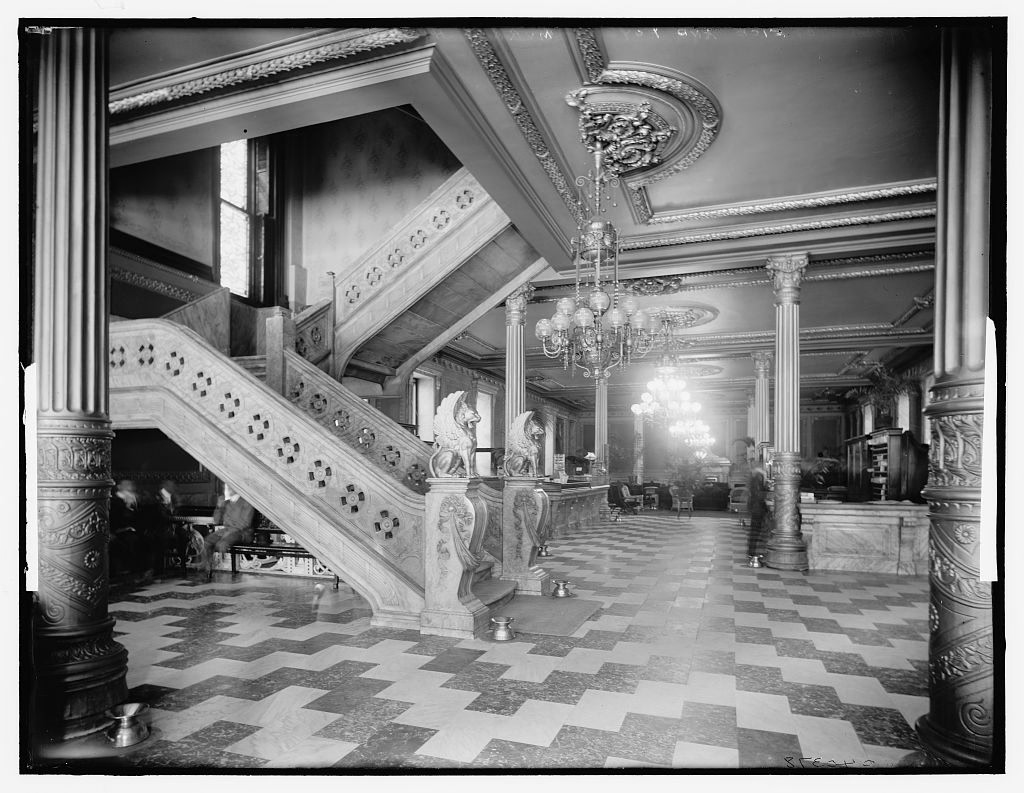
In these records the front desk is “the office.” The Library of Congress catalogs this Detroit Publishing photograph as “Office and foyer, Murray Hill Hotel” (Library of Congress), and the Coronado nomination lists the ground floor’s “lounge, smoke shop, toilet rooms, and registration offices.” The Biltmore nomination says “front desk,” but it’s describing the lobby as restored in 1986, not the words of 1926. Put a sign reading OFFICE over your check-in table.
Key Checks and Owney the Dog
The room key hung from a key check, a numbered tag. The Smithsonian’s National Postal Museum holds one from a hotel at Van Horne, Iowa: a brass “hotel room key token for room #33,” 3 3/4 by 2 9/16 inches, given during a stop on the Chicago, Milwaukee, and St. Paul Railroad line (Smithsonian). It belonged to Owney, the mail clerks’ dog and, in the museum’s words, “postal mascot,” who “was presented with more than one thousand baggage claim tags, hotel key checks, tokens, badges, coins, buttons and other trinkets.” On one trip around the world, the museum says, “he was sent by registered mail during part of this round-the-world journey, labeled as ‘Registered Dog Package’” (Smithsonian). Our place cards are printed at the height of Owney’s Iowa tag.
Dressing the House
The Office
This is the first thing guests see, so spend most of the decor budget here.
- The desk. A table across the entryway with a sign reading OFFICE, the register open to a fresh page, a pen, and a brass call bell. Every guest rings it on arrival.
- The board. A corkboard or a row of cup hooks behind the desk, with the key tags hanging from it in number order. The clerk hands each guest their key.
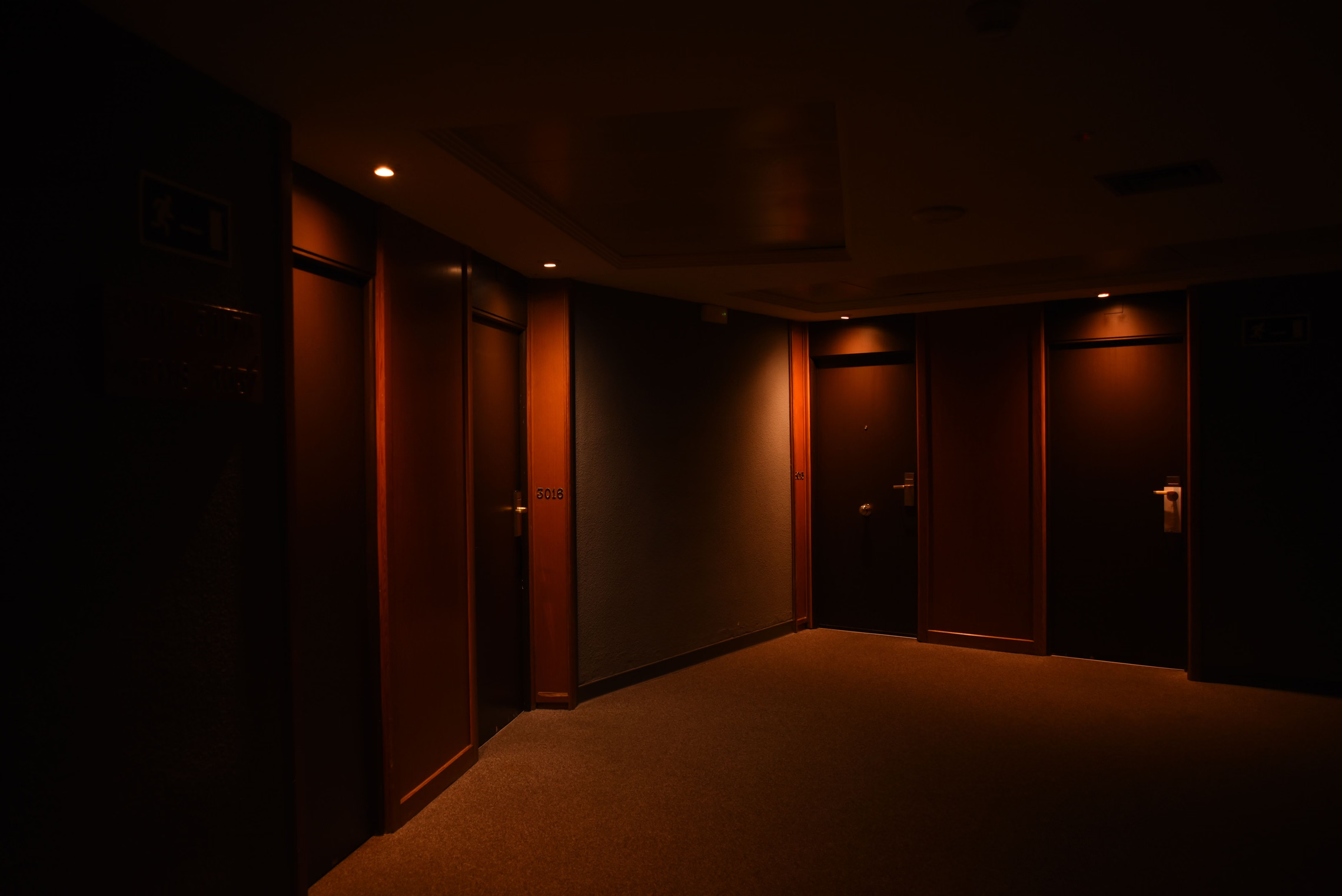
- The list. In M. R. James’s “Number 13” (1904), the Danish hotel posts its guests’ names “on a large blackboard, divided into columns and lines, the numbers of the rooms being painted in at the beginning of each line” (Project Gutenberg). If you have a chalkboard, write every guest’s name against a room number, and leave out 13.
- The floor. The Murray Hill photograph shows a two-tone checkerboard floor. A black-and-white runner under the desk gets you there (our suggestion, not the photograph’s).

The Metal Magician Solid Brass Victorian Style Service Desk Bell
A solid brass tap bell, 3 1/4 inches across and 3 inches tall, which the listing calls a reproduction of call bells of yesteryear. Loud enough to hear from the hall, and it goes back on a desk the next day.
BookFactory Visitors Register, Hardbound, 120 Pages
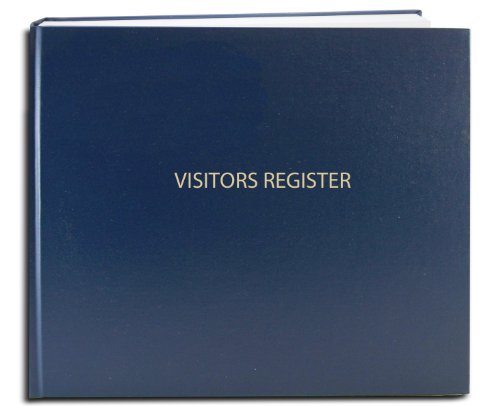
A hardbound, section-sewn register stamped VISITORS REGISTER that lies flat on the desk, with landscape pages 8 7/8 by 7 inches. Guests write the room number from their key tag in the Company column.
BookFactory’s own page for the register lists its columns as “DATE, NAME, COMPANY, PHONE, DEPARTMENT / PERSON VISITED, IN / OUT TIME.” Every guest fills in the IN time. Nobody fills in OUT.
For the tags, tie each printed key check to one of these skeleton key charms, which the listing sizes at 2.25 to 2.5 inches long, in a set of 30.
Wharton gives you a bell story for the desk. In “The Lady’s Maid’s Bell,” collected in The Descent of Man (1904), the maid wakes to find her own bell has rung in the night: “I looked at the bell against the wall, and there was the little hammer still quivering” (Project Gutenberg). That house has servants’ bells, not a hotel desk, but it’s a good line for whoever runs the Office to read out when the bell rings with nobody standing there.
The Lobby
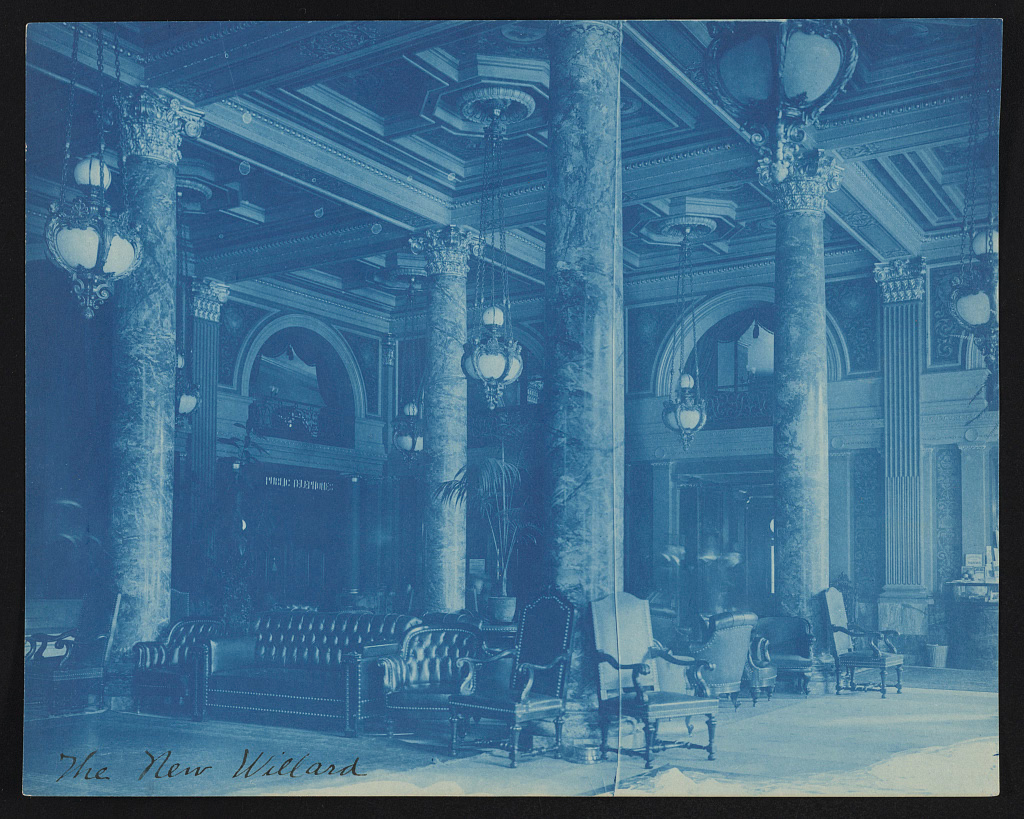
The Library of Congress holds this blue print of the Willard lobby by Frances Benjamin Johnston, dated to about 1904 “based on completion of the Willard Hotel” (Library of Congress). Its sofas and chairs are lined up along the columns, facing the room, and that’s the arrangement to copy: armchairs pushed back against the walls, a sofa or two under dust sheets, and borrowed potted palms in the corners.
Light it with candelabras and nothing else. That’s our choice, not the Coronado’s: the nomination says the gas pipes were there for when “electricity failed,” not candles. Every candle at this party is an LED, because capes, gowns and dust sheets are all over the house; our costume guide’s section on capes, gowns and candles explains why that combination is the one to avoid.

Peohud 5-Candle Metal Candelabra, 10 Inch
A bronze-finish, five-arm taper candelabra, about 10 inches tall, for tapers under 1 inch across. It's sold for real tapers; at this party it holds the LED ones below.

Homemory Black Flameless Taper Candles with Remote (6)
Black wax-shell LED tapers, 9.6 inches tall and 0.78 inches across, so they fit the candelabra's cups. Two remotes with a timer and dimmer; the listing says to keep them away from high heat.
The Hall
Tape a number to every door in the house: bedrooms, bathroom, linen closet, the door to the garage. Use every number but 13. Line the hall floor with LED tea lights, and hang a hand-lettered “Bath at end of hall” on the bathroom door, for Coronado’s 73 bathrooms among 399 rooms.
Dickens supplies the hall’s second joke. In “The Holly-Tree” (1855), his traveller arrives at an inn in the snow and is shown the largest room he has ever seen: “I asked for a smaller room, and they told me there was no smaller room” (Project Gutenberg). Put that on a card on the biggest door in the house.
Room 13
Pick one door with nothing behind it that matters, a closet or a pantry, and give it the number 13 in the same hand as the others. Put a single LED tea light on the floor inside and close the door.
This is James’s story. His narrator’s cousin, staying at the Golden Lion in Viborg, notices “the absence of any Number 13 from the tale of the rooms.” That night, coming back to his room, number 12, he tries the wrong door by mistake: “He glanced at the number: it was 13.” In the morning he goes back to look: “The next number to 14 was number 12, his own room. There was no Number 13 at all.” When he asks the landlord, the answer is: “My Number 13? Why, don’t I tell you that there isn’t such a thing in the house?” The landlord says his travelling guests “stick to it that it brings them bad luck” (Project Gutenberg).
The place cards follow the landlord’s board: no Room 13 in the run, and one extra Number 13 tag for an empty chair at the table.
The Ballroom
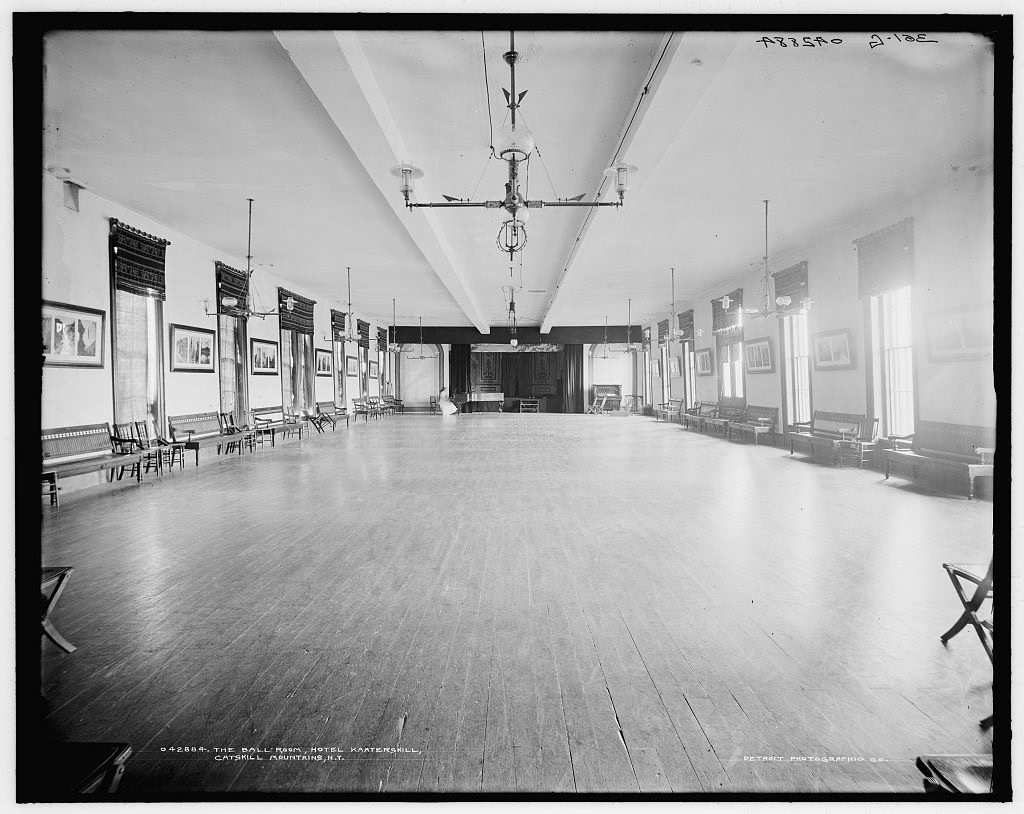
The Kaaterskill’s ballroom, photographed with its floor cleared and one figure seated at the far end (Library of Congress), is how to set yours: push every chair and bench against the walls, clear the floor, and hang a curtain or a sheet across one end as the stage. The Coronado’s rebuilt ballroom was pink and white; a single pink bulb in a lamp will do.
The ballroom’s rule comes from Poe. “The Masque of the Red Death” (1842) isn’t set in a hotel; it’s a prince’s masquerade in a sealed abbey. “There were buffoons, there were improvisatori, there were ballet-dancers, there were musicians, there was Beauty, there was wine” (Project Gutenberg). In the room with the ebony clock, “at each lapse of an hour, the musicians of the orchestra were constrained to pause, momentarily, in their performance, to harken to the sound.”
So the ballroom has a clock too. Every hour on the hour, stop the music and let a clock strike (our Sound Mixer can run a storm and a wind under the silence). Everyone freezes until it’s done. The Oldies playlist is dance music everyone knows; for a proper waltz between sets, our Vampire’s Ball has a waltz lesson you can borrow.
Room Service
Tonight’s Menu, 1919
Victor Hirtzler, “Former Chef of Hotel St. Francis” in San Francisco, published a hotel menu for every day of the year in The Hotel St. Francis Cook Book (copyright 1919), and wrote in his preface that the hotel business, “in America, now leads the world” (Project Gutenberg). Here is his dinner for October 31, exactly as printed:
Cream of cauliflower / Butterfish, saute meuniere / Shoulder of veal, au jus / Carrots, Vichy / Duchesse potatoes / Watercress salad / Roquefort cheese / Toasted crackers / Coffee
Copy it onto a card for the room-service table, the way Mount Washington’s print shop ran off its menus. The soup, the salad, the cheese and the coffee are easy to serve standing up. The fish and the veal need a plated dinner; if you want to do them, Hirtzler’s recipes are in the same book.
His cream of cauliflower is a plain one. Onion, a little leek and butter are softened, a cup of flour and the cauliflower stems go in with a quart of milk, and it’s strained and finished with a gill of cream, butter, salt and cayenne, with the florets boiled separately and added before serving. It’s a 1919 recipe with no modern test behind it, so taste as you go. A slow cooker can hold it through the evening, but check it with a thermometer: the FDA’s rule below is 140 °F or warmer, and not every warm setting gets there.
The Trays
Serve everything on small trays, the way room service would bring it, and swap full trays in instead of topping them up. That’s the FDA’s own buffet rule: “Prepare a number of small platters and dishes ahead of time, and replace the serving dishes with the fresh ones throughout the party,” and “don’t add new food to an already filled serving dish.” Hot food stays at “140 °F or warmer,” cold food at “40 °F or colder,” and anything perishable that has sat out more than 2 hours goes in the bin (FDA). Two rounds of room service, at 8:00 and 10:00, keep every tray inside that window.
- Waldorf salad. America’s Test Kitchen says the salad was “created in 1893 at New York’s Waldorf Hotel by legendary maître d’hôtel Oscar Tschirky.” Its Waldorf Salad uses three Granny Smith and three Gala or Braeburn apples, three celery ribs, toasted walnuts and golden raisins, dressed with mayonnaise, cider vinegar and honey, because “dressed with mayonnaise alone, the salad was gloppy and greasy.” It serves 4 to 6, so make three batches. Tschirky’s own version, in his 1896 The Cook Book, is two peeled raw apples and some celery, “cut them into small pieces” and mixed, and “the salad must be dressed with a good mayonnaise” (p. 433, Internet Archive). No walnuts. Hirtzler’s 1919 version is apple and celery under mayonnaise too.
- Parker House rolls. King Arthur’s Parker House Rolls are “a 19th-century staple of the Parker House, a famous Boston hotel.” One batch makes 16 at 350°F for 20 to 25 minutes, with potato flour or potato flakes in the dough. Split them and fill with sliced ham.
- The cheese board. Hirtzler’s Roquefort, toasted crackers and a bowl of watercress.
- Boston cream pie. King Arthur says “the original Boston Cream Pie, created at Boston’s Parker House hotel in the 19th century, featured sponge cake layered with cream and iced with vanilla and chocolate fondant,” and that its own Boston Cream Pie is “based, in fact, on a boxed mix from the 1950s!” Two 9-inch layers at 325°F. It’s filled with pastry cream, so it lives in the fridge until the 10:00 tray.
The book’s January 23 menu has an oyster cocktail, raw oysters in a glass set in ice. We left it off: a buffet is the wrong place for raw shellfish.
Allergens
The FDA’s nine major food allergens are “milk, eggs, fish, Crustacean shellfish, tree nuts, peanuts, wheat, soybeans, and sesame” (FDA). On this menu: the soup has milk, cream, butter and wheat flour; the Waldorf salad has walnuts and the egg in mayonnaise; the rolls and the pie are wheat, milk and egg; the Roquefort is milk and the crackers are usually wheat. Packaged ingredients can add more (chocolate syrup and dark chocolate often carry milk or soy), so check labels. Put a small card on each tray. For a guest who avoids tree nuts, make one batch of Waldorf salad without walnuts, the way Tschirky did, and make it first, with a clean bowl and board, before any walnuts come out.
The Bar
Fridge Door Manhattans
A room-service bar should need no bartender. America’s Test Kitchen’s Fridge Door Manhattans are made in a 1-liter glass bottle: 16 ounces of rye, 8 ounces of water, 6 ounces of sweet vermouth and 1/2 teaspoon of aromatic bitters, frozen until well chilled, about 2 hours. ATK says it keeps in the fridge “for up to 1 month” and needs 30 minutes back in the freezer before serving. Shake the bottle gently and pour into chilled glasses with a cherry. One bottle “makes 8 cocktails,” so make two for sixteen guests.
Do the math before the bottles go out. NIAAA counts one standard drink as “about 14 grams, or about 0.6 fluid ounces, of pure alcohol,” the amount in “a 1.5-ounce shot glass of distilled spirits at 40% alcohol by volume” (NIAAA). With 80-proof rye, a bottle holds 6.4 ounces of alcohol from the rye; sweet vermouth labeled around 16% adds about another ounce. That’s about 7.4 ounces, or roughly 12 standard drinks across 8 pours of about 3.75 ounces each: about 1.5 standard drinks per Manhattan. A 90-proof rye pushes it closer to 1.7. Check your own labels, pour small glasses, and put the count on the bottle’s tag.
The Raven, and Coffee
Keep a second bottle in the fridge door with no alcohol in it: The Raven from our cocktails and mocktails guide, cold brew, dark chocolate syrup, oat milk and a pinch of cinnamon, poured over ice. Label both bottles clearly. After supper, put out coffee; many of Hirtzler’s menus end with “Coffee” or “Demi tasse.”
Running the Evening
7:00 PM: Check-In
Send the Haunted Hotel invitation three weeks ahead. It’s a reservation confirmation, with Room No. “Assigned at the office” and Departure “Not required.” At the door, each guest rings the bell, signs the register and gets their key tag from the board. The clerk can greet them with Dickens: the traveller asks “What Inn is this?” and the answer is “The Holly-Tree, sir.” Swap in your own hotel’s name.
7:30 PM: The Bellboy’s Tour
Whoever plays the bellboy walks each group through the lobby and down the hall, pointing out the bath at the end of it, and leaves them in the ballroom.
8:00 PM: First Room Service
Soup, rolls, salad and cheese on small trays. The key tags go on the table or the backs of chairs, each tied to its key, and one place is set for Number 13 with nobody in it.
9:00 PM: The Ballroom
Music on, floor open. On the hour, the clock: stop the music and let it strike. Poe’s revellers, once the chimes stop, “made whispering vows, each to the other, that the next chiming of the clock should produce in them no similar emotion.” Then it happens again at 10:00.
10:00 PM: Second Room Service
Fresh trays out, old ones away, and the Boston cream pie.
11:00 PM: Room 13
The clerk announces that a guest in Room 13 has rung for service, and the landlord insists there’s no such room. Somebody has to go and find it. When they open the door, there’s one tea light on the floor and nothing else. Whoever came back first reads James’s line from the empty chair’s key tag: “There was no Number 13 at all.”
Midnight: The Last Dance
Poe’s midnight is the end of his masque: “there commenced the sounding of midnight upon the clock. And then the music ceased.” Play the last song, stop it for twelve strikes, and have the host read the story’s final line in the silence: “And Darkness and Decay and the Red Death held illimitable dominion over all.” Then the lights come up and, since nobody checks out, everyone stays for the coffee.
Costume Guide
The Staff
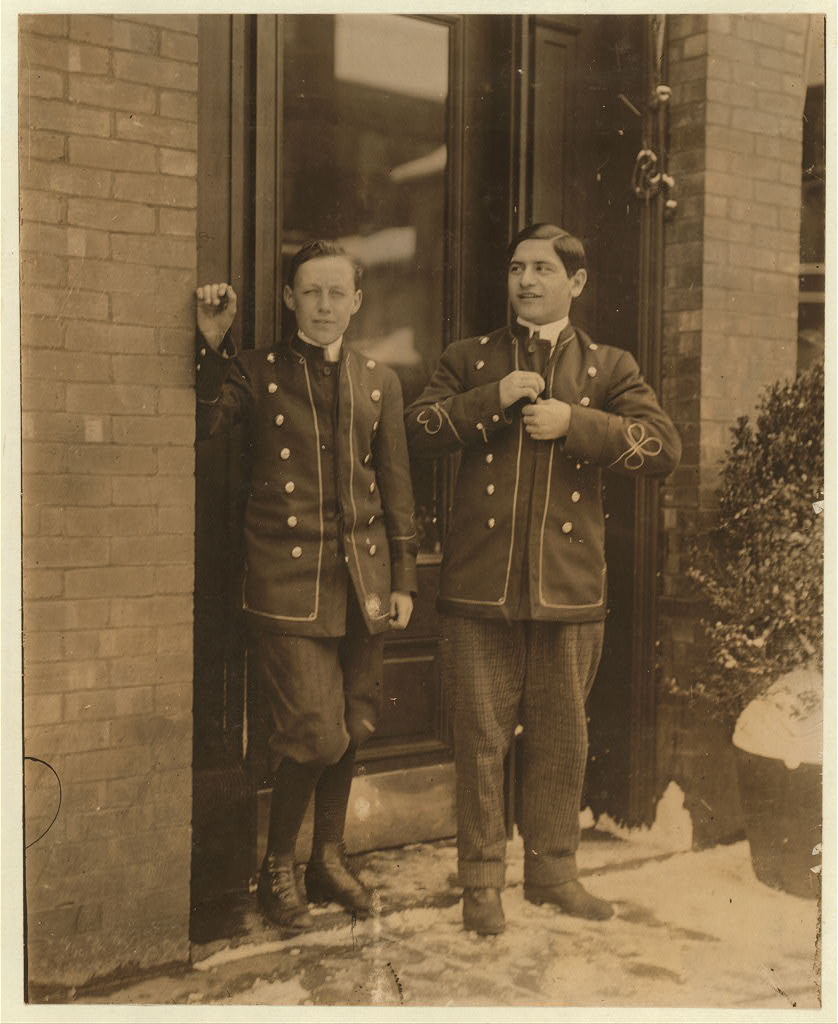
The bellboy costume comes from this photograph (Library of Congress). Both jackets are short and fitted, with a stand collar, light piping down the front edges, two vertical rows of round buttons, and looped braid on the cuffs of the one on the right. One wears knee breeches and dark stockings, the other long trousers. Neither wears a cap, so the pillbox hat is optional.
The caption is also the history lesson. The Library of Congress attributes the photograph to Lewis Hine, from the National Child Labor Committee’s files. The caption card gives no ages; both look young, and one looks close to adult. The card’s point is in its title: “work until midnight.” Dress as an adult on the hotel’s staff.
The closest costume we found is this Funmer 3-piece bellhop costume, which the listing describes as having “a sophisticated stand collar” and “gold piping along the front.” It isn’t the same jacket: the Funmer has one asymmetric row of buttons on a longer jacket, where Hine’s bellboys have two rows on a short one, and it has cuff stripes instead of braid. It’s a new listing with no customer reviews yet, and it comes with a cap the photograph doesn’t show. A short fitted jacket from your own closet with brass buttons sewn on is just as good.
For the rest of the staff: the desk clerk in a waistcoat and shirtsleeves, and a chambermaid or a room-service waiter with a tray and a folded napkin over the arm. Those are our suggestions, not a period source’s. For a full livery, the Metropolitan Museum’s Costume Institute holds a 1904 Brooks Brothers livery in wool and cotton (The Met) and a French one from 1905 to 1914 (The Met). Neither record has a photograph we can show, so treat them as proof that the uniforms existed rather than a pattern to copy.
The Guests
- The guest who never checked out. Evening clothes out of any decade you like, a little dust on the shoulders, and the key tag worn on a string.
- The 1920s guest. A silk evening dress. The same dress works at our Egyptian Tomb, 1922 party, where the Tut craze of 1923 is the dress code. The Met’s collection has a 1925 Madeleine Vionnet evening dress (The Met) and a 1926 to 1927 Edward Molyneux one (The Met), both silk.
- Poe’s masquers. A mask and a single colour: Poe’s seven rooms are blue, purple, green, orange, white, violet, and black with scarlet windows.
- The traveller. A heavy coat, a hat and a small trunk or a portmanteau, arriving late, like Dickens’s man at the Holly-Tree and James’s Mr Anderson at the Golden Lion.
Our adult costume guide has an Edgar Allan Poe build that fits the ballroom.
Roles, Not Peoples
A hotel party has staff roles, and they should stay roles. The Coronado was built by Chinese workers recruited through the Chinese Seven Companies; that belongs in the history section above, not in a costume. Dress as a job, never as a nationality or an ethnicity. The University of Utah’s costume guidance asks the right question for a period party: “What’s the historical context of this costume?” It’s also plain that “any costume depicting an entire ethnic group is offensive” (University of Utah).
Production Notes
Budget Breakdown: The bell, the register, the keys, a candelabra with LED tapers and a pack of tea lights come to about $105. Food for sixteen, the soup, three batches of Waldorf salad, rolls and ham, the cheese board and the pie, is about $130. Two bottles of rye, a bottle of sweet vermouth, bitters, cherries and the cold brew bottle add about $70. Cardstock for the printables is about $16. That’s a floor of about $325 with sheets, palms and door numbers from around the house. A bellhop costume, a second candelabra with its LED tapers, more tea lights, a hole punch and envelopes take it to about $450.
Advance Prep: Send invitations three weeks out. Print and cut the key tags the weekend before, and tie on the keys. Make the Manhattans up to a week ahead and keep them in the fridge; 30 minutes in the freezer before guests arrive. Bake the pie the day before. Make the Waldorf salad and the soup in the afternoon. Number the doors, and choose Room 13, before anyone arrives.
What to Skip: Real candles anywhere, including in the candelabra. Topping up a tray that’s been out since 8:00. Raw oysters on the buffet. Costumes of a nationality instead of a job. And “real haunted hotel” stories told as fact: the three landmark nominations quoted here don’t mention a ghost.