Music at a party is not background noise. It is the emotional score of the evening, and if you get it wrong (too loud, too quiet, wrong genre, same energy for 5 hours), your guests will feel it even if they cannot name the problem.
A good Halloween playlist is not a Spotify search for “Halloween party” and hitting shuffle. Those playlists are 200 tracks of Monster Mash, Thriller, and Ghostbusters on repeat, interleaved with random death metal that clears the room. You need a curated arc. If you are still in the planning stage, our party planning checklist includes a music timeline so you do not forget this step.
The Energy Arc
Your playlist should follow the emotional shape of the party. Think of it as a film score in three acts.
Act 1: Arrival (First 60-90 Minutes)
Low energy. Atmospheric. Guests are arriving in waves, finding drinks, complimenting costumes, and settling in. The music should create mood without competing for attention.
Target BPM: 80-110 Target Volume: Conversation-level. If you have to raise your voice to talk over the music, it is too loud for this phase.
What works here: Dark jazz (Miles Davis “Bitches Brew” era, Bohren & der Club of Gore), ambient electronica (Amon Tobin, Boards of Canada), Gothic folk (Chelsea Wolfe, Agnes Obel), film scores (the Suspiria soundtrack, anything by Ennio Morricone that skews dark).
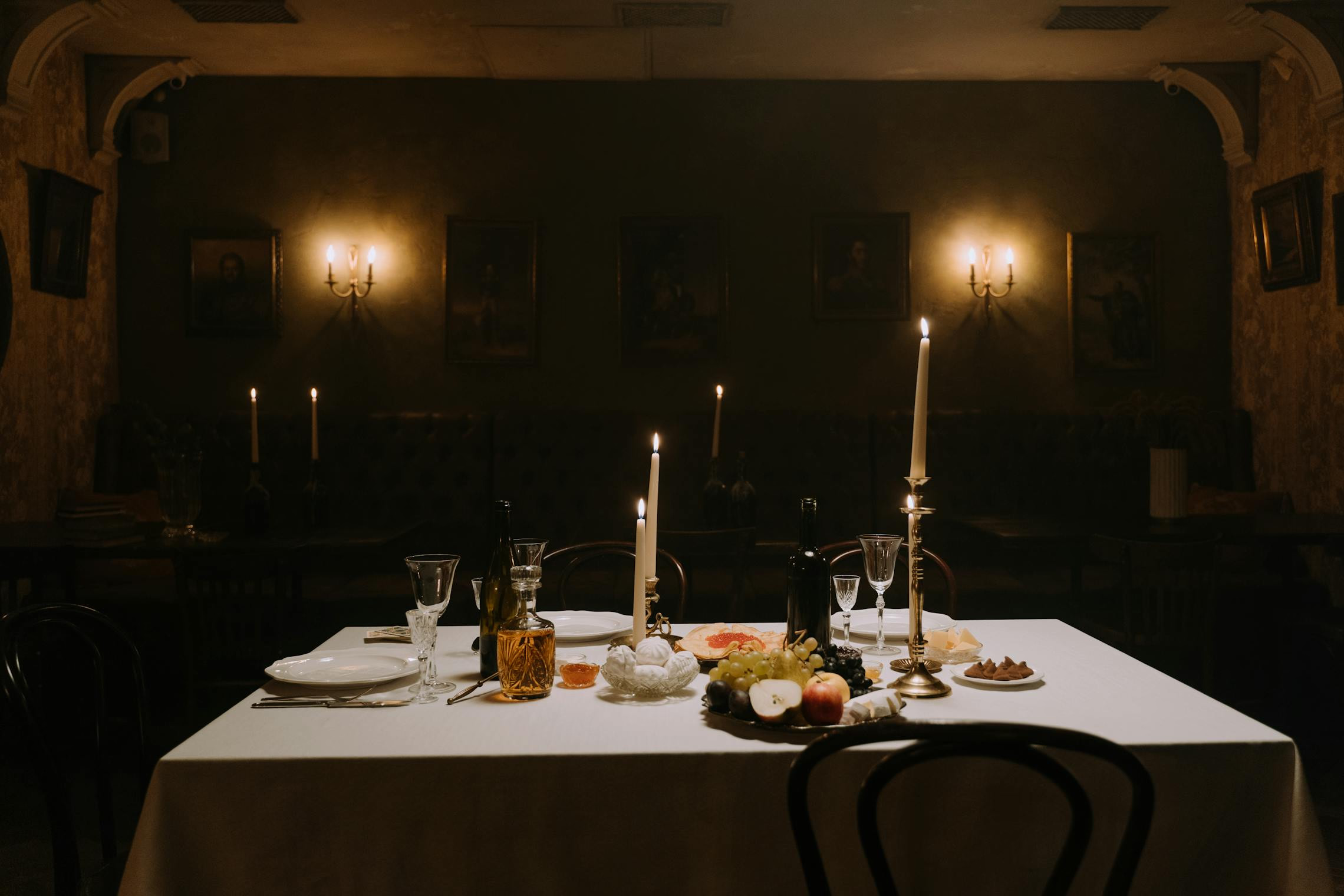
Do not start with Thriller. Do not start with the Monster Mash. Those songs have a place, and it is not when 4 of your 12 guests have arrived and are holding coats. For a dinner party arrival, pair this music with the atmosphere from our gothic tablescaping masterclass and let the mood build itself.
Act 2: Peak (2-3 Hours)
The party is at capacity. People are on their second or third drink. Conversations are louder. If there is dancing, this is when it starts. Ramp up gradually. Never jump from ambient jazz to full dance floor in one track.
Target BPM: 110-135 Target Volume: Loud enough to move to, quiet enough to shout a conversation.
What works here: Gothic rock and post-punk (Bauhaus, Siouxsie and the Banshees, The Cure), dark wave and synth (Carpenter Brut, Perturbator, John Carpenter’s Lost Themes), rock with Halloween energy (Black Sabbath, Blue Öyster Cult, Rob Zombie), and yes, the crowd-pleasers (Thriller, Superstition, Somebody’s Watching Me). Our rock playlist and pop playlist are built for this phase.
This is also where your one or two “everybody knows this” songs land. Thriller at 10 PM when the room is full? Perfect. Thriller at 7:15 PM when Dave is the only one here? Wasted.
Act 3: Wind-Down (Final 60-90 Minutes)
The crowd has thinned. The people still here are the inner circle, sprawled on couches, deep in conversation or watching a horror movie in the background. The music drops back down.
Target BPM: 70-100 Target Volume: Background. Barely noticeable.
What works here: Ambient soundscapes (Brian Eno, Stars of the Lid), dark folk (Nick Drake, Iron and Wine, Mazzy Star), minimal piano (Nils Frahm, Olafur Arnalds), or switch to a film score and let it play out.
Genre Mixing Strategy
The mistake most people make is building a playlist within one genre and hoping it works all night. It will not. A 5-hour goth-rock playlist exhausts the room by hour three.
The 60/30/10 Rule:
- 60% atmospheric and mid-energy. This is the backbone. Dark pop, Gothic rock, film scores, synth wave. Songs that maintain mood without demanding attention.
- 30% crowd-pleasers and high-energy peaks. The songs everyone knows, the bangers, the ones that make people point at each other across the room. Cluster these in Act 2.
- 10% deep cuts and surprises. A Screamin’ Jay Hawkins track nobody expected. An obscure Italian horror film theme. A haunting folk song in a language your guests do not speak. These are the moments that make your playlist feel curated rather than algorithmic.
Transition between genres by matching tempo and mood rather than genre. A slow Siouxsie song flows into a slow Nick Cave song flows into a moody Radiohead track. The listener does not notice the genre shift because the emotional temperature stayed constant.
Known Songs vs. Deep Cuts Ratio
There is a real tension here. Known songs create collective energy (when “Somebody’s Watching Me” comes on, the room lights up). Deep cuts create atmosphere and the feeling that this party is different from every other Halloween party.
For a casual house party (20+ guests, mixed friend groups): Lean 70% known, 30% deep cuts. Familiarity builds connection across social circles.
For an intimate dinner party (8-12 guests, close friends): Lean 40% known, 60% deep cuts. Your friends already feel connected. Surprise them.
For a themed event (murder mystery, Gothic gala): Lean 20% known, 80% atmospheric and obscure. The music is scenery, not entertainment. Our Vampire’s Ball and Haunted Victorian Seance blueprints include specific playlist recommendations matched to each theme.
Ambient Sound vs. Music
This is the overlooked layer that separates amateur from deliberate. Ambient sound (wind, thunder, creaking wood, distant wolves, dripping water) played underneath your music adds a cinematic dimension that music alone cannot achieve.
How to do it: Run your music playlist through your main speaker system. Run an ambient sound loop through a separate, smaller speaker placed in a different part of the room (or in a hallway, near the entrance, in the bathroom). The sounds should be barely perceptible, felt more than heard. For more on the science of layered audio, our sound design masterclass covers directional audio and syncing sound to scares.

ANCOON Portable Bluetooth Speaker (80W)
Waterproof party speaker with deep bass and 20-hour battery life. Use as your main music speaker while a smaller Bluetooth runs ambient sound in another room.
Our sound mixer lets you build custom ambient layers from 20+ atmospheric loops. Combine “distant thunder” with “fireplace crackle” and “old house creaks” for a haunted manor backdrop. Or “wind” with “wolf howl” and “church bell” for a Gothic countryside feel.
Do not combine ambient sound and music in the same speaker or at the same volume. The ambient layer should sit about 60-70% lower than the music.

JBL Go 3 Portable Mini Bluetooth Speaker
Palm-sized and IP67 rated, which is what matters for the ambient layer. Hide it in a hallway or bathroom corner to run wind and creaking underneath the main music.
Creating Transitions
If you are building a playlist manually (rather than using a pre-built one), pay attention to transitions. A jarring shift from a soft acoustic song to a loud industrial track breaks the immersion.
Three rules for good transitions:
- Never jump more than 20 BPM between consecutive songs.
- Match energy levels across genre boundaries. A mellow Cure song can follow a mellow Mazzy Star song despite being completely different genres.
- Use instrumental tracks as bridges between mood shifts. A 3-minute film score cue between the “dark jazz” phase and the “Gothic rock” phase smooths the transition.
If this sounds like too much work (fair), use crossfade. Set your playback app to a 6-8 second crossfade. It eliminates dead air between tracks and softens transitions automatically.

Remote-Controlled Horror Sound Machine
Pocket-sized sound effects player with 18 horror sounds. Hide it in a hallway or bathroom to add an ambient scare layer alongside your main music system.
Our Genre Playlists
We have built curated playlists for each major genre and energy level. Each one is designed as a complete 3-4 hour set with built-in energy management:
- Classic Horror — Iconic Halloween songs, from Screamin’ Jay Hawkins to Oingo Boingo
- Hard Rock — Black Sabbath to Ghost, for parties that want volume
- Pop Halloween — The crowd-pleasers, curated so you never hear Monster Mash three times in one night
- Electronic — Synth wave, dark wave, and retro horror scoring
- Hip-Hop — Dark beats and Halloween-adjacent energy
- Covers — Familiar songs in unfamiliar arrangements
- Originals — Tracks written for the season
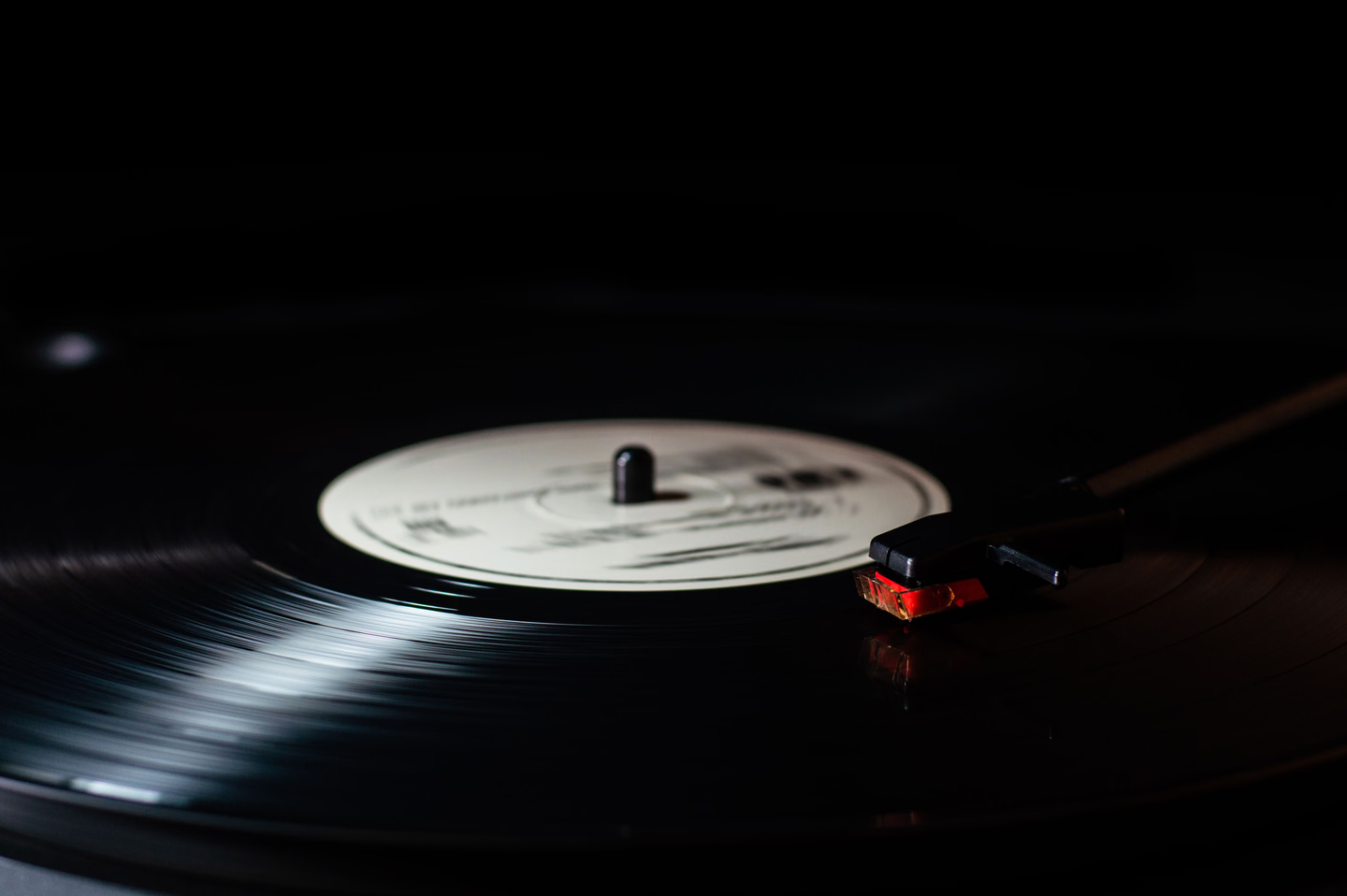
Use them as-is or as starting points for your own mix. If you’d rather drop a needle for the first hour, our essential Halloween vinyl guide covers 15 records, from Monster Mash to the Halloween score, and which pressing of each to buy.
Using the Playlist Builder
If you want to mix and match tracks across genres and build a custom energy arc, our playlist builder lets you drag songs between phases (arrival, peak, wind-down), preview track transitions, and export to Spotify.
The builder automatically suggests tempo-matched transitions and flags energy mismatches (a 140 BPM industrial track sandwiched between two ambient pieces, for instance). It is the fastest way to build a 5-hour playlist that actually flows.
Combine it with the sound mixer for the ambient layer, and you have a complete audio plan for your party that would take a DJ 3 hours to build manually. Pair great sound with great lighting and food presentation to complete the sensory experience. If you are working within a tight budget, our budget party guide proves you can score an entire evening for free with streaming services and our tools.