Fortune Teller's Parlor
A Halloween parlor built on the real fortune games: Burns' nuts in the fire and his three dishes, the Irish ring in the barmbrack, Dennison's Cup of Fate, a cartomancy table and a palmistry chair. The séance talks to the dead. This party tells the living who they'll marry.
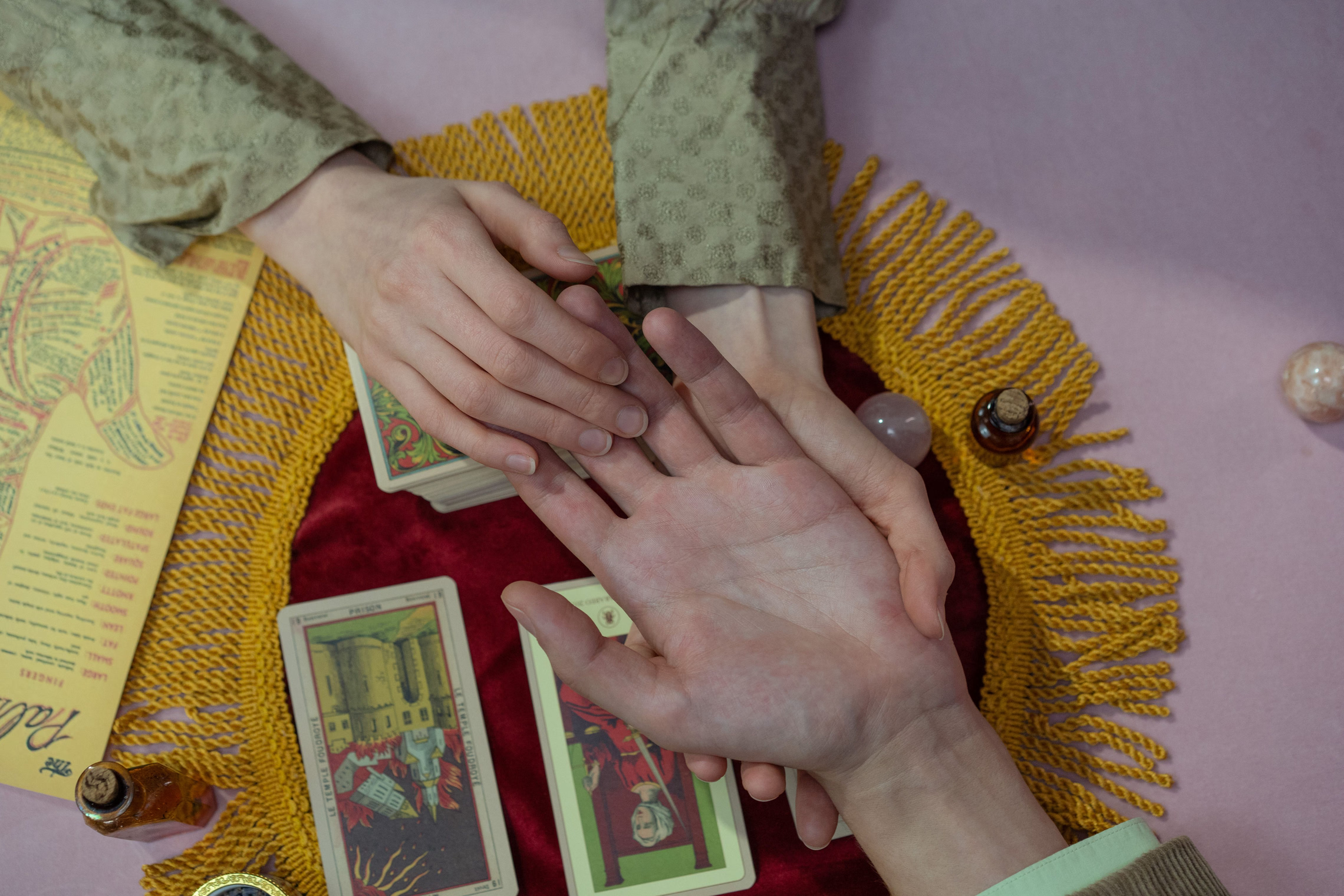
Decor Checklist
- Smith-Waite Centennial Tarot Deck Essential
Pamela Colman Smith's artwork, reissued by U.S. Games Systems, for the cartomancy table
Shop on Amazon → - Old Style Lenormand Deck Nice to have
A Lenormand deck from U.S. Games Systems, the cards named for the Paris cartomancer who is your host persona
Shop on Amazon → - Ceramic Palmistry Hand Optional
Glazed ceramic hand for the palmistry chair, so the reader has a chart to point at
Shop on Amazon → - Black Flameless Taper Candles (6, Remote and Timer) Essential
Real-wax LED tapers for every table that has velvet, fringe or a blindfolded guest near it
Shop on Amazon → - Burgundy Velvet Round Tablecloth (120 inch) Essential
Floor-length velvet for the reading table, a warmer color than the séance's black
Shop on Amazon → - Porcelain Tea Set, Floral with Gold Rim (22 Pieces) Nice to have
Teapot, six cups and saucers, sugar and creamer; for 12 guests, get two sets or add mismatched cups
Shop on Amazon → - Party Blindfolds (25 Pack) Essential
For the three luggies, the Cup of Fate and the four saucers
Shop on Amazon → - Wooden Spinning Tops (10 Pack) Nice to have
Spun on Dennison's Web of Fate
Shop on Amazon → - Wine Red Fringe Lamp Shade Optional
Scalloped fringe shade for a table lamp by the palmistry chair; LED bulb only
Shop on Amazon →
Menu
Playlist
Listen on Hallowmix →
Costumes
Host
- Paris cartomancer: an Empire-era gown or a dark coat, a shawl, a deck in hand and a ledger of clients' fates
- Victorian palmist: frock coat, magnifying glass, a printed hand chart tucked in a pocket
- Hostess of the hearth: apron, shawl and the basket of nuts, running Burns' games
Guests
- Dennison's professions: doctor, lawyer, dentist, farmer or banker, the jobs the 1920s fortune game handed out for future spouses
- The kail-yard couple: work clothes, a root of kale with the soil still on it
- A client of Lenormand's: a gown or tailcoat and a question sealed in an envelope
- Your own fate: the ring, the coin or the button, worn as a brooch or a pin
Party Timeline
- 7:00 PM: Guests arrive. Place cards deal each guest a fate. Tea is poured and the first whisky is on offer.
- 7:30 PM: Stations open: the dish table, the Web of Fate, the cartomancy table, the palmistry chair.
- 8:15 PM: The kail stocks (away from the fire), then the nuts in the fire, run by the hostess of the hearth.
- 9:00 PM: Supper. Colcannon and brack come to the table with the charms announced before anyone eats.
- 9:45 PM: The apple hour: peels over the left shoulder, the apple at the glass, the Fortunes pumpkin.
- 10:30 PM: A Calendar of Events, read aloud by the host.
- 11:00 PM: Evening ends.
Shopping List
- Smith-Waite tarot deck
- Lenormand deck
- Ceramic palmistry hand
- 6 LED taper candles with remote
- Burgundy velvet tablecloth
- Tea set, black tea, herbal tea, lemons, milk
- Blindfolds (at least 3)
- Wooden spinning tops
- Orange poster board and a black marker for the Web of Fate
- A small pumpkin and card stock for the Fortunes game
- 3 mixing bowls for the luggies, 3 cups for the Cup of Fate
- Milk, white vinegar
- 2 potted kale plants from a garden center
- Hazelnuts in the shell (1 lb)
- Potatoes (3 lb), kale (1 lb), scallions, butter, milk, eggs, flour
- Barmbrack (bakery or homemade)
- Rolled oats for porridge
- Apples (1 dozen) and a paring knife
- Scotch whisky (750ml), honey
- Apple cider (1 gallon), mulling spices
- Fortune Teller invitations and place cards (free printables)
The Premise
The Haunted Victorian Seance contacts the dead. This party asks the other Halloween question: who will you marry, and will you have any money? Nearly every old Halloween game was built to answer it. The 13th annual edition of Dennison’s Bogie Book, a party booklet from the Dennison Manufacturing Company, says the night’s customs and superstitions “are almost all connected in some way with future wedded bliss or material welfare” (Dennison’s Bogie Book, Library of Congress). The edition refers to its 1924 predecessor as last year’s, which dates it to 1925.
So the evening runs on the actual games, from Robert Burns’ west of Scotland to 1930s Ireland to the American party booklets, plus two parlor tables: cards and palms. There’s no Ouija board, no table tipping, no mourning black. The mood is flirtatious and a little ominous, because some of the old fortunes were grim.
How old are these games? Old enough, and less ancient than the usual Halloween copy claims. Smithsonian Magazine points out that “there’s no historical evidence about what actually went on during early celebrations” of Samhain (Smithsonian, 2016). Lisa Morton writes that nut divination “probably stems more from Celtic beliefs” (Morton, Halloween Encyclopedia). The first dated Halloween colcannon is a Welsh traveler’s 1735 diary entry in Dublin (below), and the games themselves are first set down in detail in Burns’ poem of 1785 and 1786. How much further back they go is still argued.
Setting the Parlor
The Room
Use one room with a fireplace if you have one, because the nut game needs a real fire. Put the reading table in the darkest corner under the velvet, and set a second table for the dishes on the far side of the room from the fireplace. Burns led his blindfolded players to the hearth; yours stay well away from it, because every blindfolded game in this plan (the kail, the luggies, the saucers, the Cup of Fate) is played at that table or in the hallway, never near the fire. The palmistry chair goes wherever the best lamp is, because palm lines disappear in candlelight.
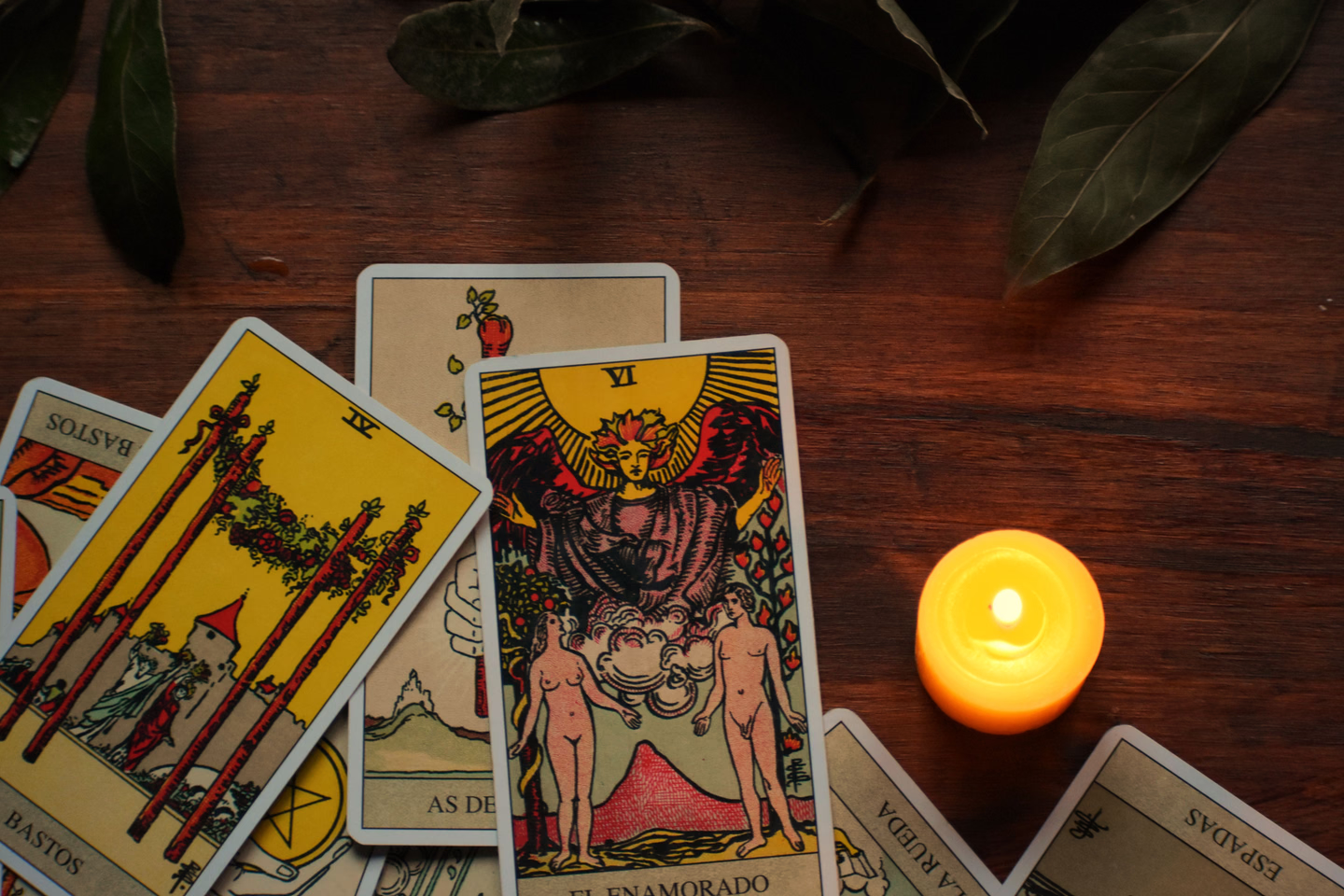
Lighting and Fire Safety
Velvet, fringe, shawls and blindfolded guests don’t mix with open flame. The U.S. Fire Administration’s rule is to “keep candles at least 12 inches away from anything that burns,” and it suggests “battery-operated flameless candles, which can look, smell and feel like real candles” (USFA). The CPSC adds that “costumes with loose, flowing fabrics can also be a fire hazard when close to open flames” (CPSC, 2023).
The Irish record has a cautionary example. A 1930s schoolchild in Kilkenny described snap apple played on two crossed laths, apples on one, lighted candles on the other, spun from the ceiling while players with their hands tied bite at it, and noted that “it is often one of the candles they catch instead of an apple” (dúchas.ie, Naomh Pádraig, Co. Kilkenny). Every candle in this parlor is LED. The only live flame is the fireplace, behind its screen.

Homemory Black Flameless Taper Candles (6 Pack)
Real black wax with a flickering LED flame, remote and 2 to 8 hour timer. Six 9.6-inch tapers cover the reading table, the hearth table and the mantel.
A fringed lamp shade over an LED bulb gives the palmistry chair real reading light with parlor looks. For more on layering dim light, see our Halloween Lighting Guide.
Sound and Music
The Oldies playlist is the soundtrack, not the séance’s classical Originals. This party is flirtatious and loud around the hearth, and the Oldies list already has the right subjects: “Witchcraft,” “Superstition,” “Black Magic Woman,” “Bad Moon Rising.” Keep it low during readings. For the space between songs, our Sound Mixer can run a crackling fire under everything.
The Stations
Burns’ Indoor Charms
Robert Burns wrote “Halloween” in 1785 and published it in 1786 in Poems, Chiefly in the Scottish Dialect, printed by John Wilson of Kilmarnock on 31 July 1786 (Robert Burns Birthplace Museum). He added notes to explain “the principal charms and spells of that night, so big with prophecy to the peasantry in the west of Scotland.” The quotations below come from those notes in Currie’s 1843 American edition of Burns, digitized by the Library of Congress (Library of Congress, pp. 34 to 44).
Most of Burns’ charms happen in barns, kilns and streams. Four work in a parlor.
The kail stocks. “The first ceremony of Halloween is, pulling each a stock, or plant of kail. They must go out, hand in hand, with eyes shut, and pull the first they meet with. Its being big or little, straight or crooked, is prophetic of the size and shape of the grand object of all their spells,” meaning the husband or wife. “If any yird, or earth, stick to the root, that is tocher, or fortune; and the taste of the custock, that is, the heart of the stem, is indicative of the natural temper and disposition.” Buy two potted kale plants from a garden center so there’s soil on the roots, blindfold the couples and let them pull. Skip the taste test with nursery plants, which weren’t grown for eating. Burns then has the stems hung “above the head of the door,” and the names of the first people through the door are the names in question. Hang them over the parlor door and announce the next arrivals.
The nuts in the fire. “Burning the nuts is a famous charm. They name the lad and lass to each particular nut, as they lay them in the fire, and accordingly as they burn quietly together, or start from beside one another, the course and issue of the courtship will be.” Lisa Morton records a rhyme to say over them: “If you hate me spit and fly; / If you love me burn away” (Morton). Play this only in a working fireplace. Burns’ own nuts “jump out-owre the chimlie,” so keep the screen closed between throws. Hazelnuts are tree nuts, one of the nine major allergens the FDA lists (FDA); ask about allergies before the basket comes out.
The three luggies. This is the best party game in the poem. “Take three dishes: put clean water in one, foul water in another, leave the third empty: blindfold a person, and lead him to the hearth where the dishes are ranged: he (or she) dips the left hand: if by chance in the clean water, the future husband or wife will come to the bar of matrimony a maid: if in the foul, a widow: if in the empty dish, it foretells with equal certainty, no marriage at all. It is repeated three times; and every time the arrangement of the dishes is altered.” The poem’s victim is Auld Uncle John, who “gat the toom dish thrice” and “heav’d them on the fire / In wrath that night.” Use three mixing bowls on the dish table, not the hearth; “foul” water can be tea.
The apple at the glass. “Take a candle, and go alone to a looking-glass; eat an apple before it, and some traditions say, you should comb your hair all the time; the face of your conjugal companion to be will be seen in the glass, as if peeping over your shoulder.” Morton gives the same charm at midnight, “eating an apple and brushing one’s hair” (Morton, Halloween trivia). Hang a mirror in a dim hallway, give each guest an LED candle and an apple, and have someone else step up quietly behind them.
The Saucers: Ireland
The Irish Folklore Commission’s Schools’ Collection, written down by schoolchildren in the 1930s and online at dúchas.ie, has its own versions of the luggies.
- The four saucers (Cúige, Co. Mayo). “They get four saucers and put into them, clay, water, a ring, and a Rosary Beads respectively.” A blindfolded player touches one. The ring means marrying first, the water means going across water, the rosary means becoming a nun or religious, and the clay means being “the first to die” (dúchas.ie). Warn guests that one saucer is a death.
- The ring in the water (Kilkenny). “If a person puts his or her hand in the saucer with the ring in it, it is believed to be a sign that that person will be married before the next Halloween” (dúchas.ie).
The Party-Book Table: Dennison’s Games
The Bogie Book turned the old charms into games a hostess could set up on a card table (Library of Congress).
- The Cup of Fate. Three cups: water, milk and vinegar. Each guest, blindfolded, dips a finger in the first one touched. “If it contains milk married life will be happy, if vinegar one’s future wife or husband will have a sour disposition, and if the cup contains water single blessedness is in store.” Move the cups before each turn. Run it next to Burns’ luggies so guests can compare.
- Spinning the Web of Fate. “Draw a large spider web on a sheet of orange mat stock. Write fortunes in the different sections. Let each guest spin a top on the web. When it stops his fate stands revealed.” Orange poster board and a marker will do.
- Fortunes. Hollow out a small pumpkin and fill it with numbered cards or cut-outs. Each guest draws one and the hostess “will read a fortune from a numbered list that has been prepared beforehand.” Write the list yourself, and make it specific to the people in the room.
- The Matrimonial Race. Carry “a spoonful of small round candies in one hand and a potato balanced on a knife blade in the other” across the room. “The winner of this race will be the first of the company to be married.” Use a butter knife.
The same book has a fortune game written in baking soda on paper and revealed by holding it over a lit candle, passed guest to guest in a darkened room. In a parlor full of velvet, skip that one.
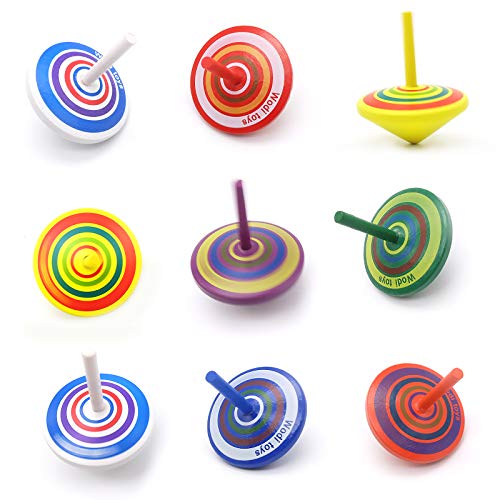
10-Piece Wooden Spinning Tops Set
Small painted tops, about 1.8 inches, that spin for a minute or more on poster board. Enough for the Web of Fate with spares to send home.

Party Blindfolds (25 Pack)
Black padded eye masks with adjustable straps. The luggies, the Cup of Fate and the four saucers all need a blindfold, and a clean one per guest is easier than sharing.
The Cartomancy Table
Tarot started as a game, not an oracle. Smithsonian Magazine’s history of the cards says the earliest deck “may have been used for little more than a courtly card game, an exquisite plaything for the super-rich.” In 1770 Jean-Baptiste Alliette, known as Etteilla, published How to Entertain Yourself With a Deck of Cards, “one of the world’s first guides to cartomancy.” Then Antoine Court de Gébelin, in Le Monde Primitif (1773 to 1782), claimed the cards were ancient and Egyptian. The magazine calls it an “entirely speculative account” that “forever tied the origin myth of tarot with the stereotype of ‘Gypsy’ fortune-tellers.” Egil Asprem of Stockholm University, who studies the Roma in the history of European magic, puts it flatly: “There is absolutely no evidence for Roma in the origin of tarot cards, or for any significant role in their spread” (Smithsonian, 2025).
Put that on a card at the table.
The host persona is French too. JSTOR Daily tells how Marie Anne Lenormand ran away from convent school at 14 in 1786, learned cartomancy, and spent 40 years reading cards in Paris for clients including Joséphine de Beauharnais, Robespierre and Marat. Lady Shelley wrote that in describing her character and past life, Lenormand was “so accurate and so successful, even to minute particulars, that I was spellbound” (JSTOR Daily). The Lenormand decks sold today carry her name.
You don’t need to know how to read. Deal three cards, read the guidebook’s lines aloud with confidence, and pause often.

Smith-Waite Centennial Tarot Deck
U.S. Games Systems' reissue of Pamela Colman Smith's artwork. Every card, minor ones included, has a picture, which makes it easy to improvise a reading from what's on the table.

Old Style Lenormand
A Lenormand deck from U.S. Games Systems. Simpler pictures than tarot (a ship, a house, a ring), so guests can read each other's cards within a few minutes.
The Palmistry Chair
Smithsonian Magazine notes that palmistry “is well known as a fairground amusement, but serious forms of this divination technique exist in many cultures.” Its parlor star was Edward Heron-Allen, who read Oscar Wilde’s palms and “published a sketch of Wilde’s hands, explaining that his palms indicated ‘extraordinary brain power’ and a ‘great power of expression’” (Smithsonian, 2025). Sit the reader under the fringed lamp with the ceramic hand as a chart, and flatter everyone the way Heron-Allen flattered Wilde.
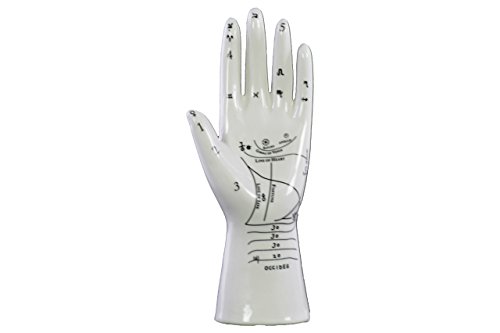
Urban Trends Ceramic Palmistry Hand
Glazed ceramic hand for the reading chair. Optional: buyer reviews are mixed, and a printed palm chart does the same job for free.
Tea-leaf reading also belongs in a parlor with a teapot. If a guest knows how, let them read the dregs. We couldn’t find a source we trust on its history, so we won’t give one.
The Menu
Colcannon and the 1735 Diary
Colcannon is the oldest dated dish here. Smithsonian Magazine quotes the 1735 diary of William Bulkely, a Welsh traveler in Dublin on Halloween, eating “what they call there Coel Callen, which is cabbage boiled, potatoes and parsnips, all this mixed together. They eat well enough, and is a Dish always had in this Kingdom on this night” (Smithsonian, 2018).
The same article gives two recipes. Dr. Máirtín Mac Con Iomaire’s kale colcannon uses 2 pounds floury potatoes, 1 pound chopped kale, 4 scallions, 1/2 cup butter and 1 cup milk. Chef Noel McMeel’s colcannon cakes use 1 pound potatoes, 5 tablespoons butter, 1/3 pound spring cabbage or curly kale, a beaten egg and 3 tablespoons flour, and they’re easier to eat standing up.
The charms hidden in colcannon changed from place to place, and the sources disagree:
- Smithsonian (2018): “A coin meant wealth in the coming year, a rag meant poverty and a stick meant your spouse was going to beat you.” The article adds that the trinkets and their meanings “varied by area.”
- Smithsonian (2016): “Finding a ring in the dish could mean that you’ll be married within the year, while a button might brand you a lifelong bachelor.” It lists a thimble among the charms without giving its meaning (Smithsonian, 2016).
- Lisa Morton: her “callcannon” has a ring, and finding it means marriage within a year “or receive good luck” (Morton).
Barmbrack
Barmbrack is the other charm food. In Blarney, Co. Cork, the brack was cut at teatime and “each member of the family takes a slice,” and “whoever gets the ring is sure to get married within the next twelve months.” That account lists a pea, a bean, a stick and a rag in the brack as well, without saying what they meant (dúchas.ie, Colthurst, Co. Cork). In Clongorey, Co. Kildare, the mother got “a good big barm brack” with a ring hidden inside (dúchas.ie).
The Charms Rule
Don’t hide anything hard in food unless every guest has been told before the first bite. The FDA’s compliance policy on hard foreign objects in food says objects “that are less than 7 mm, maximum dimension, rarely cause trauma or serious injury” except in risk groups, treats objects of 7 mm to 25 mm in ready-to-eat food as grounds for action, and names “laceration and perforation of tissues of the mouth, tongue, throat, stomach and intestine as well as damage to the teeth and gums” (FDA CPG Sec. 555.425). That’s a rule for food companies, not home kitchens, but a ring or a coin sits right in that range.
The safer version keeps the fate and loses the tooth risk. Our free Fortune Teller place cards deal the ring, the coin, the button and Burns’ three dishes on the card itself. Or tuck a large wrapped token under one plate. If you do bake a charm in, announce it at the table, wrap it in parchment and keep it big enough to notice.
Allergens are the other check. The brack carries wheat, eggs and milk, the colcannon milk, the colcannon cakes milk, egg and wheat flour, and the nut game tree nuts, all on the FDA’s list of nine major allergens (FDA). Put a small card by each dish.
Sowens and the Social Glass
Burns ends the poem at supper: “Till butter’d so’ns wi’ fragrant lunt, / Set a’ their gabs a-steerin’; / Syne, wi’ a social glass o’ strunt, / They parted aff careerin’.” The 1843 edition glosses sowens as “oatmeal made into a kind of pudding. This is always the Halloween supper,” and strunt as “spirituous liquor” (Library of Congress, p. 44). A small pot of buttered oat porridge honors it, and the whisky is your social glass. Pour 1.5 ounces: NIAAA counts a 1.5 fl oz shot of 40% spirits as one standard drink, “about 14 grams, or about 0.6 fluid ounces, of pure alcohol” (NIAAA).
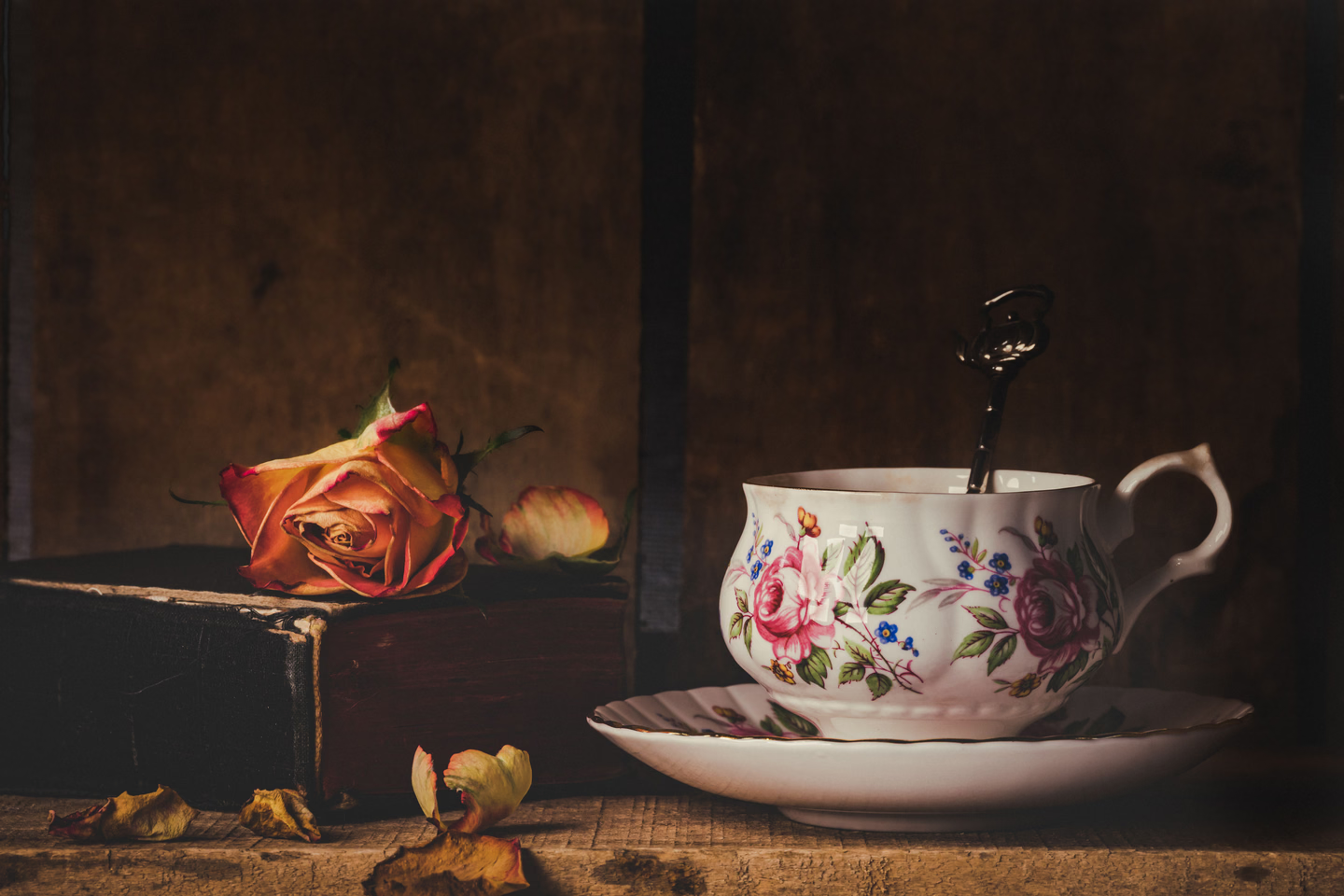
Keep the tea hot all evening with a caffeine-free option and a pot of mulled cider beside it. For a cocktail, the Harvest Moon (an apple cider Old Fashioned) from our cocktails and mocktails guide fits the harvest table, and the same guide has a full mocktail menu for the non-drinkers. A hot toddy covers anyone who wants the whisky warm.

Sweejar Porcelain Tea Set, 22 Pieces
Floral porcelain with a gold rim: a 29 oz teapot, six cups and saucers, spoons, sugar bowl and creamer. Hand wash only because of the gold trim. Six cups serve half of 12 guests, so buy two sets or fill in with mismatched cups.
Running the Evening
7:00 PM: Arrival
Each guest finds a place card with a fate on it. Don’t explain it yet. Pour tea or whisky and let people wander the stations.
7:30 PM: Stations
Staff the dish table and the cartomancy table. The Web of Fate and the pumpkin can run themselves with a card of instructions. Keep a clean blindfold for every turn.
8:15 PM: Kail and Nuts
Pull the kail first, blindfolded, at the dish table or in the hallway, and hang the stems over the door. Then take the blindfolds off and gather everyone at the fire to name and lay the nuts two by two. Announce every pair out loud.
9:00 PM: Supper
Bring out the colcannon and cut the brack at the table. Explain the charms and the place cards before anyone eats, then have each guest read their fate aloud.
9:45 PM: The Apple Hour
Apples go round with paring knives. The Bogie Book says to “peel apples in one continuous piece and throw the peelings over their left shoulders so that they may fall on the floor to form the initials of the future mate.” JSTOR Daily agrees on the initials (JSTOR Daily). Smithsonian’s version is different: the longer the unbroken peel, the longer your life (Smithsonian, 2016). Play both and let the peel decide which rule counts. Volunteers take their apple and LED candle to the mirror in the hall.
10:30 PM: A Calendar of Events
End with Dennison’s closer. Hand out papers with the twelve months down the side. Each guest signs, folds the name under and passes right. Then, in the book’s words, “opposite ‘January’ each is to write what he would like to do during the coming January”; fold, pass, and carry on through December. Unfolded, each list lands on someone else’s name, and “the hostess will read what each one will do during the coming year.” It’s the one fortune at the party the guests write themselves.
Costume Guide
Dress as a profession, never as a people. The stock “gypsy fortune teller” (headscarf, hoops, turban, an exotic stage name and an accent) is built on a slur and a made-up history. The University of Utah’s costume guidance says it plainly: “The name ‘Gypsy’ is a racial slur given to the Romani people in Europe. This group of people was persecuted because they were a minority” (University of Utah). And as the cartomancy table explains, the link between Roma and fortune cards is Court de Gébelin’s 18th-century invention.
The real history hands you better characters. The host can be a Paris cartomancer in Lenormand’s mold, a Victorian palmist with a hand chart in the style of Heron-Allen, or the hostess of the hearth running Burns’ games. Guests can come as one of the professions Dennison’s fortune game handed out, a kail-yard couple, or a client carrying a sealed question. Our adult costume guide has more on choosing costumes that don’t borrow someone else’s culture.
Send the free Fortune Teller invitation, drawn as a tarot card with the Web of Fate and Burns’ three luggies, and put the costume brief on it.
Production Notes
Budget Breakdown: The essentials (tarot deck, LED tapers, velvet cloth and blindfolds) come to about $80. Everything else on the decor list, including two tea sets for 12, the Lenormand deck, the tops, the lamp shade and the optional palmistry hand, adds about $250, and most of it gets used again. Food for 12 is cheap: potatoes, kale, a brack and a bag of hazelnuts, around $50. The whisky is the big variable. That puts the night between about $150 with your own cups and a modest bottle and $450 with every item on the list.
Advance Prep: Send invitations three weeks out. Print the place cards and write the Fortunes list a few days before, with fortunes specific to your guests. Make the colcannon cakes the day before and fry them to order. Buy the kale plants the week of the party and keep them watered.
What to Skip: The crystal ball (the séance and the Midnight Carnival already own it). Any open flame near a blindfolded guest. The baking-soda-over-candle game. Hiding charms in food without telling people.
For more games to fill the night, see our party games guide, and for the older history behind the nuts and apples, Hallowtide: How the Church Shaped Halloween. The American side of the same harvest night, with apples roasting on the hearth and ghost stories instead of fortunes, is our Sleepy Hollow Harvest, built from the party in Washington Irving’s tale. For a bigger crowd, the cartomancy table can become one stall of The Midnight Market, where every guest runs a stall and pays in scrip.