Period Epitaph Tombstones
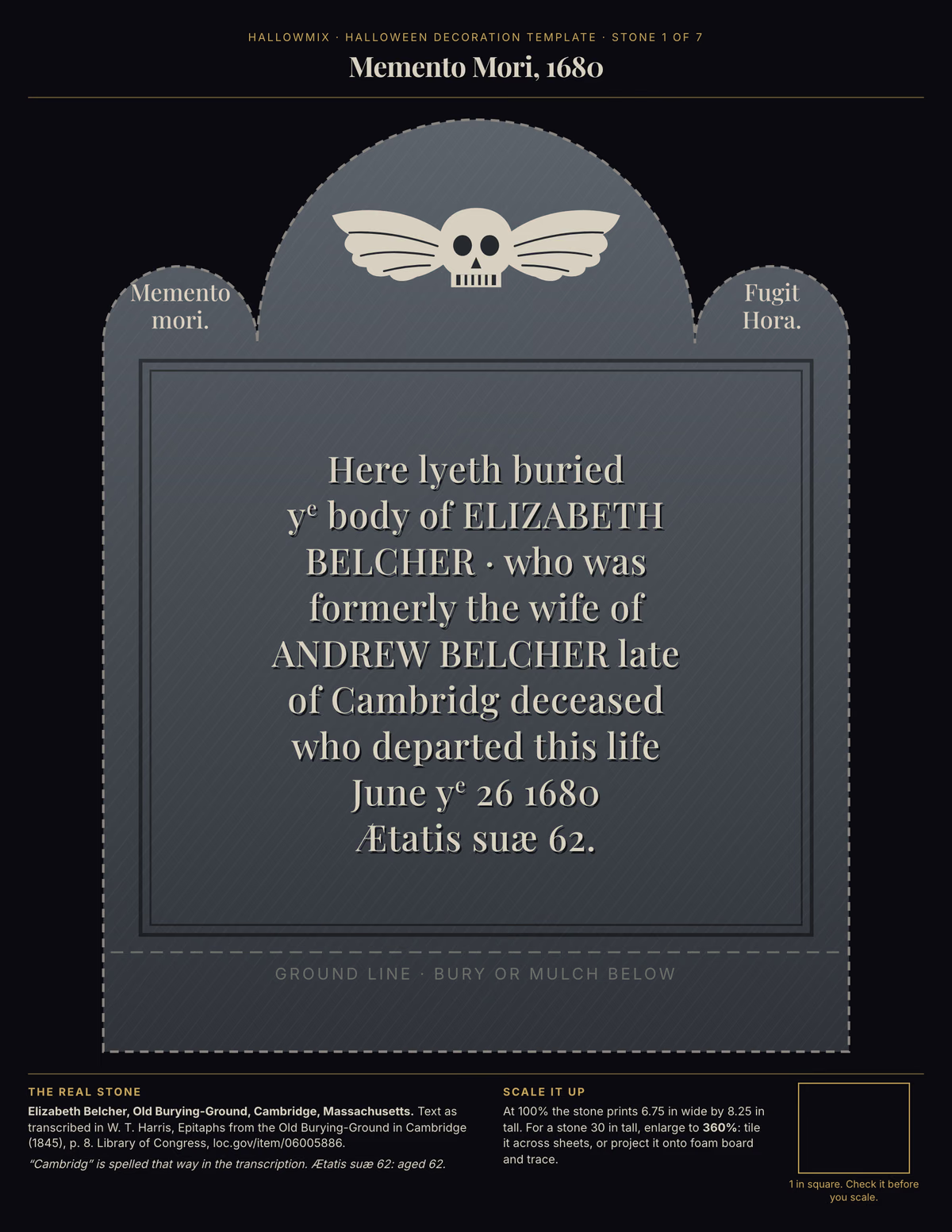
7 printable Halloween tombstone templates lettered with real colonial New England epitaphs from 1680 to 1831, on period stone shapes. Letter and tabloid PDFs.
Download Files
What You'll Need To Use This
-

Golden State Art Black Foam Board, 20 x 30 In, 3/16 In, 5-Pack
A 20 x 30 sheet takes a stone enlarged to about 250%. Cut it with a fresh utility blade.
$39.95 Price as of Sep 27, 2026
View on Amazon: Golden State Art Black Foam Board, 20 x 30 In, 3/16 In, 5-Pack -

Heavy Duty Metal H-Frame Yard Sign Stakes, 10 x 30 In, 5-Pack
Tape or glue a stake to the back below the ground line, where the mulch hides it.
$16.97 Price as of Sep 27, 2026
View on Amazon: Heavy Duty Metal H-Frame Yard Sign Stakes, 10 x 30 In, 5-Pack -

PSLER Graphite Transfer Paper, 100 Sheets with 3 Styluses
Slip it under the print and go over each letter with the stylus. The long s and the raised letters transfer exactly.
$5.99 Price as of Sep 27, 2026
View on Amazon: PSLER Graphite Transfer Paper, 100 Sheets with 3 Styluses
A Halloween decoration set: seven tombstone templates to trace onto foam for a front-yard graveyard. Six carry the real wording of stones in Cambridge, Plymouth and Marlborough, Massachusetts, dated 1680 to 1831. The seventh is a blank copy of the 1765 stone for your own name. They are the period companion to our tombstone templates, which have the joke epitaphs and the Celtic cross.
What’s Included
- Seven stones, one per page, as letter and tabloid (11 x 17) PDFs
- A dark version (slate stone on black) and a print version (white stone, black lettering) at each size
- Two period shapes: the three-lobed stone with a rounded top between two round shoulders, and the square-shouldered tablet with a low arch for the 1831 stone
- Carving that follows the dates: winged death’s heads, a death’s head with crossed bones, a winged hourglass, a winged cherub, and urn and willow
- Lettering as the transcribers printed it, including ye with a raised e, the long s (ſ), a 1713/14 double date and Latin mottos
- A dashed cutting line, a ground line to letter above, the printed size of the stone, and a 1 inch square on every page
The Stones and Where the Words Come From
Every inscription comes from a public-domain burying-ground transcription digitized by the Library of Congress. We checked each one against the page scans, not just the text layer, and kept the spelling, capitals and line breaks.
- Elizabeth Belcher, Cambridge, 1680. “Memento mori. Fugit Hora.” over “Here lyeth buried ye body of Elizabeth Belcher… Ætatis suæ 62.” W. T. Harris, Epitaphs from the Old Burying-Ground in Cambridge (1845), p. 8 (Library of Congress). Harris sets the two mottos as two columns, so they sit on the shoulders here.
- Edward Gray, Plymouth, 1681. “Here Lyeth ye Body of EDWARD GRAY Gent Aged Abovt 52 years & Departd this life ye Last of June 1681.” Bradford Kingman, Epitaphs from Burial Hill (1892), no. 3 (Library of Congress). Kingman marks the line breaks with vertical bars, and the template follows them. Pilgrim Hall Museum lists Gray’s stone first of the five on Burial Hill with 17th century dates (Pilgrim Hall Museum).
- Anna Fillebrown, Cambridge, 1713/14. “Died March ye 31 1713/14,” a double date. Harris explains in his preface that under the Old Style calendar the year began on the 25th of March, so a death between January 1 and March 24 falls in different years depending on the reckoning. Harris (1845), p. 47. Harris also shows the Old Style date left alone: Ephraim Angier’s stone reads “January the 16th 1678,” and Harris files it under 1679.
- Mary Brigham, Marlborough, 1751. “Reader: Death is a Debt to Nature due, Which I have paid and so must you.” Franklin P. Rice, Marlborough, Massachusetts, Burial Ground Inscriptions (1908), no. 74 (Library of Congress). Rice records a cherub’s head on the stone, so this one gets the winged face. He prints the last line in brackets, the mark he uses elsewhere in the book for letters he supplied where the stone was broken or illegible, so that line is probably his restoration of the common couplet rather than a reading.
- Thomas Brigham, Marlborough, 1765. “Behold & see! as You pass by, As You are now, so once was I; As I am now, so You must be, Prepare for Death, & follow me,” with the long s throughout. Rice (1908), no. 87. Rice records “Rose, Death’s Head and Scrolls,” and the template carves all three.
- Elizabeth Savery, Plymouth, 1831. The same verse 66 years later, opening “Remember me as you pass by” and closing “Prepare for death to follow me.” Frank H. Perkins, Handbook of Old Burial Hill (1902), p. 47 (Library of Congress).
- Blank, 1765 style. Thomas Brigham’s stone and verse with the name and date left open.
Rice is the only one of these books that records the carving, so only the two Marlborough carvings (Mary Brigham’s cherub and Thomas Brigham’s rose, death’s head and scrolls) come from the record. The ornaments on the Belcher, Gray, Fillebrown and Savery stones, and the rosettes on Mary Brigham’s shoulders, are our design. They follow the dating on Boston’s parks department page on gravestone iconography: death’s heads, “often with wings or crossed bones, or both,” on 17th century stones, winged cherubs from the 1690s, and willow and urn as “the predominant image used on late eighteenth and early nineteenth-century gravestones” (City of Boston). The same page notes that Boston’s Puritans avoided crosses on their gravestones, which is why nothing in this set has one.
Printing and Scaling
Print at 100% (actual size) and measure the 1 inch square before you scale anything. On letter paper each stone prints about 6.75 inches wide and 8.25 inches tall; the footer gives the exact size and the enlargement for a stone 30 inches tall (about 360% from a letter sheet). Enlarge it on a copier and tile the sheets, or project the page onto foam board and trace the outline and letters.
The print version saves ink and traces more cleanly. The dark version shows how the finished stone should look when you paint it. Letter everything above the dashed ground line and bury or mulch the rest, so the stone reads as sunk into the lawn.
For the build itself (which foam to buy, paint that won’t melt it, weathering by stone type, clustered layout and anchoring that won’t leave a stake standing), follow our front-yard graveyard guide.
Pairs With
- Front-Yard Graveyard Guide for foam, paint, weathering and layout
- Tombstone Workshop Part 1 for laying out your own lettering and transferring these templates to foam
- Tombstone Templates for six more shapes, with joke epitaphs
- Yard Haunt Warning Signs for the gate
- Halloween Yard Haunt Basics for lighting and fog around the stones
Guides That Use This Printable
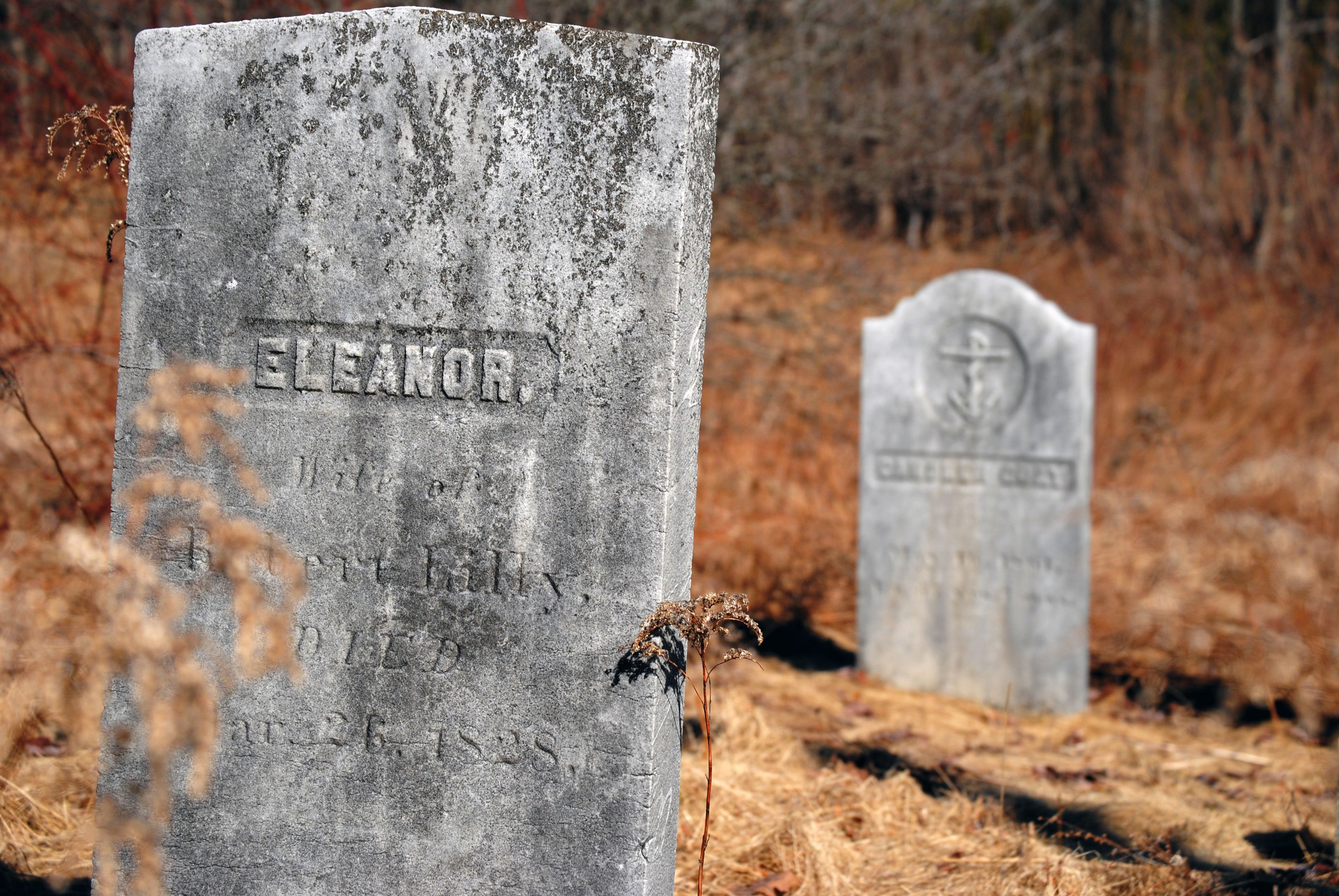
How to Build a Front-Yard Graveyard That Looks Genuinely Old
Foam tombstones that survive October, paint that won't melt them, anchoring that won't impale anyone, and the lean and clutter of a real colonial burying ground.

How to Build a Pirate Cove Yard Haunt
A skeleton crew, a wrecked bow, a smoking cannon and a lit treasure chest: where the pirate look really comes from, what the Dead Water ship's manual forbids, how to duct fog into a cannon, LED-only lanterns, a blue sea without water, and shanties that aren't pirate songs.

Running a Home Haunt: Permits, Police, Insurance and Liability
What a fire marshal's haunted-house rule actually asks for, why a garage walkthrough can need a permit, the police heads-up call, what homeowners insurance says about guests and business activity, and why a donation jar isn't a charity.