Universal Monsters Night
A double bill of the black-and-white Universal horror pictures, 1931 to 1954, with Stoker's paprika chicken, a Corpse Reviver at the intermission, a laboratory made of LEDs and a plasma globe, and silk wolfsbane that nobody can eat.
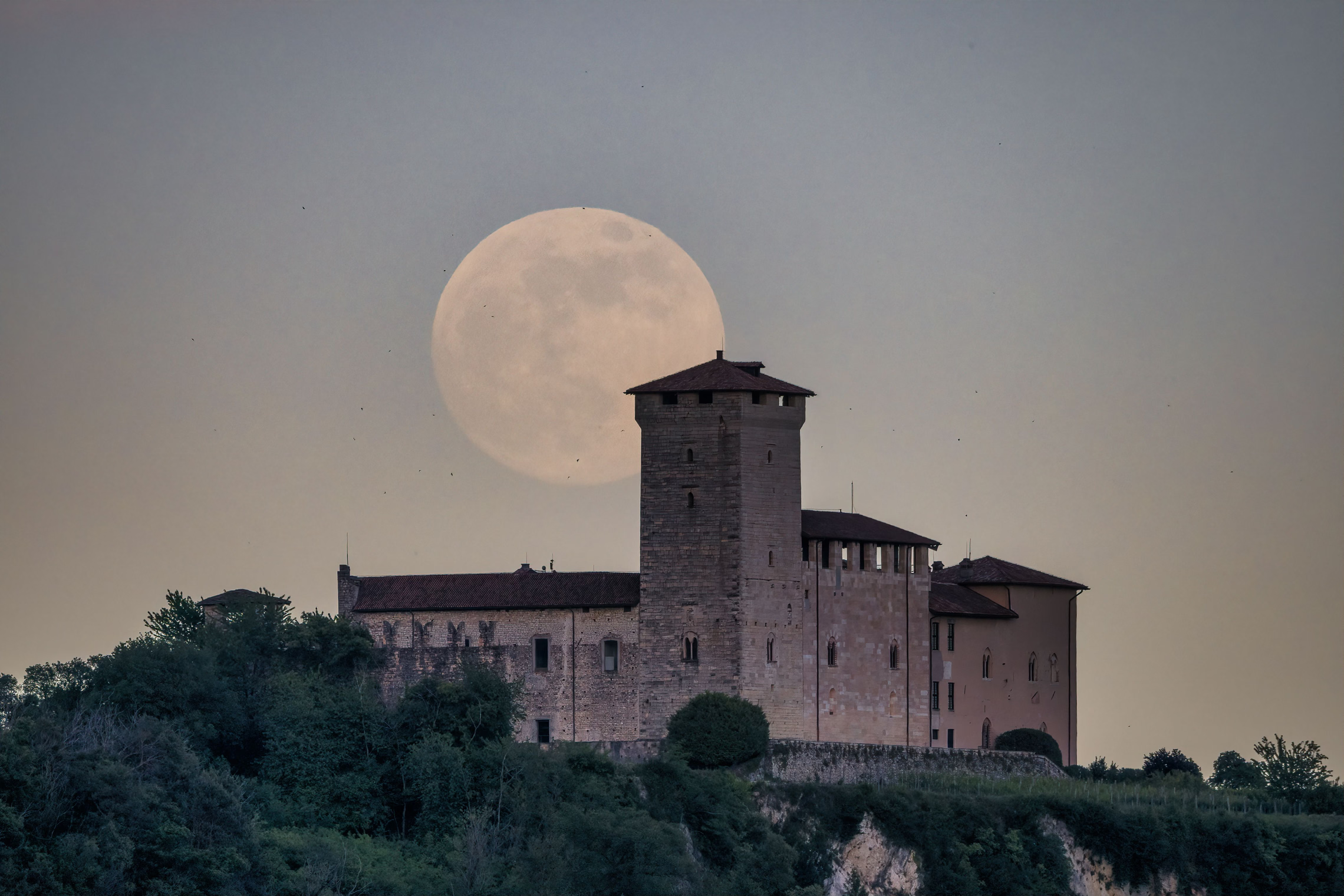
Decor Checklist
- Universal Classic Monsters: The Essential Collection (4K + Digital) Essential
The eight films in one set, which is the whole evening's program: pick two for the double bill and one for the late show
Shop on Amazon → - Vintage LED Flame Lanterns (2 Pack) Essential
Battery lanterns for the castle corner and the hall, so there's no flame near a cape or a trailing bandage
Shop on Amazon → - Theefun 6 Inch Plasma Globe Nice to have
The laboratory's centerpiece: it follows a fingertip and pulses to loud music, on the dry end of the table
Shop on Amazon → - 3D Moon Lamp (5.9 in) Nice to have
A rechargeable full moon for the moor corner, dimmed to white or pale yellow
Shop on Amazon → - Silk Purple Delphinium Stems (6) Optional
Stand-in wolfsbane for a vase on the moor table and a wreath on the castle door; silk only, never the real plant
Shop on Amazon → - Self-Adhesive Mummy Gauze Rolls (10) Optional
Bandage for the tomb corner: wrapped around a lamp base, a chair back or a stack of books
Shop on Amazon → - Glass jars, bottles and beakers Essential
Thrift-store glass filled with water and a drop of food coloring, lit from below by a battery puck light
Menu
Playlist
Listen on Hallowmix →
Costumes
Host
- The Count: evening clothes, a high-collared cape, a medallion on a ribbon and fitted fangs
- The scientist: a long lab coat, rubber gloves and a pair of goggles pushed up on the forehead
- Larry Talbot: country tweeds and a silver-headed cane
Guests
- The Monster, made up instead of masked: a short-sleeved dark jacket, grey-green makeup and bolts
- The Bride: a long plain white gown and the white-streaked beehive
- The Mummy: gauze wound over dark clothes, not over bare skin
- The Invisible Man: an overcoat, a hat, gloves, gauze and round dark glasses
- The expedition: khaki, a canvas hat and a notebook
- The villagers: a shawl, a lantern and a pitchfork made of cardboard
Party Timeline
- 6:00 PM: Goulash in the oven. Skewers threaded, cheese buns scooped and frozen or chilling.
- 7:00 PM: Doors. Swan Lake on low, the moon lamp and the plasma globe on, place cards on the table.
- 7:30 PM: Supper, from the Carpathians to Cairo.
- 8:15 PM: First feature, lights down (70 to 85 minutes).
- 9:45 PM: Intermission. Welsh cakes, Corpse Revivers, and a costume parade in front of the screen.
- 10:05 PM: Second feature.
- 11:30 PM: The late show for anyone still up, and cheese buns reheated.
Shopping List
- The Essential Collection (4K or Blu-ray), or your own copies of the two films
- LED lanterns (2 to 4), a battery moon lamp, a plasma globe, battery puck lights
- Thrift-store glass jars and bottles, food coloring
- Silk purple flower stems, gauze rolls
- Place cards and invitations (free printables), 110 lb cardstock
- Pork butt (3½ pounds), onion, green bell pepper, celery (2 ribs), plum tomato, garlic, sweet paprika, caraway, sauerkraut, sour cream, dill
- Chicken thighs (8), red and green bell peppers, marjoram, dry white wine, canned tomatoes
- Beef, thick-cut bacon, onions, skewers
- Lentils, rice, elbow macaroni, chickpeas, tomato sauce, onions for frying
- Tapioca flour, Parmesan, garlic, eggs, milk, butter
- Flour, sugar, currants, nutmeg, butter, eggs (Welsh cakes)
- Bread, two cheeses, salad greens
- London dry gin, Lillet Blanc, orange liqueur, lemons, absinthe or pastis
- Cachaça, limes, simple syrup, lime soda
- A bottle of Tokaji
The Premise
The Universal horror pictures are short. The BFI lists Frankenstein at 71 minutes and Bride of Frankenstein at 80, so a proper double bill with an intermission fits between supper and midnight. This blueprint runs one: two features, a late show, food from the places the films are set, and a house dressed as a castle, a laboratory, a tomb and a moor, one corner each.
It’s a night for twelve, because the place cards come in twelve. Every guest gets a role standing near a monster, “The Count’s Guest” or “The Laboratory Assistant,” and comes as whoever they like.
The Films
Why These Pictures
According to Gary D. Rhodes’s National Film Registry essay, Universal’s publicity sold Dracula in 1931 as “The Story of the Strangest Passion the World Has Ever Known,” but “film critics and the American public rechristened it as a ‘horror movie’: its enormous success gave rise to what became the lasting name of a popular American film genre.” It premiered in New York on February 12, 1931 (Library of Congress). Ron Palumbo’s Registry essay calls Dracula and Frankenstein the “two enormous hits that saved the studio during the Depression” (Library of Congress), and the BFI describes a cycle “that dominated Universal Pictures’ output from the 1920s to the 1950s” (BFI).
The Program
Running times are the BFI’s, except where it lists none, and they’re approximate: every source we checked gives a slightly different figure, and a Library of Congress archive print of Dracula runs 73 minutes.
| Film | Year | Director | Runs about | National Film Registry |
|---|---|---|---|---|
| Dracula | 1931 | Tod Browning | 85 min | 2000 |
| Frankenstein | 1931 | James Whale | 71 min | 1991 |
| The Mummy | 1932 | Karl Freund | 74 min (Universal) | Not listed |
| The Invisible Man | 1933 | James Whale | 72 min (Universal) | 2008 |
| Bride of Frankenstein | 1935 | James Whale | 80 min | 1998 |
| The Wolf Man | 1941 | George Waggner | 70 min | Not listed |
| Creature from the Black Lagoon | 1954 | Jack Arnold | 79 min | Not listed |
Directors and times are from the BFI’s film pages (Dracula, Frankenstein, The Mummy, Bride, The Wolf Man, Creature) and Universal’s own pages for the two the BFI doesn’t time (The Mummy, The Invisible Man). Registry years are from the Library of Congress’s complete National Film Registry listing, which runs through the 2025 inductions. The Mummy, The Wolf Man and Creature from the Black Lagoon aren’t on it.
Three Double Bills
- The 1931 bill. Dracula, then Frankenstein: about two and a half hours, the pair Palumbo credits with saving the studio. Dracula has almost no music. The Library of Congress notes that “only two pieces of music are on its soundtrack: Tchaikovsky’s Swan Lake during the opening credits, and the overture of Wagner’s Die Meistersinger von Nürnberg during a scene at an opera” (Library of Congress). That’s why Swan Lake is playing at the door.
- The Whale bill. Frankenstein, then Bride of Frankenstein. Richard T. Jameson’s Registry essay says Bride has “an adventurous music score by Franz Waxman instead of, in the case of ‘Frankenstein,’ none at all,” and that it “crams a third of its running time into one frenzied night” (Library of Congress). The Library of Congress’s own sources don’t agree on Frankenstein’s music: Gary D. Rhodes writes that Dracula and Frankenstein “mathematically feature the same number of musical selections,” and the Library’s screening note calls Frankenstein a film made “when there was talking but no underscore” (Library of Congress). Read together, there’s no score running under the scenes, but there is some music. The BFI’s guide to the cycle picks Frankenstein as “the best place to start.”
- The expedition bill. The Mummy, then Creature from the Black Lagoon: an Egyptian dig, then a boat up the Amazon.
For the late show, The Invisible Man (Universal lists it at 72 minutes) or Abbott and Costello Meet Frankenstein, a Registry film since 2001, which Palumbo says is “as mandatory at Halloween as ‘A Christmas Story’ and ‘It’s a Wonderful Life’ are at Christmas.”

Universal Classic Monsters: The Essential Collection (4K Ultra HD + Digital)
Universal's eight-film set: the seven films above plus Phantom of the Opera (1943). The studio lists the total running time as 10 hours 10 minutes, and it also comes on Blu-ray.
The contents and the running total are from Universal’s page for the set. If your player doesn’t do 4K, the Blu-ray edition is cheaper. Our movie night guide covers the projector, screen and sound.
Names, Faces and the Printables
Universal still owns these films. The word FRANKENSTEIN is a live trademark registered to Universal City Studios for posters (USPTO), and the US Copyright Office puts the longest term for works of this era at 95 years from publication (Copyright Office), which covers all seven pictures in 2026. So our invitation and place cards don’t name a monster or copy a makeup design: no flat head and bolts, no streaked beehive, no gill-man. They use a castle, a full moon, lightning, bandage and lab glass, and every quotation on them comes from the public-domain novels by Bram Stoker, Mary Shelley and H. G. Wells, not from the films. Licensed products, like the collection above or a Spirit Halloween wig, are Universal’s to sell.
Hallowmix isn’t affiliated with or endorsed by Universal, and the printables are our own designs.
Dressing the House
Castle Dracula
Universal’s synopsis sets the first film’s mood in one sentence: “Towering ominously among the shadows of the Carpathian Mountains, Castle Dracula strikes fear in the hearts of the Transylvanian villagers below” (Universal). Rhodes credits the film’s “elaborate sets designed by Charles ‘Danny’ Hall” and “cinematography by Karl Freund.”
Put the castle at the front door and in the hall: LED lanterns on the stairs, a candelabra of flameless candles, dust sheets over the furniture you don’t want sat on. Every flame at this party is an LED. Capes, gowns and loose gauze are all over the house, and the CPSC guidance quoted in our costume guide warns against “big, baggy sleeves, large capes, or billowing skirts” near candles.

YAKii LED Vintage Flame Lanterns (2 Pack)
Black metal lanterns with a frosted glass shade and a 20-LED flickering flame, about 10.5 inches tall, on 4 AA batteries each. Hang one by the front door and one on the stairs.
The Laboratory
Smithsonian’s 2019 piece on the science behind the monster films says that for the creation scene, “set designer Kenneth Strickfaden, who had experience as an electrician, devised techniques for simulating lightning and electricity” (Smithsonian). Jameson’s essay adds that Henry Frankenstein sets up shop in “an abandoned watchtower.”
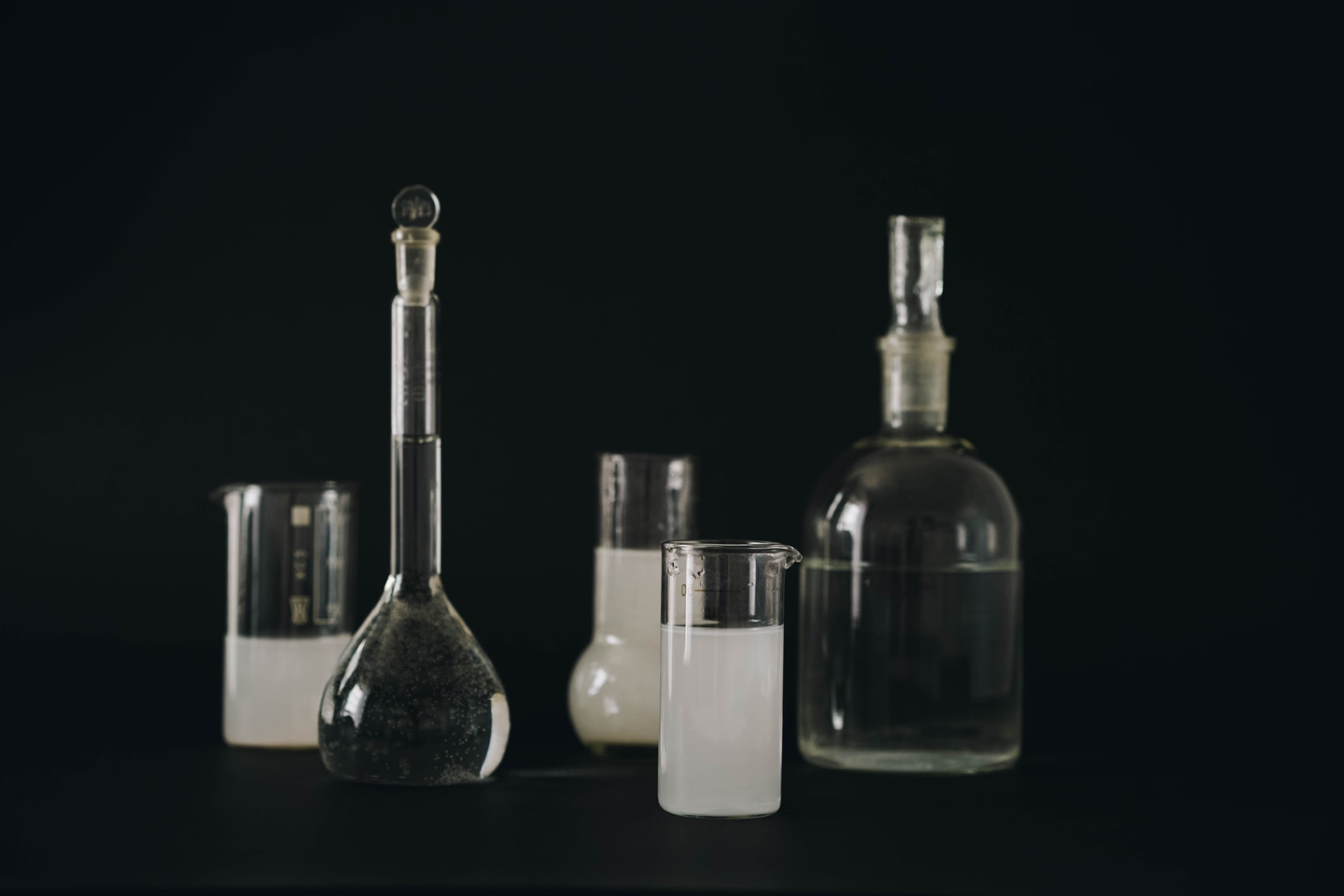
Build yours on a sideboard or bookshelf:
- The glass. Thrift-store jars, bottles and beakers filled with water and a drop of green or amber food coloring, each on a battery puck light.
- The spark. A plasma globe at the dry end of the table. Theefun’s manual says not to expose it “to moisture of any kind,” which “will create a fire or shock hazard,” so keep it well away from the water-filled jars and the drinks. The same manual says to use it “in a well-ventilated area,” keep it away from heat sources, and never try to open the base (Theefun manual, NX-PS-6).
- The storm. Our lightning effects guide covers flashing LED setups. Don’t use strobes if anyone at the party has photosensitive epilepsy; that guide has the flash-rate guidance.
- What to leave out. Anything built to throw real sparks, like a homemade Jacob’s ladder. That’s our rule, not a quote from anyone.
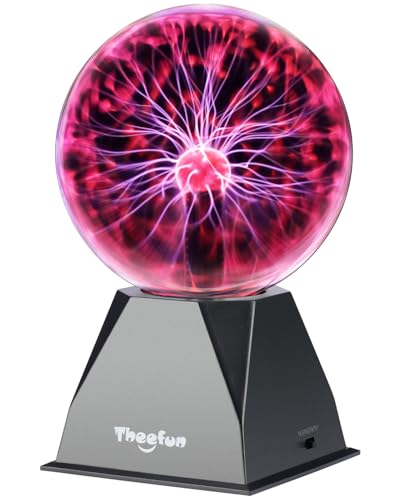
Theefun 6 Inch Plasma Globe
A 6-inch plasma ball on a 12V DC adapter with an OFF / AUDIO / ON switch. Theefun's manual says the ON setting follows your hand and the AUDIO setting responds to sounds of 80 decibels or more, so it pulses with the thunder track. The listing adds: never touch it with wet hands, and not for unsupervised use by minors.
The Tomb
It took Jack Pierce, head of Universal’s makeup department, “eight hours to apply Karloff’s makeup for The Mummy,” with “150 feet of bandages” among the layers, according to Smithsonian. You need less. Wrap gauze rolls around a lamp base, a stack of books and the back of one chair, set out the koshari, and prop up a rolled paper scroll: Universal’s synopsis has Imhotep “accidentally revived by a team of archaeologists after 3,700 years,” and the BFI notes that in the 1932 film he’s brought back by “reading from the sacred Scroll of Thoth” (BFI). The tana leaves came later, in The Mummy’s Hand (1940). For a party about the real 1922 dig, Carter’s journal and all, see our Egyptian Tomb, 1922 blueprint.
The Moor and the Wolfsbane
Universal’s page for The Wolf Man opens with the rhyme as the studio prints it: “Even a man who is pure in heart and says his prayers by night may become a wolf when the wolfbane blooms and the autumn moon is bright” (Universal). An autumn moon for an October party, then: a moon lamp in the darkest corner, with a vase of purple flowers.
The flowers work twice. The BFI’s guide to plants in early horror notes that Van Helsing, in the 1931 Dracula, “also claims wolfsbane to be a powerful charm against vampires,” and that Mina “is sent to bed with a wreath of wolfsbane,” not garlic. So hang a wreath of it on the castle door, too.
Make it silk. Wolfsbane is a real plant, and a poisonous one. Poison Control’s page on Aconitum napellus, “also known as monkshood or wolfsbane,” says “swallowing any part of the plant could be deadly” and that “the severity of aconitine poisoning is related to the rapid onset of life-threatening heart rhythm changes.” If you think someone has swallowed it, “do not make the person vomit”; call 1-800-222-1222 (Poison Control). Poison Control notes that it’s “often grown as an ornamental plant,” so it turns up in gardens. Don’t bring it into a house with food, drinks and a buffet.

INSUNSIX Purple Delphinium Artificial Flowers (6 Stems)
Six silk stems about 33 inches tall with wire stems you can bend or cut, so three fill a vase and three twist into a door wreath. Tall purple spikes read as wolfsbane across a dark room, and nobody can eat them.

BRIGHTWORLD 3D Moon Lamp
A 5.9-inch printed moon on a USB-rechargeable 500mAh battery, which the maker rates at 4 to 10 hours depending on brightness: long enough for a double bill. Set it to white or pale yellow and dim it.
The Lagoon
The Library of Congress’s screening note describes the 1954 film’s “dangerous half-human, half-fish creature lurking in the depths of the Amazon,” and says part of its success “stems from the score, a hybrid arrangement by Mancini, Hans J. Salter, and Herman Stein, with all three being uncredited” (Library of Congress). A bowl of limes, a blue LED under the drinks table and some potted ferns will do it.
Supper, From the Carpathians to Cairo
Stoker’s Menu
The novel, not the film, is where the food is. Jonathan Harker keeps notes on his meals on the way to the castle (Project Gutenberg):
- At Klausenburgh: “a chicken done up some way with red pepper, which was very good but thirsty,” which the waiter called “paprika hendl,” “a national dish.”
- At Bistritz: “robber steak” of “bits of bacon, onion, and beef, seasoned with red pepper, and strung on sticks and roasted over the fire,” with a wine, Golden Mediasch, “which produces a queer sting on the tongue.”
- At the castle, the Count serves him “an excellent roast chicken,” with “some cheese and a salad and a bottle of old Tokay.”
The Dishes
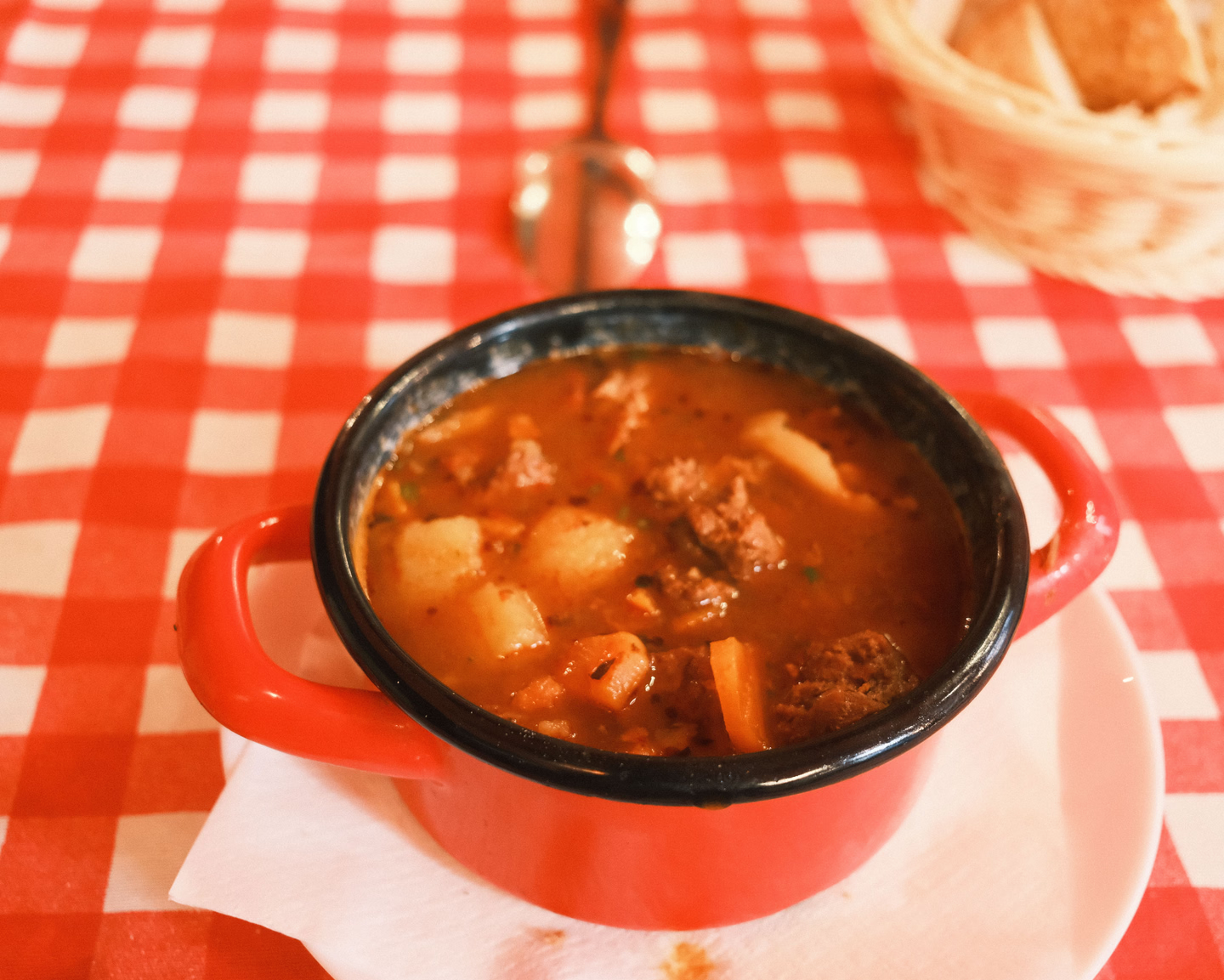
- Goulash. America’s Test Kitchen’s Transylvanian Goulash is “a close cousin to Hungarian goulash” made with “rich, marbled pork shoulder, rather than beef”: a 3½-pound pork butt, 3 tablespoons of sweet paprika, a tablespoon of caraway and 2 cups of sauerkraut, finished with sour cream and dill. It serves 6 to 8 and takes 1½ hours, so make one batch and the paprikash for twelve.
- Paprika hendl. ATK’s Classic Chicken Paprikash uses 8 bone-in chicken thighs, both red and green peppers and 3½ tablespoons of sweet paprika, with sour cream stirred in at the end. It serves 4, so double it.
- Robber steak. No test kitchen we trust has a recipe for it, so this one is Stoker’s description: cubes of beef and bacon and wedges of onion on skewers, dusted with paprika and cooked under the broiler.
- Koshari. ATK calls its Koshari “classic Egyptian comfort food”: “lentils, rice, pasta, and chickpeas smothered in a spiced tomato sauce and topped with crispy fried onions.” It serves 4 to 6 and takes 1¾ hours.
- Pão de queijo. King Arthur’s Brazilian Cheese Buns are made with 2 cups of tapioca flour and ¾ cup of Parmesan, Romano or aged Asiago, bake at 375°F, make 18 to 20 and are “naturally gluten-free.” Reheat a tray for the late show.
- Welsh cakes. The BFI’s werewolf list has Larry Talbot “returning to Wales to help manage the family estate” (BFI), so the intermission tray is King Arthur’s Welsh Cakes, “a cross between a pancake and a baking powder biscuit,” cooked in a dry pan or an electric skillet at 325°F for about 2½ minutes a side. It makes two dozen, and King Arthur says they’re “excellent the next day, warmed in the toaster.”
Allergens
The goulash and the paprikash both have sour cream, and the paprikash is thickened with flour. The koshari’s pasta is wheat. The Welsh cakes are wheat, milk, butter and eggs; the cheese buns are gluten-free but have milk, cheese and eggs. Milk, eggs and wheat are all on the FDA’s list of nine major food allergens (FDA). Label each dish, and the koshari and the goulash are your safest bets for a guest who avoids dairy (serve the goulash’s sour cream on the side).
The Bar
Corpse Reviver No. 2
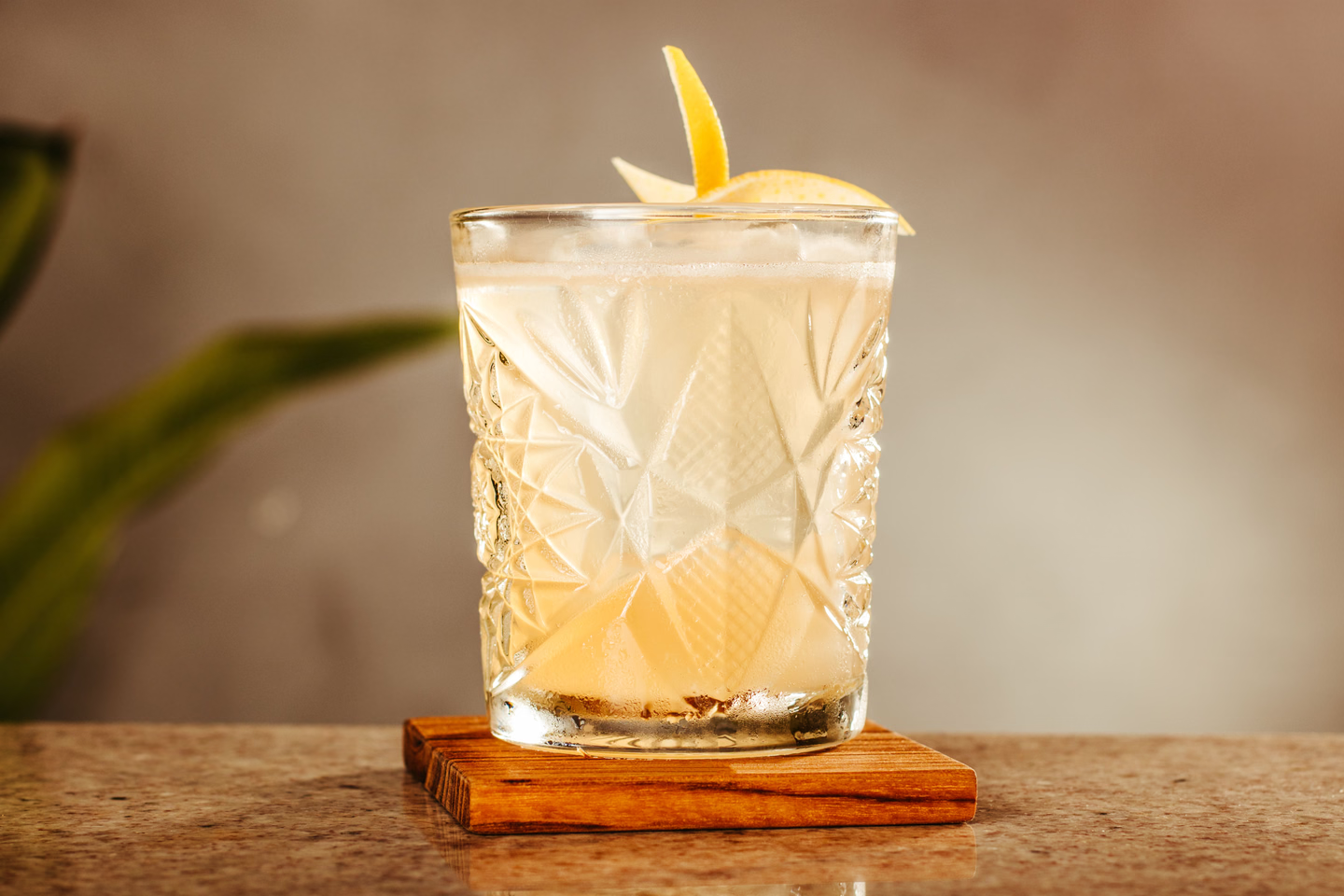
For the laboratory. ATK’s Corpse Reviver No. 2 lists 1 ounce of London dry gin, 1 ounce of Lillet Blanc, ¾ ounce of orange liqueur, ¾ ounce of lemon juice, ¼ ounce of simple syrup and ⅛ teaspoon of absinthe, shaken for about 15 seconds and double-strained. (The method step on the same page says “1 ounce simple syrup”; we’d follow the ingredient list, since the headnote says the recipe cuts the orange liqueur and makes up the sweetness with a little syrup.) ATK says the corpse revivers were meant “to be taken before 11 a.m., or whenever steam and energy are needed,” quoting The Savoy Cocktail Book. The intermission counts.
It’s strong. NIAAA counts one standard drink as “about 14 grams, or about 0.6 fluid ounces, of pure alcohol,” the amount in “a 1.5-ounce shot glass of distilled spirits at 40% alcohol by volume” (NIAAA). With a 40% gin and orange liqueur and a Lillet labeled around 17%, one Corpse Reviver holds about 0.87 ounces of alcohol: roughly one and a half standard drinks. Check your own labels and do the math again if they differ.
Caipirinha
For the expedition. ATK’s Caipirinha is one lime cut in eighths and muddled for about 30 seconds, 2 ounces of cachaça and ¾ ounce of simple syrup, shaken for about 5 seconds and poured into the glass unstrained. ATK prefers an aged cachaça. At 40%, 2 ounces is 0.8 ounces of alcohol, about 1.3 standard drinks. Make the same drink with lime soda instead of cachaça for anyone not drinking.
Tokay
For Stoker’s “old Tokay,” pour a Hungarian Tokaji in small glasses with the cheese board. One bottle is plenty. For more drinks with a Halloween name, see our cocktails and mocktails guide.
Running the Evening
7:00 PM: Doors
Send the invitation three weeks ahead with the double bill written on the Feature line, so guests can pick a costume from the right films. Put Swan Lake on at the door. The host plays the Count and greets everyone with Stoker’s line from Chapter II, the one on the invitation: “Welcome to my house! Enter freely and of your own will!”
7:30 PM: Supper
Everything goes out at once, each dish in its own corner: goulash, paprikash and skewers in the castle, koshari in the tomb, cheese buns by the lagoon. Deal the place cards face down so nobody knows who they’re sitting next to.
8:15 PM: First Feature
Lights down. The lab table and the moon lamp stay on low. The playlist is Originals, which starts with the classical pieces Halloween borrowed (“Toccata and Fugue in D Minor,” “Night on Bald Mountain,” “Danse Macabre”); keep it off during the films.
9:45 PM: Intermission
Corpse Revivers, the Welsh cakes and a costume parade in front of the screen, with a prize for the best monster and one for the best person running from a monster. Twenty minutes is enough to refill, then back for the second feature at 10:05. The longest film on the program, Dracula, runs about 85 minutes, so an 8:15 start clears the intermission with time to spare.
11:30 PM: The Late Show
The Invisible Man, Creature or Abbott and Costello Meet Frankenstein for whoever’s still up. Reheat the cheese buns.
Costume Guide
Our adult costume guide has full builds for four of these, the Bride, Karloff’s Monster without a mask, Dracula with fangs you can talk in, and the Invisible Man, plus how to do all four as a group.
- The Count. Evening clothes, a high-collared cape and a medallion. Rhodes describes Lugosi “wearing his famous cape and speaking in his distinctive accent.”
- The Monster. Makeup rather than a mask. The Library of Congress catalog record says the “makeup designed by Jack Pierce was revolutionary”; a dark jacket with short sleeves, heavy boots and grey-green paint get you most of the way.
- The Bride. A long white gown and the streaked beehive. The licensed wig below is the fastest route.
- The Mummy. Gauze wound over dark long sleeves and leggings, never tight around the neck, wrists or ankles (our rule). Pierce’s 1932 method used collodion on the skin; skip that part.
- The Invisible Man. Universal’s synopsis: “Covered by bandages and dark glasses, he arrives at a small English village.” An overcoat, a hat, gloves and gauze with a gap at the mouth for a straw.
- Larry Talbot. Tweeds and a cane, with or without the fur.
- The Creature’s expedition. Khaki and a canvas hat, or the Creature itself if you’re up for a full suit. Who designed it depends on the source: Universal’s page credits “Bud Westmore’s brilliantly designed monster” (Universal), while Smithsonian says “designer Milicent Patrick extensively researched sea life and prehistorical animals to shape her vision for ‘Gill-Man,’” poring over “scientific illustrations of reptiles and amphibians that lived on Earth 400 million years ago.”

Spirit Halloween Bride of Frankenstein Wig, Universal Monsters
Officially licensed, polyester, one size. The listing says not to wash or style it, so take it out of the bag a few days early and let the beehive settle rather than brushing it.

Scarecrow Classic Deluxe Custom Fangs (18mm)
Comes with a molding kit to fit the caps to your own canines; clip-on and reusable, for average to larger teeth. The Count can talk through a toast and still take them out for the goulash.
Makeup, Latex and Glow
- Patch test. The FDA says to “test the makeup you plan to use at least 24-48 hours in advance” on the wearer’s arm, and to “wear makeup and hats rather than costume masks that can obscure your vision” (FDA). Our makeup and fake blood guide has the full routine.
- Neck bolts are latex. The Libima neck bolts are latex, and the listing itself warns they may not suit anyone with a latex allergy and suggests a patch test. MedlinePlus explains why: “If your immune system detects the protein, a reaction can start in minutes,” and “in rare cases you could have a severe reaction called anaphylaxis” (MedlinePlus). Ask before you glue bolts on a friend.
- Glow-in-the-dark lab makeup. The FDA says the only luminescent color approved for cosmetics is zinc sulfide, and it’s “not for near your eyes”; fluorescent colors aren’t allowed near the eyes either (FDA). Keep the glow on the hands and the lab coat.
- Colored contacts. White Bride eyes and yellow wolf eyes need a prescription; the costume guide explains the FDA and ophthalmologists’ rules.
Monsters, Not Peoples
Three of these films borrow real cultures for their backdrops, and the costumes are where that goes wrong.
- Dress as the Mummy, not as “an Egyptian.” Come bandaged. Skip robes-and-fez disguises and any “Middle Eastern” costume: the University of Utah’s guidance lists “Costumes depicting Middle Eastern people as terrorists” among the stereotypes to avoid, and asks, “Does this costume represent a culture that is not my own?” (University of Utah).
- No “Gypsy” fortune teller from The Wolf Man. Utah is plain about the word: “The name ‘Gypsy’ is a racial slur given to the Romani people in Europe. This group of people was persecuted because they were a minority.” Come as Larry Talbot or the wolf. Our Fortune Teller’s Parlor explains its rule, “Dress as a profession, never as a people,” and how to do a fortune teller without the stereotype.
- The Amazon expedition, not “Amazonians.” Come as the scientists or as the Creature. WVU Libraries’ test works for all of these: “Is your costume racially, ethnically or culturally based? If the answer is yes, change” (WVU Libraries).
Production Notes
Budget Breakdown: Food for twelve, the goulash, paprikash, skewers, koshari and two trays of baking, runs about $120. Gin, Lillet, cachaça, a bottle of Tokaji and the mixers add about $90. Two LED lanterns and the silk flowers are another $60. With films you already own or rent, that’s a floor of about $250. The 4K collection, the plasma globe, the moon lamp and the gauze take it to about $500.
Advance Prep: Send invitations three weeks out with the two features named. Test the projector and both discs the weekend before. Bake the Welsh cakes the day before and warm them at the intermission. If you’d rather make the goulash the day before, refrigerate it and reheat it until it’s hot all the way through. Thread the skewers in the morning.
What to Skip: Real monkshood anywhere in the house. Open flames near capes and gauze. Collodion and spirit gum from the old studio methods. Anything that throws real sparks. Glow makeup near the eyes. Costumes of a people instead of a monster. And quoting famous film lines on the signs: some of the best-known ones are hard to pin to the actual film, and the films are still under copyright, which is why our printables quote only the public-domain novels.