A blacklight room is the highest-impact-per-dollar effect in Halloween decorating. Forty dollars of UV flood and a few tubes of fluorescent paint transform a room more completely than several hundred dollars of props.
It is also the effect people most often get wrong, and almost always for the same two reasons: they buy the wrong wavelength, and they light things that do not fluoresce.
365nm vs 395nm: The Only Spec That Matters
Blacklights are sold by wavelength, and the difference between the two common options is dramatic.
395nm: Cheap and Purple
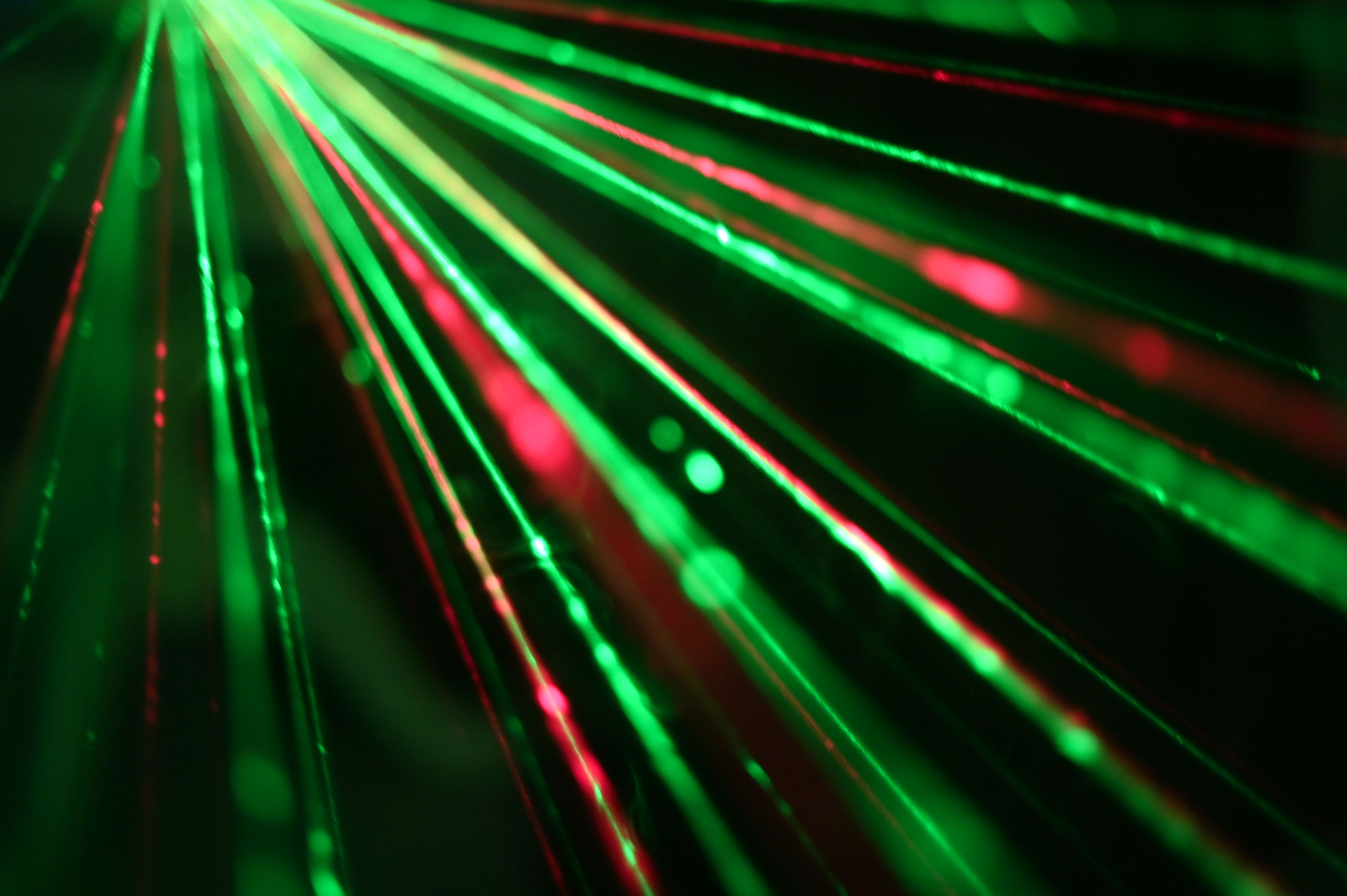
Most consumer blacklights are 395nm. This sits at the edge of visible violet, which means the fixture itself glows bright purple. You see the lamp, and everything in the room gets a purple cast.
Fluorescent materials do still glow, but the effect is muddied. Because there is so much visible violet in the output, the contrast between “glowing thing” and “dark room” collapses. It reads as a purple room rather than as objects glowing in blackness.
Best for: Cheap ambience, large areas where you want a purple wash, anywhere the budget rules.

Waygor 100W UV Blacklight Floodlight, IP65 Waterproof, 395nm (2 Pack)
Two IP65-rated 395nm floods for the price of one decent bulb. The purple cast is heavy, but for washing a porch or a large room in UV this is the value pick.
365nm: The Real Thing
365nm sits in true UV-A, mostly outside human vision. The fixture looks dim, almost like a faintly glowing dark lamp. That is the point. With very little visible light coming out, fluorescent materials appear to glow on their own against genuine darkness.
The difference is not subtle. A white shirt under 395nm looks purple-lit. Under 365nm it looks like it is generating light.
365nm fixtures cost meaningfully more because the filtering that removes visible violet is the expensive part. If you are lighting one feature room, this is where the money goes.
Best for: A signature room, photo backdrops, anything where you want the “objects floating in blackness” effect.

Everbeam 365nm 100W UV LED Black Light, IP66 Waterproof Flood
True 365nm UV-A with proper filtering, so the fixture stays visually dark and the fluorescence does the work. Three times the price of a 395nm flood and worth it for one feature room.
What Actually Glows
This is where people lose. You can have a perfect 365nm setup and a room that looks like nothing, because fluorescence is a property of specific chemicals, not of bright colors.
Glows reliably:
- White cotton and most white fabric. Laundry detergent contains optical brighteners that fluoresce hard. This is why white shirts blaze at a club. Unwashed or bleach-free fabric glows less.
- Fluorescent and neon pigments. Highlighter ink, neon poster board, safety orange and safety green, fluorescent paint and tape.
- Tonic water. The quinine fluoresces a startling pale blue. A tray of tonic drinks under UV is a genuinely good party trick.
- Petroleum jelly, which is useful for slime and gore effects.
- Certain plastics and vinyls, unpredictably. Test before you commit.
- Teeth and fingernails, which is either a bonus or a problem depending on your theme.
Does not glow, no matter what:
- Most regular acrylic and latex paint, including bright colors
- Black fabric, black paint, most dark surfaces
- Natural wood, stone, most foam props (until you paint them with blacklight paint)
- Real pumpkins
- Anything metallic
That last list is why blacklight rooms disappoint. A room decorated in Halloween orange and black is almost entirely non-fluorescent. Under UV it is simply a dark room.
The fix is to introduce fluorescent material deliberately rather than hoping existing decor glows.
Blacklight Paint
Fluorescent, glow-in-the-dark, or invisible
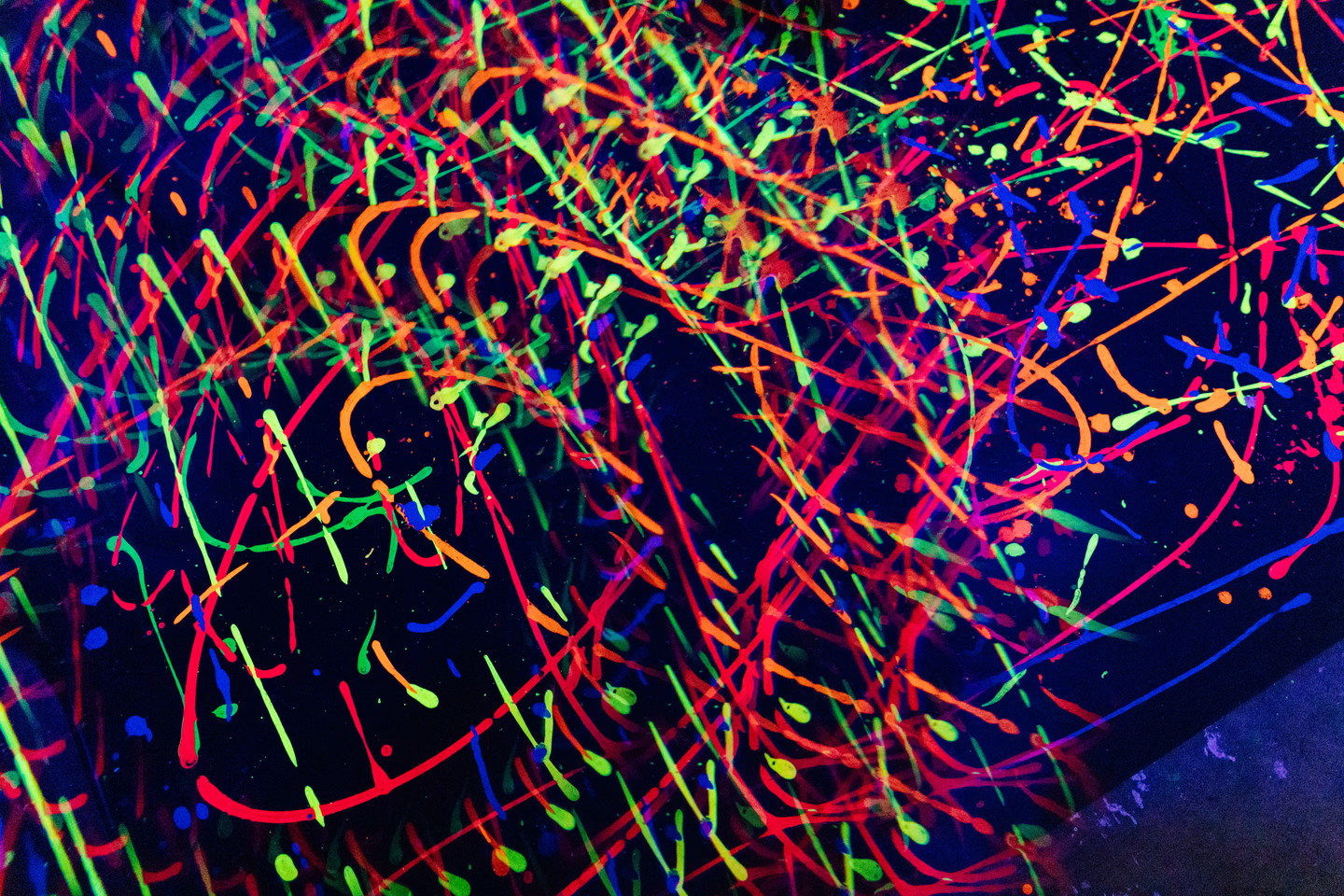
- Fluorescent (neon) paint glows only while the blacklight is on. Golden Artist Colors, which makes fluorescent acrylics, puts it this way: a fluorescing material “typically lasts only while the excitation source is present” (Just Paint). In daylight it looks like bright neon.
- Glow-in-the-dark (phosphorescent) paint stores light and keeps glowing after the source goes off. DecoArt says to charge its Americana Ultimate Glow “under sunlight or UV light,” for at least 30 minutes in a brightly lit room (DecoArt’s product notes). Rust-Oleum’s 2013 technical data sheet for its Glow in the Dark spray (form GDH-127) promises “a glowing effect for 4-8 hours in the dark” after charging, over a white or light surface.
- Invisible UV paint dries clear and only shows under a blacklight. Wildfire, which makes both UV paint and UV fixtures, says its invisible colors “appear transparent under ordinary lighting, changing to bright, glowing colors when black light is applied” (Wildfire’s product notes). Use it for a message or a handprint trail that isn’t there until the lights change.
Match the paint to your light
This is where the 395nm vs 365nm choice comes back. Visible neon paint works under both. Invisible paint, by its makers’ own accounts, works reliably only under 365nm.
Wildfire says its own Invisible Clear Colors “will not activate correctly if illuminated by black light wavelengths longer than 370nm” (Wildfire’s product notes), and that at 385 to 400nm “most invisible fluorescent materials (such as our Invisible Luminescent Paints and Clear Top Coats) do not respond well” (Wildfire on 400nm lights). Visible fluorescent colors still work at 395nm, though Wildfire says they “shift slightly due to the violet and blue visible light produced.” GLO Effex says of its invisible paint: “The red and green pigments will require a true 365nm blacklight for optimal use” (GLO Effex’s product notes). Invisible-ink pens are a different formula, and our scavenger hunt guide pairs them with a 395nm flashlight. Whichever you use, test it under the light you’ll actually have on the night.
Start with white
Rust-Oleum’s fluorescent spray is at its best “over a white basecoat,” with white primer “on darker surfaces for maximum brilliance” (Rust-Oleum TDS SPC-07). Krylon’s fluorescent is “Brightest over white base coat” (Krylon’s product notes). Golden explains why: its fluorescents are “organic dye based fluorescents that are dissolved in a transparent solid polymer carrier,” and painted over white, “the white behind the transparent color is helping by allowing more light to bounce off of the surface” (Just Paint).
That goes for foam too. Bare foam stays dark under UV, but DecoArt lists styrofoam among the surfaces for its Black Light Neon acrylic, along with wood, walls, canvas, metal, glass, fabric and most plastics (DecoArt’s product notes). Prime a foam tombstone white, paint it neon, and it glows like everything else.
Spray, brush-on, or tempera
Spray covers big flat props fast, and it’s the one with rules. Rust-Oleum’s data sheet for its Specialty Fluorescent spray says “Apply Outdoors,” between 50 and 90°F with humidity below 65%, in “2 or more light coats a few minutes apart,” and “Do not use near open flame.” It’s dry to the touch in 15 minutes and fully dry in 24 hours. Krylon’s fluorescent spray wants 55 to 75°F and humidity below 60%. On a late-October evening, that often means painting props in the afternoon or earlier in the month.
Krylon’s safety data sheet for its Lemon Yellow fluorescent carries the signal word “Danger,” lists “May damage fertility or the unborn child” among its hazards, and says “Use only outdoors or in a well-ventilated area” (Krylon SDS). It also warns that rags and other waste soaked with the paint “may spontaneously catch fire if improperly discarded,” and says to put them in “a sealed, water-filled, metal container.”

Rust-Oleum Specialty Fluorescent Spray Paint, Yellow, 11 oz
An interior and exterior fluorescent spray that Rust-Oleum says glows under a black light, dries to the touch in 15 minutes and covers 10 to 12 square feet per can. Spray it outdoors, over white primer. Green is the same price under ASIN B0009XCK4M.
Brush-on acrylic is for detail work: eyes on a prop, lettering, a painted skeleton. It cleans up with water and doesn’t need an outdoor spray booth. Liquitex says simply that its “fluorescent colors glow under UV and black light” (Liquitex). DecoArt warns not to paint its Black Light Neon on hot surfaces like working lightbulbs.
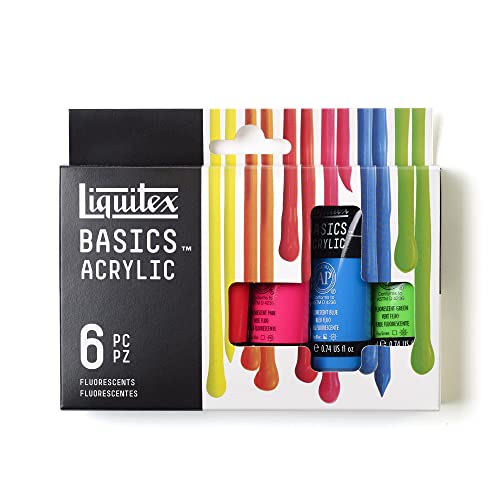
Liquitex BASICS Acrylic Paint Set, Fluorescent, 6 x 22ml
Six student-grade fluorescent acrylics (orange, red, pink, yellow, blue, green) in 22ml tubes. Liquitex says its fluorescents glow under black light. Enough for detail work on props, handprints and lettering, not for covering a wall.
Washable tempera is the pick for anything temporary, like a sheet you want to wash afterward. Colorations says of its Fluorescent Simply Washable Tempera that “Most colors glow under black light” (Colorations’ product listing). Test each color under your light before you commit.
For invisible paint, GLO Effex’s is lacquer based, which it says makes it “brighter and more durable than water based paint,” and it says the paint can be brushed on or “thinned out and sprayed.” GLO Effex gives no ventilation guidance. We assume a lacquer gives off solvent fumes, so brush it outdoors or in a room with cross-ventilation, and never spray or airbrush it indoors.

GLO Effex Invisible Transparent UV Reactive Blacklight Paint, 3-Color Pack
Clear lacquer paint in blue, green and red that only shows under UV. GLO Effex says the red and green need a true 365nm blacklight, so pair it with the Everbeam, not a 395nm flood. Expensive per ounce, and only worth it if hidden messages are part of the plan.
How much paint for a 4x8 sheet
A 4x8 sheet of plywood or foam board is 32 square feet. Rust-Oleum rates its fluorescent spray at 10 to 12 square feet per 11 oz can, so one coat takes about three cans. Krylon rates its fluorescent at 15 to 20 square feet per can, so about two. Rust-Oleum’s glow-in-the-dark spray covers 8 to 10 square feet per can. All of that is before the white primer, and Rust-Oleum calls for two or more light coats.
Glass, varnish, and fading
Test anything behind glass or clear plastic. Wildfire warns that “Glass and plastic lenses filter out UV light!” (Wildfire’s blacklight guide). It’s talking about the lenses on light fixtures, and how much a jar or a display case blocks depends on what it’s made of, so put the lid on and look at it under your actual blacklight before you fill a shelf with specimen jars.
Varnish protects the paint and can kill the glow. Golden tested its fluorescents and found that “At two coats of MSA Varnish there was absolutely no fluorescing,” because the varnish “contains UVLS (Ultra Violet Light Stabilizers) which block UV light from entering through to the paint film” (Just Paint). Liquitex, for its part, recommends its spray varnish “for best results with fluorescent colors.” Before you seal a prop, varnish a test scrap and check it under the blacklight.
Fluorescent paint fades. Golden ran its Heavy Body fluorescents through 410 hours in a xenon arc chamber, which it equates to “roughly 100 years of indoor gallery lighting conditions,” and exposed another set outdoors in Arizona for over nine weeks. Orange-Yellow faded worst, and Blue held up best (Just Paint). Golden describes the fade as yellow going green, orange going dull yellow, and pink going to “a light earthy orange color” (Just Paint). Liquitex marks its fluorescents “NR,” not rated for lightfastness. Rust-Oleum says its glow-in-the-dark spray may need “Periodic re-application” outdoors.
Makeup Under Blacklight
Face paint that glows is a cosmetic, and the FDA says Halloween makeup is “subject to the same regulations as other cosmetics, including the same restrictions on color additives” (FDA fact sheet). For UV and glow effects, those rules are narrow. Our Halloween makeup guide covers what counts as the eye area and how early to patch test.
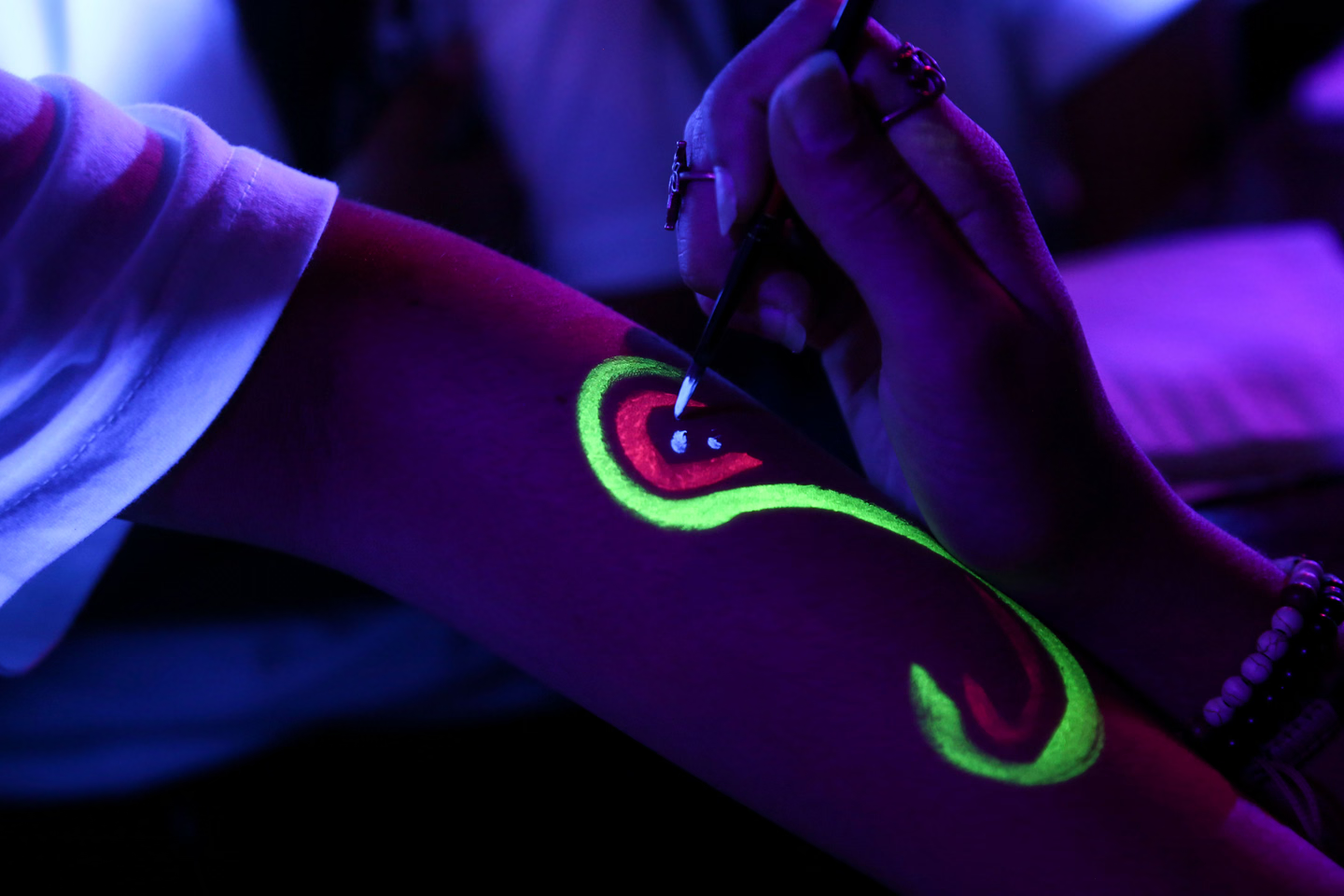
Fluorescent makeup: eight colors, none near the eyes
The FDA approves eight fluorescent colors for cosmetics: D&C Orange No. 5, 10 and 11; D&C Red No. 21, 22, 27 and 28; and D&C Yellow No. 7. “None of them are allowed for use near the eyes,” and the FDA adds: “Believe this, even if the label has a picture of people wearing it near their eyes” (FDA, novelty makeup).
Lips are a different story, color by color. Under 21 CFR Part 74, the four reds are approved for “cosmetics generally,” so a UV-reactive red or pink lip color can be legal. Orange No. 5 is allowed in lip products up to 5.0% by weight. Orange No. 10, Orange No. 11 and Yellow No. 7 are approved only for “externally applied cosmetics,” which the regulations define as not for “the lips or any body surface covered by mucous membrane” (21 CFR 70.3). Apart from Orange No. 5 in lip products at up to 5%, a neon orange or yellow lip is off the list.
On the face, keep fluorescent makeup on the cheeks, jaw and body, and put it on lips only if it’s sold as a lip color. That includes cosmetic neon palettes. Mehron’s ingredient list for its Paradise FX shades includes CI 45410, which is D&C Red No. 27 and 28, two of the fluorescent reds (Mehron’s ingredient list). Mehron calls its Paradise neon shades “FDA/EU compliant” (Mehron’s Paradise AQ page). One shade we can’t explain: Mehron lists Dark Matter as clear in daylight with a blue glow under UV, and we couldn’t identify the colorant behind that blue.
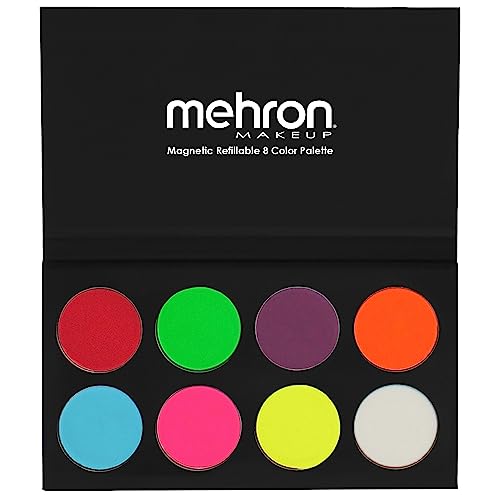
Mehron Makeup Paradise FX Neon UV Glow Palette, Water-Activated
Eight water-activated neon shades from a cosmetics maker, which Mehron says give bold color in daylight and a bright glow under UV. Mehron calls its Paradise neon shades FDA and EU compliant. We couldn't identify what makes the clear Dark Matter shade glow blue. Keep every shade on cheeks, jaw and body, never around the eyes.
We’ve dropped the cheap eight-tube neon face paint set this guide used to recommend. Its listing markets the paint as eyeliner, which the FDA’s rule on fluorescent colors doesn’t allow, and we couldn’t find the maker’s ingredient list to check its colors.
Glow-in-the-dark makeup: one approved pigment, one color
Only one color additive that keeps glowing after the lights go out is approved for makeup: luminescent zinc sulfide, under 21 CFR 73.2995. The regulation comes with limits:
- 10% cap. It “shall not exceed 10 percent by weight” of a facial makeup.
- Halloween, by name. Facial makeup containing it is “intended for use only on limited, infrequent occasions, e.g., Halloween, and not for regular or daily use.”
- A required warning. The label must carry, “conspicuously displayed: Do not use in the area of the eye.”
The regulation describes its glow as “a yellow-green phosphorescence with a maximum at 530 nanometers,” and the FDA says “You can recognize it by its whitish-yellowish-greenish glow.” The FDA also calls it “the only luminescent color approved for cosmetic use.” Our reading of those two statements: a face paint that keeps glowing blue or pink after the lights go off isn’t using zinc sulfide, so it isn’t using an approved color. That’s our inference, not an FDA statement, and it applies only to afterglow. Legal fluorescent makeup can still glow pink, red or orange while the blacklight is on.
Mehron lists zinc sulfide as the second ingredient in the Glow-in-the-Dark shade of its Fantasy F/X water-based paint (Mehron’s Fantasy F/X page). Mehron’s web page doesn’t reproduce the regulation’s eye warning, so look for it on the tube.

Mehron Makeup Fantasy F/X Water-Based Face and Body Paint, Glow in the Dark, 1 oz
Water-based glow paint that Mehron makes with zinc sulfide, the one glow-in-the-dark pigment approved for makeup. Expect the yellow-green glow the regulation describes. For occasional use, and never in the eye area.
Craft paint isn’t makeup
Glow-in-the-dark craft paint usually uses a different pigment. Rust-Oleum’s data sheet lists the pigment in its Glow in the Dark spray as strontium oxide aluminate, not zinc sulfide, which means it isn’t the approved glow color. The FDA’s advice covers it: “Don’t decorate your face with things that aren’t intended for your skin.”
“Non-toxic” and the AP seal don’t change that. The Consumer Product Safety Commission’s art-material rules, which are where the ASTM D-4236 label comes from, apply to “any substance marketed or represented as suitable for use in any phase of the creation of any work of visual or graphic art” (CPSC). The label is about art paint. Our reading, not CPSC’s wording, is that it tells you nothing about whether the colors are approved for skin. Washable tempera that “washes from skin” is still craft paint. The makeup guide’s section on craft paint and craft glitter goes further.
Placement
Light across, not at. A UV flood aimed straight at a wall creates a hot spot and washes out. Mount it to one side and rake the light across the surface. Texture and depth appear immediately.
Hide the fixture. With 395nm especially, a visible lamp destroys the effect because the eye locks onto the brightest thing in the room. Behind a prop, above a door frame, or in a corner facing away from sightlines.
Kill every other light source. UV effects are ruined by ambient light, and this is the most common failure after wavelength. A single warm bulb, a TV, a bright phone screen, or light spilling under a door will flatten the whole effect. Blacklight rooms need to be genuinely dark.
One fixture per roughly 100 square feet for even coverage, more if the room is deep or broken up.
Combine with fog carefully. UV plus fog looks spectacular in photographs, but the fog scatters the UV and lifts the ambient level, which reduces contrast on your fluorescent objects. Use less fog than you think. Our fog machine guide covers controlling density.
Safety, Briefly
UV-A at these power levels is not dangerous in the way UV-B or UV-C is. It isn’t harmless, though. The FDA says UVA rays “can penetrate the middle layer of your skin (the dermis),” and that “certain oral and topical medicines, such as antibiotics, birth control pills, and benzoyl peroxide products, as well as some cosmetics, may increase skin and eye sensitivity to UV in all skin types” (FDA, UV radiation). Three limits are worth respecting.
Do not stare into the fixture. This is true of any 100W light source. A 365nm flood also looks dimmer than it is, because most of what it puts out is light you can’t see.
Aim the floods at the decor, not at faces, and warn guests who are sensitive to UV. The American Academy of Ophthalmology’s UV guidance is written about sunlight, not party lights, but the people it flags are worth a word before a long night in a UV room. It says “People who had cataract surgery years ago may have an elevated risk of UV damage,” and that photosensitizing drugs “can make your eyes more sensitive to light as well,” naming antibiotics containing fluoroquinolones and tetracycline (including doxycycline and Cipro), certain birth control and estrogen pills, psoralens, and ibuprofen and naproxen sodium, though for those two the AAO says “the reaction is rare” (AAO). Put the seating where the floods aren’t pointing.
Never buy a “UV sterilizer” lamp for decoration. Germicidal lamps run UV-C at 254nm, which genuinely damages skin and eyes within minutes of exposure. The FDA warns that some UV wands sold for disinfection “may cause injury to the skin, eyes, or both after a few seconds of use” (FDA, UV wands). They are sold for disinfection, they are not blacklights, and they have no place at a party. If a listing mentions sterilizing, disinfecting, or killing bacteria, it is the wrong product.
A $60 Room That Looks Like $600
The most effective use of UV is one committed room rather than UV scattered through the house.
- Pick a small room with a door you can close. A bathroom, a hallway landing, a spare bedroom. Small rooms are easier to darken and need fewer fixtures.
- Black out the light leaks. Cheap black plastic tablecloths over windows, a towel along the bottom of the door.
- One 365nm flood, hidden, raking across the main wall.
- Build the fluorescent layer. Neon poster board cut into shapes, white fabric draped, fluorescent paint over white primer on a few key props. This is what actually glows, so this is where the effort goes.
- Add one thing at eye level that people will touch or photograph. Handprints in fluorescent paint on a white sheet works absurdly well.
For lighting the rest of the house, the Halloween lighting guide covers color temperature and placement, and the lighting roundup has specific fixtures. If you want to plan the whole room first, try the lighting designer tool.