
Nothing transforms a space faster than fog. A $40 fog machine turns a decorated room into a world. It softens edges, catches light, hides imperfections, and makes everything feel three-dimensional. If you’ve never used one, you’re about to become a convert. If you have used one and it was disappointing, you probably made one of the common mistakes this guide will fix. Check our top fog machine picks for specific model recommendations.
Machine Types: What the Wattage Actually Means
Fog machine wattage tells you two things: how much fog the machine produces and how quickly it reheats between bursts. Here’s what each tier actually delivers.
400-Watt Machines ($20-35)
These are the entry point. A 400W machine produces a short burst of fog (5-10 seconds), then needs 4-6 minutes to reheat before it can fire again. The fog output is thin and doesn’t travel far. This is enough for a single small room (a bathroom, a hallway) or a porch. It’s not enough for a living room or yard.
Best for: Tight spaces, single-room effects, first-time buyers testing the waters.
700-Watt Machines ($35-60)
The sweet spot for most Halloween hosts. A 700W machine produces a thicker burst for 10-15 seconds with a 2-3 minute reheat cycle. It can fill a medium-sized room and maintain a light haze if you fire it regularly. Most come with a wired or wireless remote, which is a huge convenience upgrade over the entry-level models.
Best for: Living rooms, party spaces, anyone who wants fog without fuss.
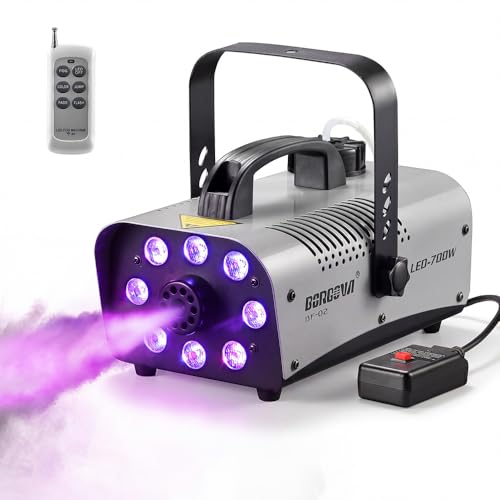
BORGOVA 700W Fog Machine with LED Lights
700W with wireless remote and 8 built-in LED lights for colored fog output. The sweet spot of price, power, and convenience for most Halloween hosts.
1000-Watt Machines ($50-90)
Serious output. A 1000W machine produces dense, sustained fog with a reheat cycle under 2 minutes. These can fill large rooms, feed a front yard from a covered spot (or from the lawn itself, if the manual allows outdoor use; see placement strategy below), and keep up with a fog chiller’s demand. Some models at this wattage include timer controls, continuous-output modes, and DMX compatibility.
Best for: Large spaces, yard haunts, chiller setups, anyone who wants fog as a core design element.

Katomi 1000W DMX512 Fog Machine with Wireless Remote
Serious output with a fast reheat cycle, plus DMX512 if you ever want to automate it. Wireless remote and a wired timer are both included.
1200W+ and Haze Machines ($90-300)
The prosumer tier. Machines above 1200W produce near-continuous output. Haze machines are a separate category: they produce a thin, persistent atmospheric haze (think concert lighting) rather than thick fog bursts. Many run on water-based haze fluid (Chauvet’s Hurricane Haze hazers, for example), others on oil-based fluid, and each needs the fluid its maker specifies. Haze machines are expensive, but they maintain atmosphere for hours without manual triggering, which is what makes laser beams visible. Our guide to lasers and fog covers when that’s worth the money.
Best for: Large events, walkthrough haunts, professional-grade setups.
Use our Fog Calculator to determine the right wattage for your space.
Fluid Types: They’re Not All the Same
Fog fluid is a mixture of water and either propylene glycol or glycerin (sometimes both). The ratio determines the fog’s density, hang time, and behavior.
Standard water-based fluid (the stuff that comes with most machines) produces a medium-density fog that rises and dissipates within 2-3 minutes. This is fine for general atmosphere.
High-density fluid uses a higher glycol concentration. It produces thicker fog that lasts longer and fills a space more completely. This is what you want for dramatic bursts and chiller setups.
Low-lying fluid is formulated to produce fog that stays close to the ground even without a chiller. Results vary. In my experience, low-lying fluid helps but doesn’t replace a proper chiller. It’s worth the $3-5 premium per quart if you’re chasing ground fog.
Haze fluid is made for haze machines only. It comes in water-based versions (Chauvet’s HFG, Rosco’s V-Hazer fluid, Froggy’s Fog Faze Haze) and oil-based ones. Use the type your hazer’s maker names, and don’t put haze fluid in a standard fog machine. NIOSH, after studying theatrical fog on Broadway, recommended “using only fog fluids approved by the manufacturers of the machines” (NIOSH), and that goes for fog fluid too.
Never use homemade fluid. I know there are recipes online using glycerin and distilled water. These mixtures clog pumps, leave residue, and can produce harmful byproducts if the glycol-to-water ratio is wrong. Commercial fog fluid costs $8-15 per quart and a quart lasts 2-4 hours of moderate use. Just buy it.

Froggy's Fog Halloween Party Fog Fluid, 1 Gallon
Professional-grade water-based fog juice that works in any 400-1500W machine. High output, long lasting, and a gallon covers a full night of heavy use.

FogWorx Extreme High Density Fog Juice, 32 oz
Thick, long-lasting juice formulated for maximum hang time. Works well with chillers and produces visibly denser fog than standard fluid.
Building a Fog Chiller
A fog chiller is a container filled with ice that cools the fog before it exits, producing low-lying ground fog that crawls along the floor instead of rising to the ceiling. This is the single biggest upgrade you can make to a fog machine, and it costs $15-25 in materials.
Materials
- Styrofoam cooler (28-48 quart)
- 4-inch diameter dryer vent hose, 3 feet long
- Duct tape
- Box cutter
- 10-20 lbs of ice (bagged ice from a gas station works fine)

Steelsoft 4-inch Flexible Dryer Vent Hose, 3 Feet
Heavy-duty 6-ply aluminum foil ducting with clamps included. Cut to length for your chiller build. The 3-foot length is ideal for a cooler setup.
Build Instructions
- Cut a hole in one end of the cooler, sized to press-fit your fog machine’s nozzle. It doesn’t need to be airtight, just snug.
- Cut a second hole in the opposite end, sized for the dryer vent hose. Insert the hose and seal the gap with duct tape.
- Fill the cooler with ice. Loosely crumpled aluminum foil on top of the ice increases surface area and improves cooling.
- Position the fog machine’s nozzle into the intake hole.
- Aim the dryer vent hose output where you want the ground fog to go.
- Fire the machine. Hot fog enters the cooler, passes over ice, exits as cold, dense ground fog that hugs the floor.
Ice consumption: A good chiller with 15 lbs of ice lasts 1.5-2 hours of moderate fog output. Buy more ice than you think you need. Stash a backup bag in a cooler.
Pro tip: Freeze water in disposable aluminum baking pans. The resulting ice blocks melt much slower than bagged ice cubes and cool the fog more efficiently. Freeze them 2-3 days before your event.
For the full masterclass treatment, see our Fog Mastery series.
Placement Strategy
Where you put the fog machine matters as much as which machine you buy.
Hide it. A visible fog machine breaks the illusion instantly. Place it behind furniture, inside a cabinet with the door cracked, behind a porch column, under a table draped with fabric, or inside a prop (a cauldron with the nozzle poking through works well).

PULACO Ultrasonic Mist Maker with 12 LEDs
Drop this into a cauldron of water for an instant bubbling fog effect with colored LED glow. Great as a standalone accent or paired with a real fog machine.
Elevate it for haze, lower it for ground fog. Standard (unchilled) fog rises. If you want atmospheric haze filling a room, elevate the machine to waist or chest height so the fog disperses evenly as it rises. If you’re using a chiller for ground fog, place the output hose at floor level and let physics do the rest.
Consider airflow. Fog drifts with air currents. A ceiling fan, an open window, or an HVAC vent will push fog in directions you didn’t plan. Turn off ceiling fans in fogged rooms. Close windows unless you want the fog to drift toward them. If you want to direct fog flow intentionally, a small fan on its lowest setting works well.
Outdoor placement. Check your machine’s manual first: many consumer fog machines are indoor-only. Chauvet’s Hurricane 1000 manual lists “Use outdoors” under its DO NOTs, along with “Expose to rain or moisture.” Run an indoor-only machine from a dry, non-flammable spot under a roof, such as the garage mouth or a covered porch edge, and let the fog drift out. Machines built for outdoor use say so: Antari’s IP-1500 manual says the model “is particularly designed for outdoor applications,” and also warns it is “spray-waterproof only.” Either way, wind is your enemy. Shelter the fog’s path (walls, hedges, props) and accept that wind will scatter it unpredictably. Ground fog from a chiller survives light breezes better than standard fog because the cold, dense fog has more mass. On a calm night, chilled outdoor fog is genuinely magical. See the fog effects gallery for real examples of outdoor fog done right, and our outdoor decorating guide for integrating fog into a full yard display.
Troubleshooting Common Issues
“My machine spits fluid instead of making fog”
The heater isn’t hot enough. Wait for the ready light to stay solid (not blinking). On cheaper machines, give it an extra 60 seconds beyond the ready indicator. If it keeps spitting, the heater element may be failing. Try running a cleaning solution through it.
“The fog smells terrible”
Old or contaminated fluid. Drain the tank, flush with distilled water, and refill with fresh fluid. If the smell persists, the residue is baked onto the heater. Run a fog machine cleaning solution (available for $5-8) through the system.
“The output is weak and thin”
Three possible causes: (1) Low fluid level, as the pump pulls air when the tank is near-empty. (2) Clogged nozzle, so run cleaning solution. (3) The machine is underpowered for your space. A 400W machine cannot fill a living room. Upgrade or add a second machine.
“The fog sets off my smoke alarm”
It might. Fog particles can trigger photoelectric smoke detectors. If your home has hardwired alarms, this is a genuine problem. Options: temporarily cover the smoke detector (not recommended for safety, but people do it), or keep the fog output low and away from detectors. Our guide to whether a fog machine will set off your smoke alarm covers the options in detail. Never disable a smoke detector and forget to re-enable it. For more on keeping your Halloween event safe, see our party safety tips.
“My fog rises instead of staying low”
Standard fog is warm. Warm air rises. You need a chiller (see the build section above) or low-lying fluid (less effective but better than nothing). Even chilled fog will eventually warm up and rise. In a room at 72 degrees F, chilled fog stays low for 2-4 minutes before dissipating. Continuous output is better than occasional bursts for maintaining a ground fog layer.
Maintenance and Storage
Follow your own machine’s manual first. Chauvet added a maintenance section to its Hurricane 1000 manual in May 2025, and its order is cleaner first, then water:
- Unplug the machine, take the pickup hose out of the fluid tank, and put it in the bottle of fog cleaner.
- Plug it back in and let it warm up.
- “Run the FCQ/CF250 through the product in a well-ventilated area for 60-90 seconds of continuous, full output.” The manual adds: “DO NOT allow the product to run dry!”
- Move the hose to “a small bottle with distilled water (only use distilled water, not tap or any other water or liquid)” and run it “for at least 30 seconds to clear any remaining cleaning solution from the pump and heater.”
Then, before it goes on the shelf: “DO NOT leave the cleaning solution in the product,” drain the tank (the safety notes say to “Drain the tank before transporting or storing the product”), and “do not refill the tank with atmospheric fluid before storing the product.” That replaces the old advice to run plain water until only steam comes out: Chauvet’s order ends with a 30-second distilled-water flush, and its warning is “DO NOT allow the product to run dry!”
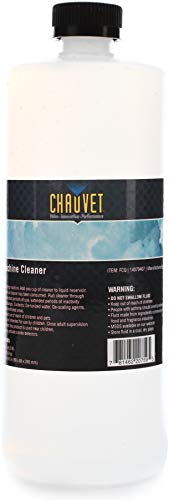
Chauvet Fog Machine Cleaner
Industry-standard cleaning solution that dissolves glycol residue from heaters and pump lines. One bottle handles multiple cleaning cycles across seasons.
Chauvet says not to leave its fluid in the tank “for more than 10 days without use,” and it is blunt about clogs: “Once a product is clogged, the cleaning procedure is unlikely to effectively clear the clog.” It also asks for a monthly test run and says it “does not guarantee products will withstand storage for long durations, even if the cleaning process is followed,” so give it a short run every month or so through the off-season rather than finding out in October. For even more detail on maintenance, chiller builds, and outdoor techniques, work through our Fog Mastery masterclass series. You can also compare fog machine options side by side in our best dry ice machines roundup for an alternative approach to low-lying fog. What to do with the leftover fluid is in how to store Halloween decorations.