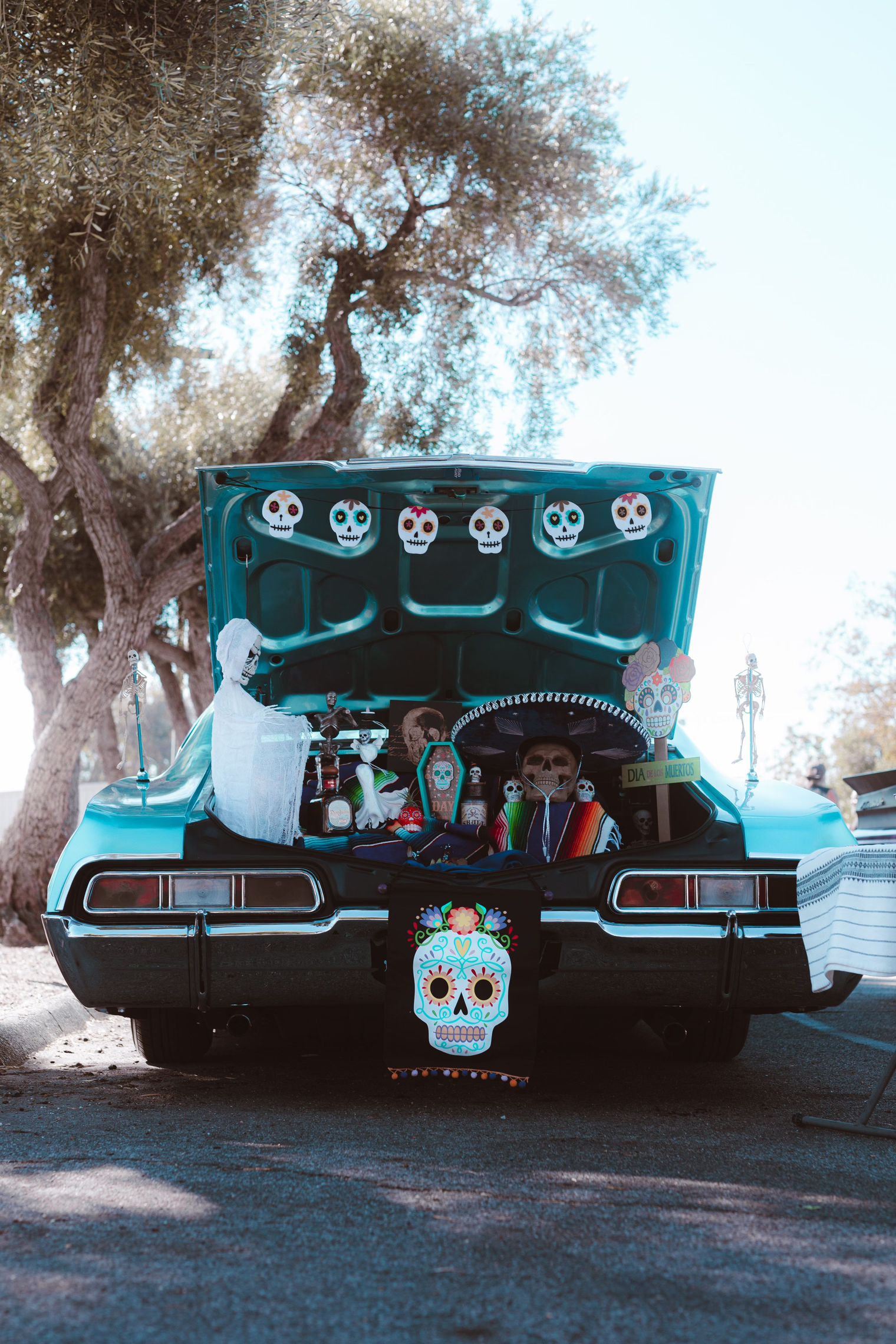
A trunk-or-treat hands you a parking space, an open hatch or trunk lid, maybe a folding table, and two hours of kids walking past in costume. Historian Samira Kawash, writing in the peer-reviewed American Journal of Play in 2011, places it in the present-day version of the ritual, one run by grown-ups: “In many communities, adults organize and direct opportunities for trick-or-treating in parking lots (trunk-or-treat) and shopping malls,” and “Churches and other community groups sponsor trick-or-treating parties” (Kawash, p.171). She gives no start date for it. Our history of trick-or-treating covers the century before it.
The car is the part most decorating advice skips. It has an exhaust pipe, a battery that shuts things off on its own schedule, paint you want to keep, and a lid that was never designed to carry a backdrop.
Ask the Host First
Churches, schools and community groups each set their own rules, and we found no organizer standard from an approved source to hand you. Before you design anything, ask the host:
- When cars may pull in, and when they may leave. The safest lot is one where no car moves while kids are in it.
- Whether generators, fog machines or open flames are allowed at all.
- How much room each car gets, and whether you can set a table or props on the ground behind it.
- What the rain plan is. If it moves into a parking garage or a gym, the engine and fog rules below matter even more.
Pick a Theme That Reads From Ten Feet
Kids see your trunk from across a lane, in the dark, for a few seconds. A single big shape (a monster mouth, a coffin, a dragon, a cauldron) reads better than a crowd of small props. Put the biggest color at kid height, in the lower half of the opening, and keep the space where you hand out treats clear so no one has to reach past a prop to get to the bowl.
If you buy a trunk kit, read how it attaches before you order. Skip any that stick to the paint or hang weight from the lid (both covered below), and measure your opening against the kit’s panel sizes.
Keep the Engine Off
Our rule is that the engine stays off for the whole event, and it rests on what CDC and Ford say about open tailgates. The CDC’s carbon monoxide guidance, written for driving, says: “If you drive a car or SUV with a tailgate, when you open the tailgate open the vents or windows to make sure air is moving through. If only the tailgate is open, CO from the exhaust will be pulled into the car or SUV” (CDC, Carbon Monoxide Poisoning Basics). Ford’s owner’s manual gives the same warning from the automaker’s side: “Make sure that you fully close the liftgate to prevent exhaust fumes from entering your vehicle” (2020 Expedition manual, Manual Liftgate).
A decorated cargo area with the hatch up is the space kids lean into, and the exhaust pipe sits under the bumper they’re standing behind. So the engine stays off for lights, heat, the stereo and recharging. CDC lists the most common symptoms of CO poisoning as “headache, dizziness, weakness, upset stomach, vomiting, chest pain, and confusion,” and says infants, the elderly and people with heart disease, anemia or breathing problems “are more likely to get sick from CO.”
If rain moves the event indoors to a garage, the EPA’s carbon monoxide fact sheet is blunt about vehicles in garages: “CARBON MONOXIDE CAN BUILD UP TO DEADLY LEVELS, EVEN WITH THE GARAGE DOOR OPEN” (EPA, September 2025).
Some trucks decide for you anyway. Ford’s 2019 Super Duty manual describes an engine idle shutdown that turns the engine off “when it has been idling in P (Park) or N (Neutral) for five minutes (parking brake set) or 15 minutes (parking brake not set)” (Super Duty manual).
Lights and Power Without the Car
Why the car battery is a poor power source
Some cars shut accessories off on their own well before a two-hour event ends. Ford’s 2015 Mustang manual, for example, says: “If you leave on the courtesy lamps, dome lamps or headlamps, the battery saver turns them off 10 minutes after you switch off the ignition,” and on cars with a push-button key, a car left in the run state “turns off once it detects a certain amount of battery drain or after 45 minutes” (Mustang manual). Check your own manual before you plan on the dome light or anything else running off the car.
Plug-in inverters for the 12-volt socket bring their own catch. Energizer’s manual for its 150-watt EP150 inverter says a typical vehicle battery with an 80-watt load gives “4 to 5 hours or more,” then adds: “When using a vehicle battery as a power source, it is strongly recommended to start the vehicle every hour or two to recharge the battery” (Energizer EP150 manual). That’s sound battery advice and the wrong move with a hatch open and kids behind the bumper. The same manual lists a no-load current of 0.4 A and says to unplug the inverter from the 12-volt port when it’s not in use “to prevent slight discharge” of the battery. It shuts off at 10.5 volts, and any device rated over 150 watts shuts it down. It also says “Do not place items on or over the inverter during operation,” which rules out hiding it under a tablecloth or a pile of fake cobweb.
Battery maker Optima describes reserve capacity, the number that tells you how long a battery can run accessories with the engine off, as “how long a fully-charged battery can deliver 25 amps of current in an 80°F environment, before the battery is discharged down to 10.5 volts.” It also says that when any battery is deeply discharged, “it’s always best practice to fully-recharge the battery with a battery charger as soon as possible and not the vehicle’s charging system” (Optima, Battery Reserve Capacity).
Battery-pack lights first
For most trunks, the answer is lights that carry their own batteries. Strings and candles that take AA cells have nothing to do with the car’s electrical system, can’t be turned off by it, and don’t need a cord across the pavement. Put a fresh set of cells in on the day, and bring spares.

ZAIYW 2 Pack 16.5 Ft 50 LED Battery Operated Halloween String Lights with Timer
Two purple and orange strings, each on its own battery box of 3 AA cells (not included), with eight modes. The listing says the timer runs 6 hours on and 18 off once switched on, and rates the strings IP54. Two separate strings let you outline the floor and sides of the cargo area without one long run.

Homemory Black Flameless LED Pillar Candles, 9 Pack, Remote and Timer
Black plastic pillar candles in three heights, 2 AA cells each, with two remotes and 2, 4, 6 and 8-hour timers. The listing says they won't melt but are NOT waterproof, so keep them inside the cargo area and out of the rain. The flame look without the flame, which is the only kind a trunk full of paper and fabric should have.
Power stations: read the manual for outdoor use
A projector, a speaker that plugs into the wall or a string of plug-in lights needs an outlet, and a portable power station is the usual answer. Check its manual for outdoor use before you bring it, because some makers rule it out. Jackery’s manual for its Explorer 300 Plus (288 Wh, 300 W rated, 600 W surge peak) carries this: “DANGER: This device is for indoor use only (e.g. RV/tent/off-grid cabin, etc.). Do not use outdoors under any circumstances (e.g. where exposed to rain or snow or use it in wet environments by the sea or waterways)” (Jackery Explorer 300 Plus user manual).
That rules this unit out for a parking lot. We don’t recommend a specific power station here: if your own unit’s manual doesn’t allow outdoor use, leave the plug-in gear at home and stick to battery-pack lights. The same Jackery manual also says “Please start the vehicle before charging to prevent draining the car battery,” which is another reason not to top one up from the car at the event.
Hanging It Without Hurting the Car
Nothing hangs from the liftgate
Ford’s manual is plain: “Do not hang anything, for example a bike rack, from the glass or liftgate. This could damage the liftgate and its components.” The same page says “Do not leave the liftgate open when you are driving,” so build the display after you park, not in the driveway. On power liftgates, Ford’s 2019 Escape manual says that if the liftgate “starts to close after it has fully opened, this indicates there may be excessive weight on the liftgate or a possible strut failure,” and tells you to remove the weight (Escape manual).
Let the display stand on its own: backdrops draped from the cargo floor or supported by props inside the car, and anything tall on the ground behind the bumper where it can’t lean on the lid. Keep only light paper or fabric cutouts on the inside of the lid itself.
Magnets: steel panels, cured paint, off by the end of the night
Car-magnet sign makers write care guides for signs that ride on a car for months, and the rules carry over to a few hours in a lot. eSigns says its magnetic signs “will not work on Emron® paint, vehicles with non-magnetic body panels (such as fiberglass), nonferrous metals like aluminum, plastic on Saturn® cars, vehicles that have been repaired with Bondo®, simulated wood-grain siding, or vehicles that have been painted numerous times.” It wants paint cured first, giving “90 days for paint, 60 days for clear coats, and two [2] days for wax,” and a panel “free of trim, moldings, indentations, dents, ridges, or rust spots” (eSigns magnetic care guide). Aluminum and fiberglass panels won’t take a magnet at all, so try a fridge magnet on the exact spot before you build a plan around it. On paint newer than those cure times, eSigns’ advice is to wait, so keep magnets off a new car or a fresh repaint.
StickyLife, another sign maker, says to make sure the area “is flat and void of any folds, creases or other body panel formations,” and that “Even a thin space may be all that is needed for air flow to get under the magnet and peel it off while driving down the road.” For cold nights it says “the temperature of the magnet should be a minimum of 50°F, but the temperature of the vehicle surface matters little” (StickyLife car magnet care). eSigns asks for the sign to be at 60°F or above when installed. Keep magnets indoors until you set up, wipe the panel and the back of the magnet clean first (eSigns recommends daily cleaning for signs on vehicles “to help protect their clear coat”), and take them off before you drive home.
Tape
We found no automaker or tape-maker source that rates any tape for a car’s clear coat, so we don’t recommend taping to paint. Painter’s and gaffer tape belong on the table, the ground and the props.
The table and the wind
A folding table behind the bumper takes the treat bowls, which keeps kids out of the cargo area. Clip the cloth down so the first gust doesn’t take the display with it. Our weatherproofing guide covers anchoring for anything taller than the table.

TriPole Tablecloth Clips, 32 Pack
Stainless steel clips that hold a tablecloth to the table edge. The listing says they fit tables less than 1.77 inches thick, so check your folding table's edge before you rely on them. Thirty-two is enough for a table and the edge of a backdrop cloth.
No Flames and No Fog at the Trunk
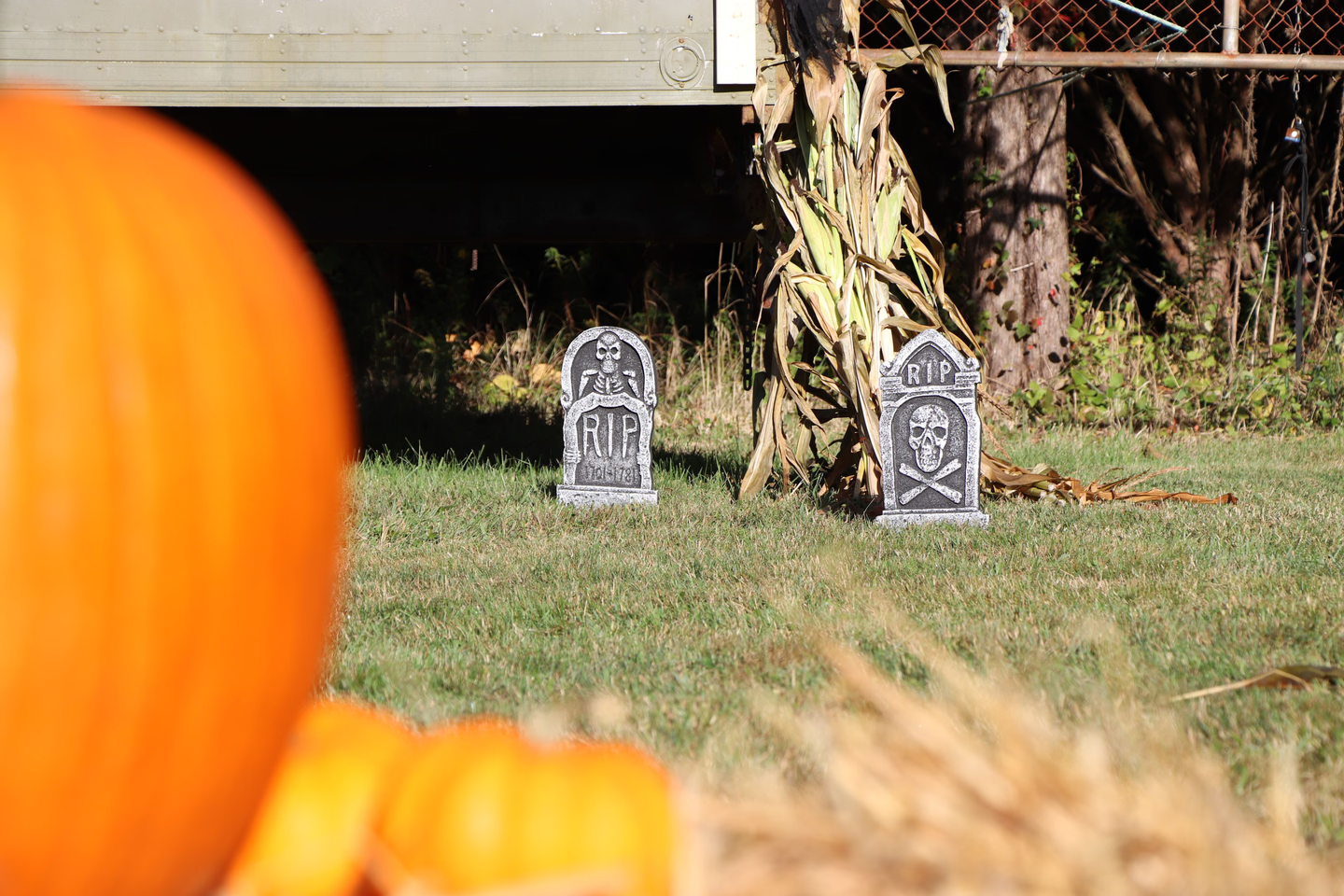
The NFPA’s Halloween tip sheet says decorations “are the first thing to ignite in more than 800 reported home fires each year. Nearly one-third of these fires were started by a candle,” and that “Dried flowers, cornstalks, and crepe paper catch fire easily. Keep all decorations away from open flames and other heat sources like light bulbs and heaters” (NFPA Halloween Fire Safety Tips). Cornstalks are standard issue for a farm-theme trunk. Pair them with LED light only. For pumpkins, NFPA says to “Use a battery-operated candle or glow-stick in jack-o-lanterns,” and the CPSC’s Halloween safety poster says to keep candle-lit jack-o’-lanterns where children “cannot brush against the flame. Try LED lights instead” (CPSC “Deadly Cute” poster).
Timing makes this more pointed. The U.S. Fire Administration’s snapshot of Halloween fires from 2017 to 2019 counts an average of 9,200 fires a year over the three days around Halloween, and says they “occurred most frequently in the afternoon and early evening hours, peaking from 6 to 7 p.m.” (USFA data snapshot). Vehicle fires were 16.4% of those Halloween fires; USFA doesn’t break out any from trunk-or-treats.
Fog at the car is a poor fit too. Chauvet’s Hurricane 1000 draws 740 W at 120 V, more than a 300 W power station or a 150 W plug-in inverter supplies, and its manual (Rev. 4) lists, among its DO NOTs, “Use outdoors,” “Expose to rain or moisture,” “Allow flammable materials close to the product when it is operating,” and “Touch the output nozzle. It may be hot for several hours after use.” It also says to “Clean around the product during and after use, as surfaces may become slippery.” Other fog machines have their own manuals, so read yours, and see our fog machine guide for where fog does work.
Kids, the Trunk and Moving Cars
Nobody climbs into the car, including for photos, and the trunk or hatch closes only after you’ve looked inside. The glow-in-the-dark release handle inside many sedan trunks comes from federal standard FMVSS No. 401, which requires “a trunk release mechanism that makes it possible for a person trapped inside the trunk compartment of a passenger car to escape.” The standard “does not apply to passenger cars with a back door,” meaning a door at the back “through which cargo can be loaded or unloaded” (49 CFR 571.401), and the regulation’s definition of “passenger car” leaves out multipurpose passenger vehicles (49 CFR 571.3). The same section defines a truck separately, as a vehicle “designed primarily for the transportation of property or special purpose equipment.” Hatchbacks and wagons fall outside the trunk-release rule, and so does any vehicle classed as a multipurpose passenger vehicle or a truck. Don’t count on an inside release in the cargo area you just decorated.
Cars arriving late or leaving early are the moving hazard. NHTSA’s Halloween tips for drivers say to “Watch for young trick-or-treaters in unexpected places. Children may be unaware of traffic and dart into the street unexpectedly” (NHTSA Halloween Safety Tips). A parking lot full of costumes is one of those places. Arrive early enough to park and set up before the first kids do, and stay parked until the host says the lot is clear.
Your own costume matters when you’re reaching into a cargo area in the dark. The CPSC poster lists bad-fitting costumes as the source of “Most injuries from trips and falls” and says costumes should be “brightly colored or trimmed with reflective tape to make them visible to motorists at dusk and in the dark.” NFPA adds: “When choosing a costume, stay away from long trailing fabric.”
Treats Parents Will Keep
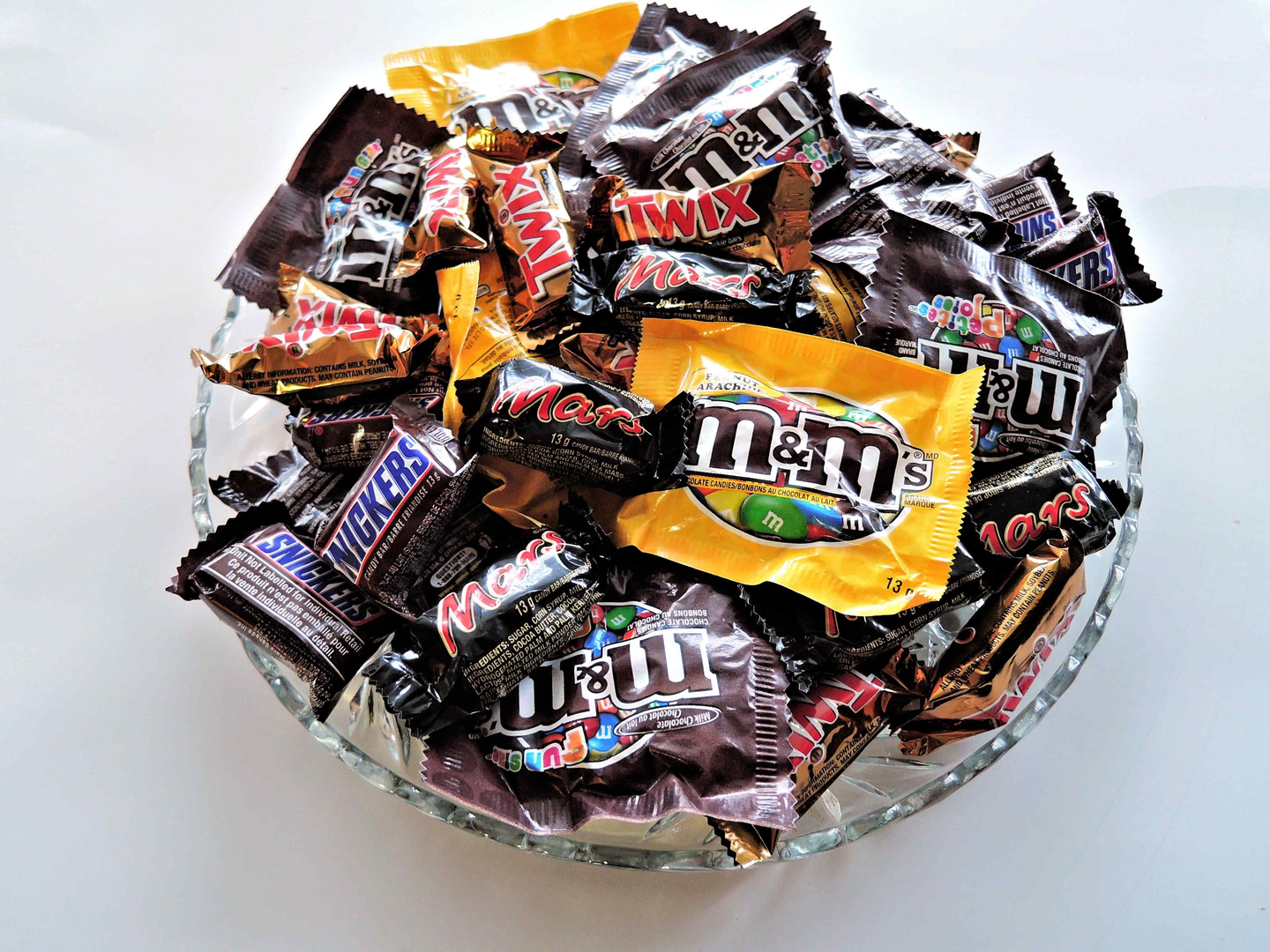
The FDA’s Halloween guidance is written for parents, and it tells you what happens to anything you hand out. It tells parents to have children accept and eat only commercially wrapped treats, to check wrappers for “tiny pinholes, or tears in wrappers,” and, for a child with a food allergy, “Do not allow the child to eat any home-baked goods he or she may have received” (FDA, Halloween Food Safety Tips for Parents). For those kids, homemade cookies from your trunk go straight in the trash. The FDA also tells parents of very young children to remove “choking hazards such as gum, peanuts, hard candies, or small toys,” and the CPSC poster says “No toys with small parts for children under 3,” so keep a separate bowl if you’re handing out small trinkets. If you planned anything perishable, the FDA’s limit is two hours out of the fridge, or one hour above 90°F.
FARE, which runs the Teal Pumpkin Project, says one in 13 U.S. children has a food allergy. It asks you to keep “food treats and non-food treats in separate bowls,” notes that “some brands of moldable clay contain wheat,” and says to “choose latex-free items, as there are children who have latex allergies” (FARE, About the Teal Pumpkin Project). Glow sticks lead FARE’s list of non-food treat ideas, and a pack of 100 glow sticks doubles as light for the display. A teal pumpkin bucket on the table marks the non-food bowl. Our candy guide’s teal bowl section has more non-food ideas and how much candy to bring.
Packing List
- Battery-pack string lights and flameless candles, fresh AA cells, and spares
- Backdrop or kit, set up to stand on its own, nothing hung from the lid
- Magnets only for steel panels you’ve tested, plus a cloth to wipe the panel
- Folding table, tablecloth and clips
- Commercially wrapped candy in one bowl, non-food treats in another, and a teal bucket or sign
- A costume that clears the ground, with some reflective trim
- The host’s arrival and departure times