Most Halloween apothecary shelves go wrong the same way. Twelve bottles from twelve different stores, twelve label styles, lined up like a yard sale.
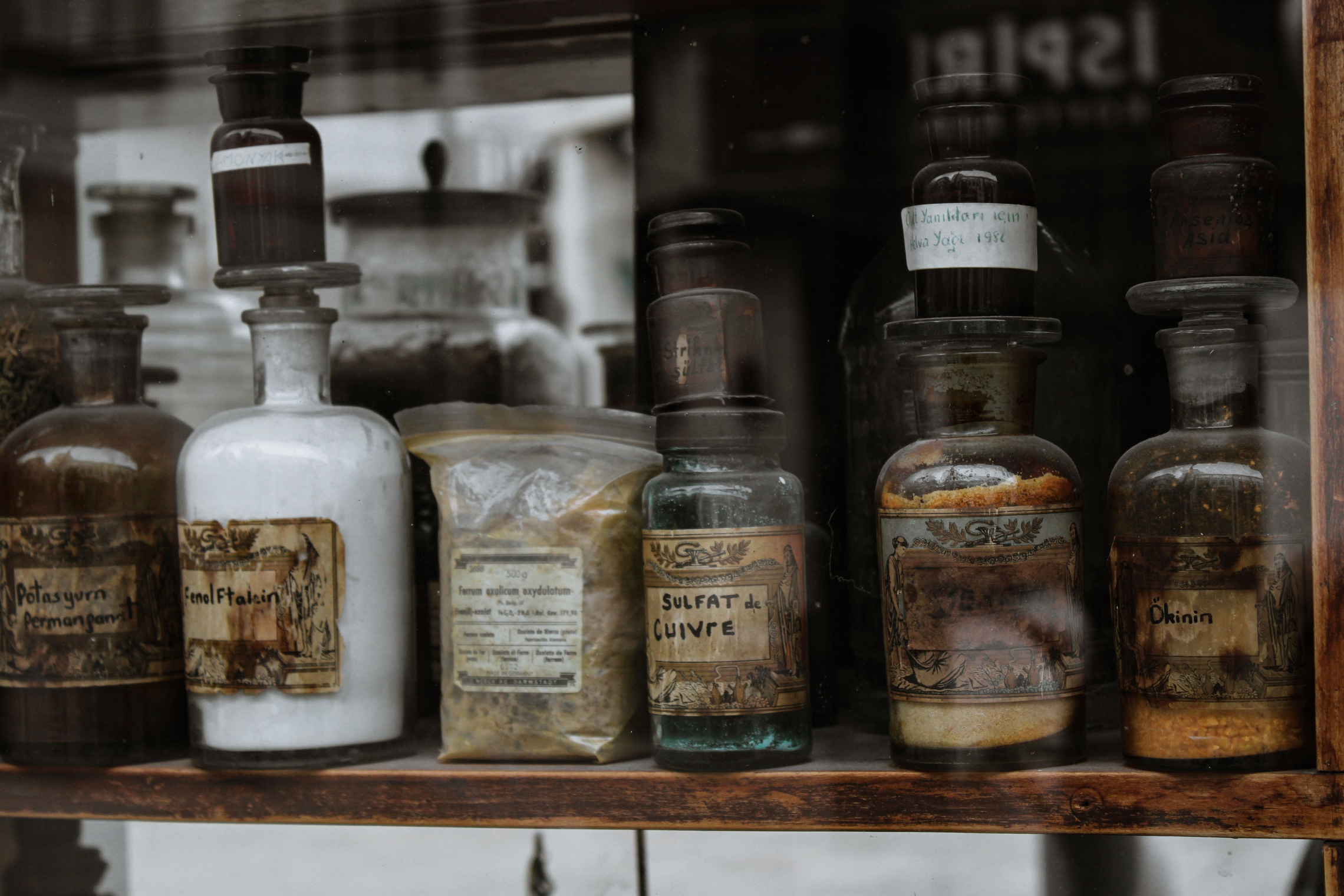
A real apothecary shelf looked almost dull. Row after row of the same jar, the same painted cartouche, the same abbreviated Latin with a full stop after it. Only the name changed. That repetition is what makes a shelf read as real, and it starts with the labels.
Our two free printables are made for it: 12 potion bottle labels for bottles and decanters, and 20 smaller ingredient labels for jars.
Get the free potion bottle labels Get the ingredient jar labels
What Real Apothecary Shelves Held
Glass did most of the work. Thomas K. Ford’s history for Colonial Williamsburg, The Apothecary in Eighteenth-Century Williamsburg, records an order for “246 white glass vials ranging in capacity from two drams to twelve ounces.” Earthenware gallipots came second, and the inventories list “pill pots, ointment pots, and syrup pots” by the dozen. When archaeologists dug the site of Williamsburg’s first theater, next to Gilmer’s shop, they found George Gilmer’s pharmaceutical rubbish: delftware ointment pots and drug jars, glass medicine phials, a brass pestle, and, “inexplicably, a human jaw.” Just how, or if, the jaw related to his shop, Ford writes, “remains open to conjecture.”
The Smithsonian’s National Museum of American History sorts the vessels by what went in them. In its notes on the Bristol-Myers Squibb European Apothecary, “Tall-waisted albarelli and wide-mouth jars were used to store dry, bulky material such as leaves, bark, and flowers. Syrup jars with spouts and handles were used for liquids.” Tiny vials and pots went home with patients.
That gives you a layout rule. Put dried herbs in wide-mouth jars, liquids in narrow-necked bottles, and keep the smallest vials for the front edge of the shelf, where a customer would have picked one up.
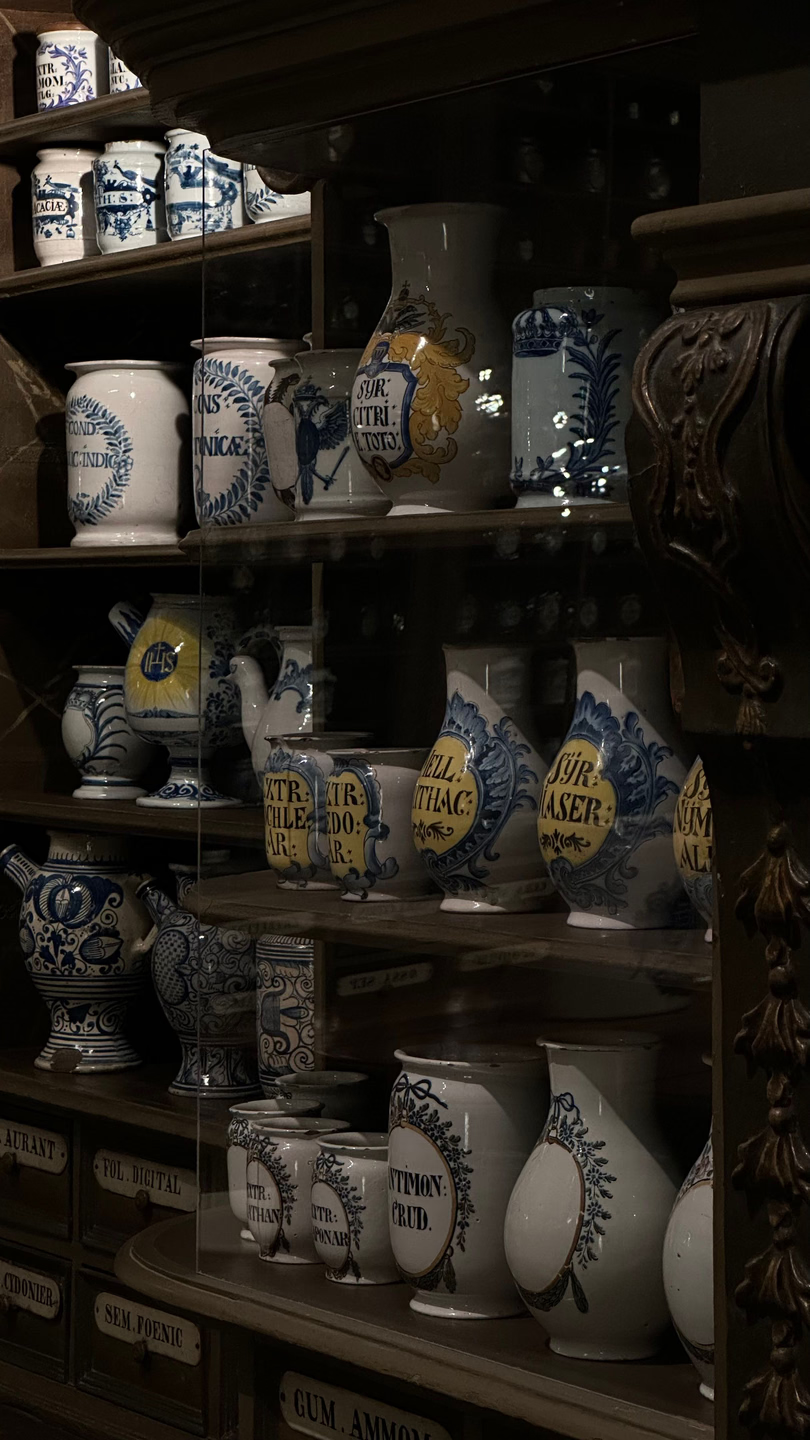
The blue-and-white jars most people picture are delftware. The Victoria and Albert Museum’s London drug jar from about 1765 to 1775, lettered “E:CARYOCOST.”, held a purgative that included cloves. The V&A adds that delftware stayed in pharmacy use “into the 1800s. Glass or white earthenware with transfer-printed labels finally replaced it.”
One detail costs nothing. The Smithsonian notes that “Containers without lids were covered with parchment or cloth and tied with a string at the neck.” A square of brown paper and some twine over a jar mouth looks more period than any cork.
Ridges meant poison. Amber blocks light.
The ridged blue bottle is the apothecary glass most people picture, and the ridges were a warning, not a style. The Science Museum Group’s blue ridged bottle for arsenic, from Henry Wellcome’s collection, is “ridged, so the user would know by touch that its contents were poisonous if given in large doses.” The museum adds that “Coloured glass was also used to indicate poisons.” Its description dates the bottle 1801 to 1935; the record’s own title says 1701. Its blue bottle for laudanum, dispensed by Dinneford and Co. of London around 1834, is only 56 mm tall.
Color was not a fixed code, though. The same museum holds a ribbed brown bottle labelled “Tinct. Cannab. Ind. B.P.” and embossed POISON, made by Wright, Layman and Umney of London between 1900 and 1950. The ribs and the word did the warning; the glass was brown.
Britain regulated the contents before it regulated the bottles. According to the Royal Pharmaceutical Society’s Pharmaceutical Journal, the 1851 Arsenic Act required a sales register, a buyer known to the seller, and arsenic colored with substances “such as soot or indigo.” The Pharmacy Act of 31 July 1868 covered 15 named poisons and set rules for labelling them. We found no primary source showing that any law required ridged or blue bottles.
Amber did a different job. The FDA’s guidance on container closure systems says “Light protection is typically provided by an opaque or amber-colored container.” It says nothing about blue, and we found no source claiming cobalt was chosen to block light.
On a shelf, that means amber for the bulk of the bottles. For the poisons, use texture and lettering: a ridged or embossed bottle marked POISON, in amber or in cobalt, placed where a hand would find it first.
Show globes, and the plague story
The big glass globes of colored liquid in old shop windows attract plenty of invented history.
The documented record starts late. The University of Arizona’s Coit Museum of Pharmacy, drawing on the pharmacist George Griffenhagen’s research, gives the first written account as a German visitor’s letter from London in 1775: “The street looks as though it were illuminated for some festivity; the apothecaries and druggists display glasses filled with gay-colored spirit.”
The popular origin stories are another matter. The Medical University of South Carolina’s Waring Historical Library lists the Great Plague of London and a red-for-danger, green-for-safe color code among the myths: “While there are many sources stating the British plague as the origin of the show globe, there is little evidence to support this claim.” It lists the alchemist origin among the myths too, while the Coit Museum calls the merger of apothecaries and alchemists “the most commonly accepted origin.” Put a show globe on your shelf, but don’t write a plague legend on its card.
What real globes held is darker than the legend. Case Western’s Dittrick Museum says the 1893 Era Formulary gave “over 50 ways” to color one: potassium bichromate with sulfuric acid for orange, copper and nickel coins dissolved in strong acid for green, cobalt nitrate with ammonia and alum for red. Use water and food coloring.
Matched Rows or a Curiosity Cabinet
Pick one look before you buy any glass.
The real shop is repetition. The Smithsonian notes that “Well-to-do pharmacists arranged to have large sets of jars produced with coats of arms.” Its glass collection holds “dozens of drug jars with this same embellishment,” the same blue and yellow cartouche under the same crown, over and over, with only the Latin changing.
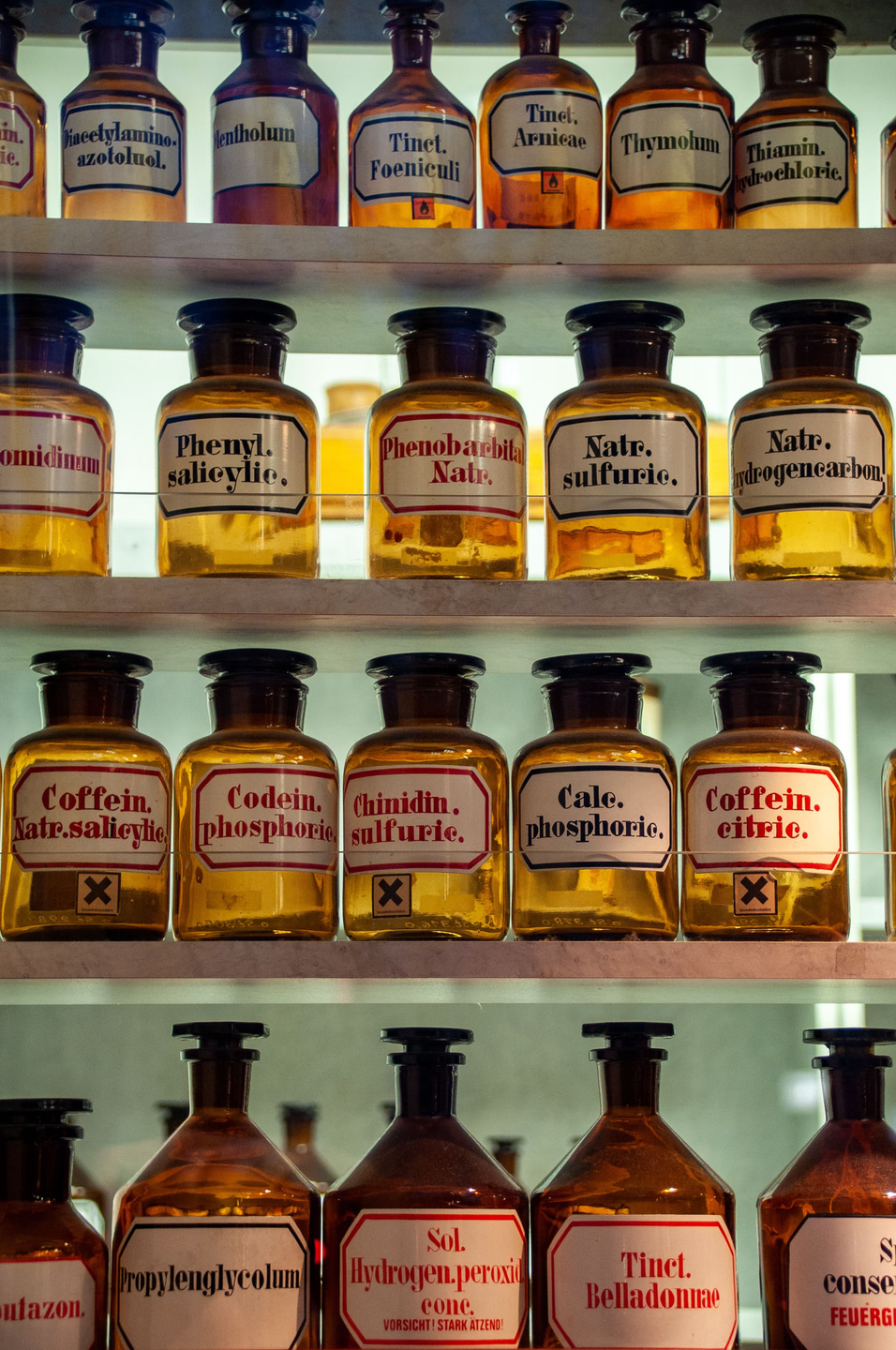
The witch’s cabinet is variety. Odd bottles, mismatched heights, a skull, dried seed pods, one jar with its label half torn off. That is the Victorian curiosity cabinet, and it’s what our Witch’s Apothecary blueprint builds on its specimen shelf.
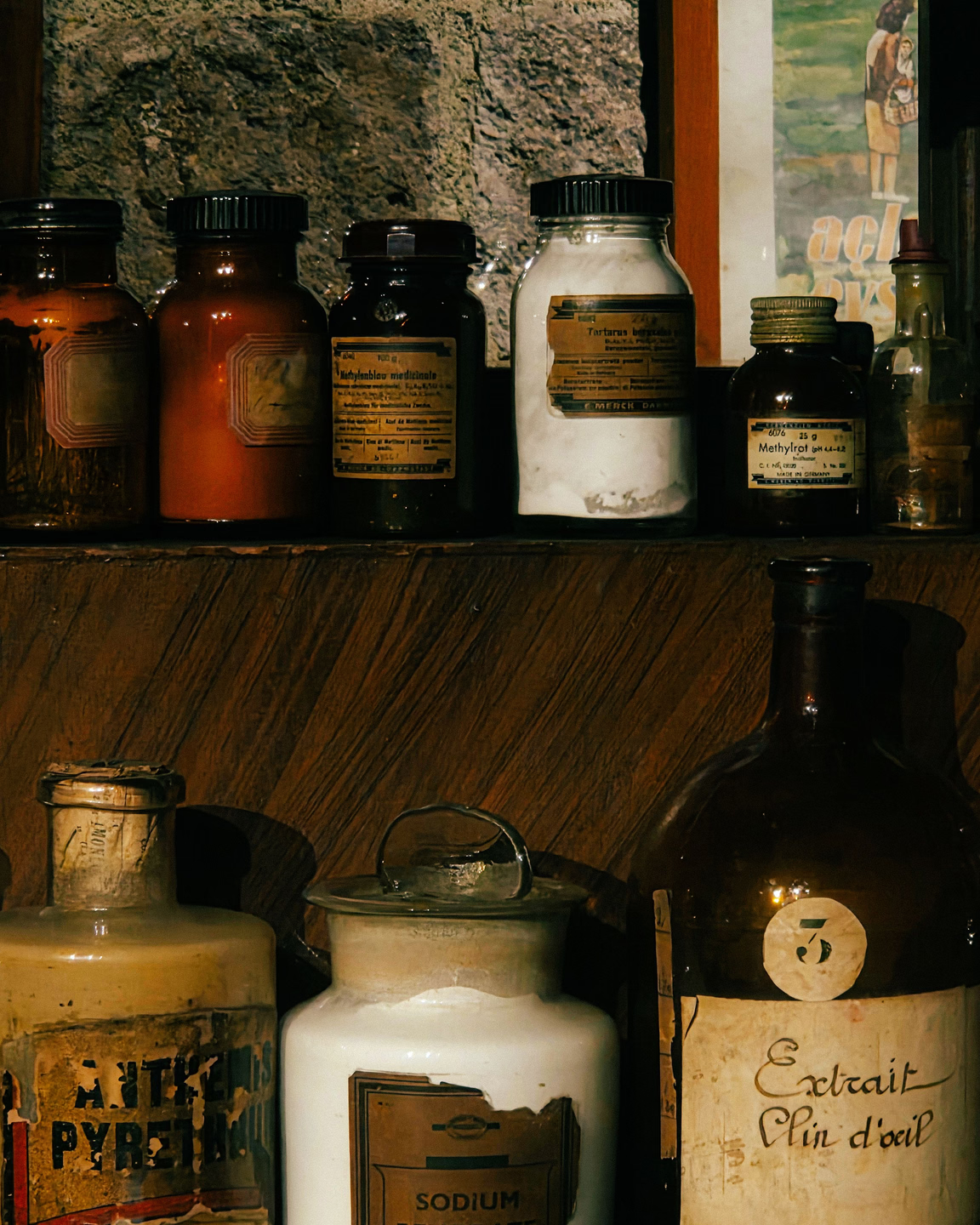
We think the matched row is the scarier of the two. A dozen identical amber bottles with neat labels looks like a place that knew what it was doing. It also costs less, since one multipack does the whole shelf.

PINIWON 12 Pack 8 oz Amber Glass Bottles, Boston Round
Twelve identical amber Boston rounds. The screw caps seal colored water better than cork. Soak off the included labels and use ours.
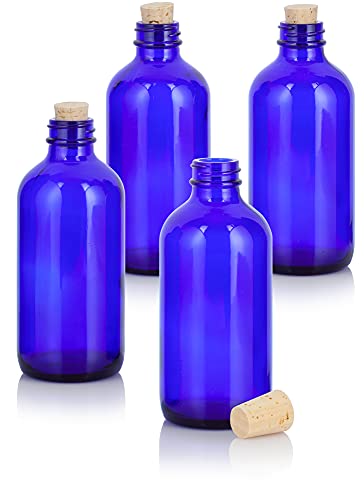
JUVITUS 8 oz Cobalt Blue Boston Round Glass Bottles with Cork, 4 Pack
Smooth rather than ridged, but the right cobalt and the same 8 oz size as the amber set, so they sit in the same row. Fill them with dry goods, or glue the corks in if they hold colored water.
Labels That Read as Genuine
Period labels were Latin, abbreviated, and stopped with a full stop or a colon. Every abbreviation below is on a real museum object we could check.
| On the label | Latin | Meaning | Real example |
|---|---|---|---|
| Tinct. | tinctura | tincture | “Tinct. Cannab. Ind. B.P.” (Science Museum Group); TINCT MART POMAT (Smithsonian) |
| Aq. | aqua | water | AQ CARDUI BENED, “Aqua Cardui Benedicti, or Blessed Thistle Water” (Smithsonian) |
| Ol. | oleum | oil | OL SPICAE, “Spike lavender oil” (Smithsonian) |
| Ung. or U / V | unguentum | ointment | “Ung: au Frabirm” and “Vng. Alaba strin.” (Smithsonian); “U Pectoral” (Old Operating Theatre Museum) |
| Elec. or E | electuarium | electuary | ELEC MITHRIDAT. ANDROMACH (Smithsonian); “E. Mitridat. D” (Old Operating Theatre Museum) |
| Rad. | radix | root | RAD: ARIS (Smithsonian) |
| Spir. or SP | spiritus | spirit | SPIR NASTURT (Smithsonian); “SP Bezoardic” (Old Operating Theatre Museum) |
| Ess. | essentia | essence | ESS VALERIAN, “Essence of Valerian” (Smithsonian) |
| P | pilulae | pills | “P Aloes Ros,” rosated aloe pills (Old Operating Theatre Museum) |
| Ax | axungia | fat or grease | “Ax Ursi,” bear grease (Old Operating Theatre Museum) |
The London Old Operating Theatre Museum adds a line worth putting on a card beside the Mithridate jar: “Mithridate was considered a universal antidote to poisons and venoms.”
Four more details from the Smithsonian’s glass containers make a printed label look painted:
- Powder was often a symbol, not a word. Several jars begin with “the alchemical symbol for powder” before the name.
- I for J, V for U. “In Latin, the letter I was often used instead of a J,” as on a bottle marked OL MAIOR, and the ointment jar above is spelled VNG.
- Red and black letters. Many labels alternate red and black, or set just the first letter of each word in red.
- Leave one blank. Some jars have empty cartouches. “When the contents of the jars were replaced, the apothecary would write the appropriate name.” One hand-lettered label in a row of printed ones looks right.
Don’t worry about getting every abbreviation perfect. The same museum says abbreviations “varied from century to century and from country to country,” and “it is not always possible to decipher the labels on drug jars.”
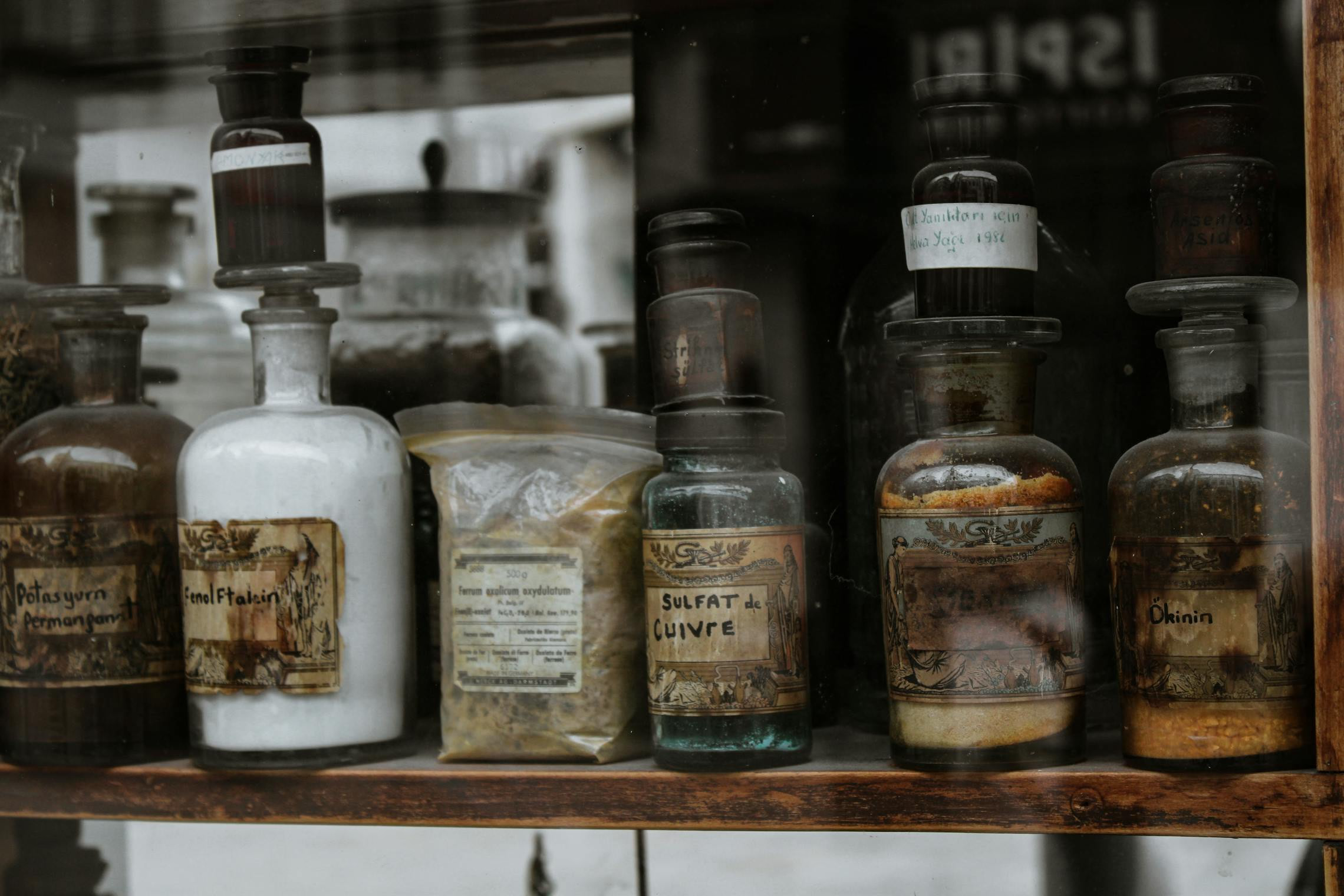
Our potion bottle labels use English potion names, which read better from across a room. To push a few toward the real thing, add a handwritten Latin line underneath in brown ink. Following the pattern above, Wolfsbane Tincture would become Tinct. Aconit. That is our Latinizing, not a label from any museum. For the jars, the ingredient labels come twenty to a sheet, sized to sit in proportion on small containers.
Aging the Labels Without Smearing Them
The usual advice is to brush tea or coffee over the printed label. On most home printers that ruins it: inkjet ink is water-based, and a wet brush drags it across the paper. Change the order instead.
- Stain first, print second. Brush strong black tea over plain paper, let it dry completely, press it flat under a stack of books, then print. The stain sits under the ink, where it would be on a label that yellowed on a shelf.
- Or seal first. Plaid, the maker of Mod Podge, says that with thin paper “it may help to spray your paper with a clear acrylic sealer before Mod Podging,” and to “spray both sides and allow to dry before using.” Once sealed, the print will take a brushed finish without running.
For the finish itself, Plaid makes a formula for this. Its Mod Podge Academy describes Antique Matte as creating “a more yellowed, aged appearance with a soft matte finish, making it ideal for timeworn and antique-inspired projects.” Plaid’s Mod Podge 101 says to let each layer dry “for 15-20 minutes (depending on the thickness of the layers and humidity).” The Smithsonian’s cold-painted jar labels were finished the same way: “Once the paint dries, a thin layer of varnish is applied to prevent the paint from flaking.”

Mod Podge Waterbase Sealer, Glue and Finish, Antique Matte, 8 oz
Glues the label down and yellows it at the same time, with a flat finish that won't catch the light like gloss. Brush it over the whole label and a finger's width onto the glass around it.
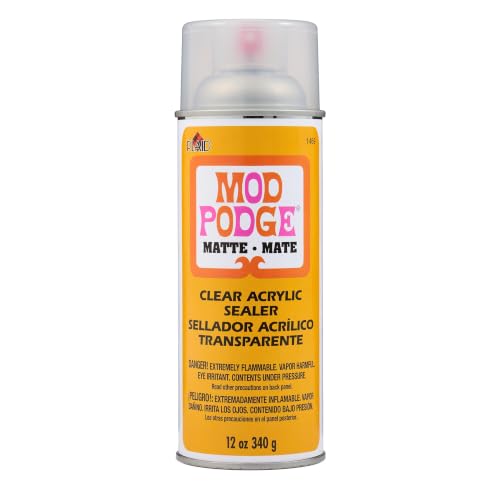
Mod Podge Clear Acrylic Sealer, Matte, 12 oz
The spray for the seal-first route. A light coat on both sides of an inkjet sheet stops the ink running under a wet brush.

NefLaca Full-Sheet Sticker Paper for Laser and Inkjet Printers, 100 Sheets
Matte full-sheet labels that go straight onto glass. The maker's own listing recommends spraying printed stickers with sealer for water resistance, which is the seal-first step anyway.
Keep Mod Podge off anything anyone drinks from. Plaid’s food safety FAQ is direct: “Mod Podge isn’t considered food safe, so it shouldn’t be used on anything that will touch food or drinks.” On a cup it belongs on the outside only, avoiding “the rim or any surface that touches your mouth or food.” That rules out Mod Podged labels on test tubes you plan to serve shots in.
What Goes in the Jars
Dry goods do most of it. Our ingredient label page already maps a few: black beans for Crushed Bone Meal, green lentils for Dried Hemlock, coarse salt for Powdered Moonstone. Dried beans, lentils, rice, salt and whole spices look like specimens through glass and last all season.
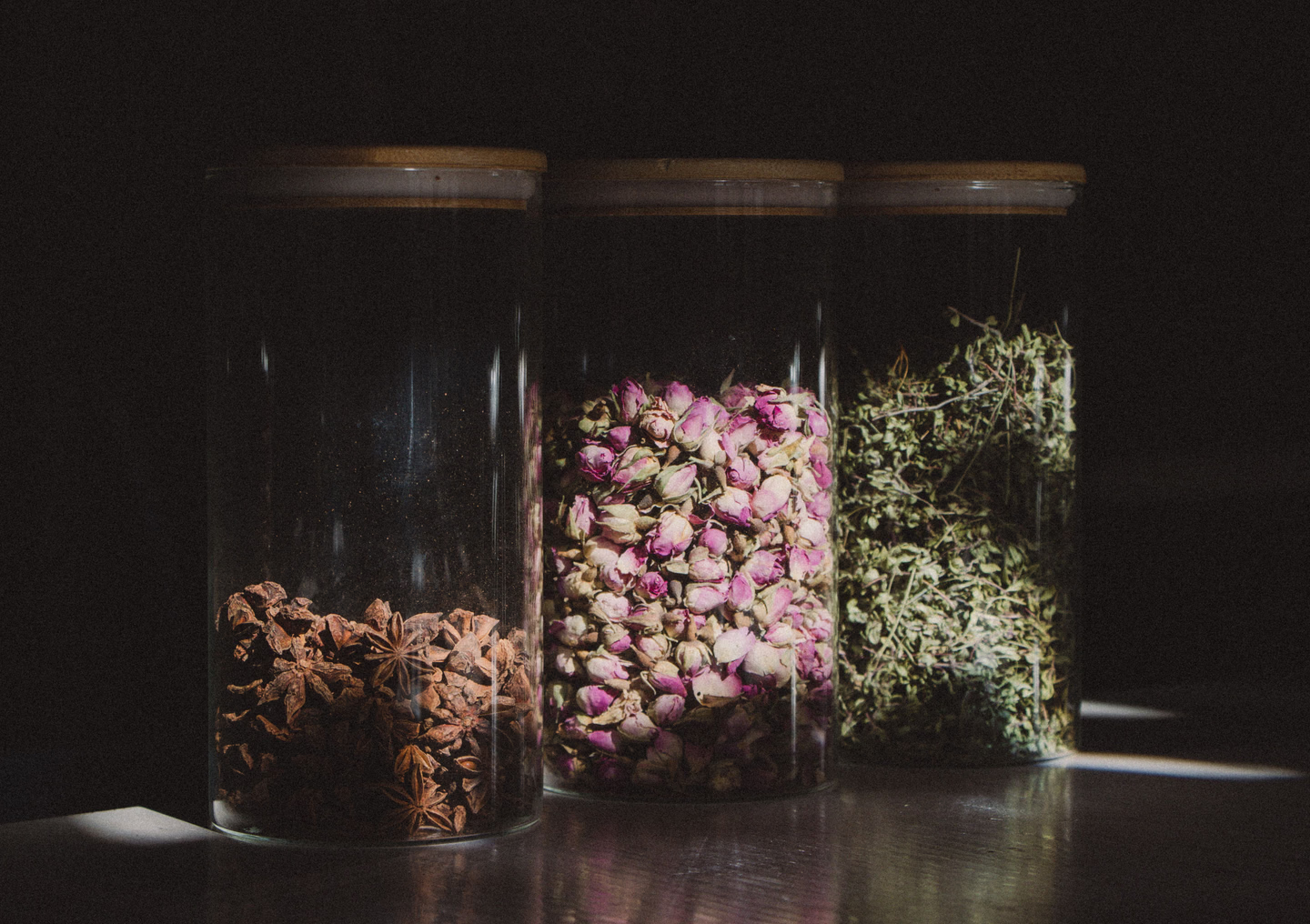
For liquids, use water and food coloring, in bottles that cap tightly.
Skip the layered oil bottle. The oil-and-water potion bottle is everywhere online, and the oils it uses are the problem. Poison Control lists baby oil, mineral oil and lamp oil among hydrocarbons that are dangerous to swallow: “These slippery liquids easily can be breathed into someone’s lungs when they try to swallow them. This can cause pneumonia and death.” On lamp oil specifically: “To a child, colored lamp oil looks like a beverage; clear lamp oil looks like water.” Never put one on a party shelf. If you want one at all, keep it for a party with no bar, with the cork glued in and the bottle out of children’s reach.
Keep the plant on the label, not in the jar. Poison Control’s list of poisonous plants includes deadly nightshade, foxglove, monkshood and poison hemlock, which are Belladonna, Foxglove, Wolfsbane and Hemlock on our labels. Of foxglove, it says “All parts of the plant are poisonous, possibly even deadly, if swallowed,” and describes a man who used about 12 young foxglove leaves in an herb sauce, mistaking them for borage. He and his wife both spent two nights in hospital, and her heart briefly stopped. Fill the Foxglove Extract jar with dried green lentils.
Lavender and pets. Real dried lavender smells right, but the ASPCA lists lavender as toxic to dogs, cats and horses, with nausea and vomiting as the signs. With pets in the house, hang it where they can’t reach or leave it off the lower shelves.
Keep the Display Away From the Drinks
Poison Control’s article on look-alike bottles puts it plainly: “It is easy for an adult or a child to mistake a cleaning product for a soft drink.” It describes a man who took a swallow of what he thought was fruit juice, which turned out to be a household cleaner, and had a nosebleed and diarrhea for three days. Its rule: “ALWAYS store food separately from other products.”
The display lives on the shelf; the drinks live on the bar, in a different kind of vessel. If the shots come in test tubes, as the Poison Shots do in the Witch’s Apothecary blueprint, no test tubes go on the display, and no corked display bottles go on the bar. For drinks that actually belong in the theme, see our Halloween cocktails and mocktails.
If you want a smoking cauldron beside the shelf, dry ice never goes in anything someone drinks. Our dry ice cauldron punch guide covers the nested-bowl setup that keeps it out of every cup.
Lighting It Without Burning It Down
The NFPA’s Halloween safety tips, reprinted by the Connecticut State Fire Administrator: “Dried flowers, cornstalks, and crepe paper are highly flammable. Keep these and other decorations well away from all open flames and heat sources, including light bulbs and heaters.”
The U.S. Fire Administration’s candle rule is a number: “Keep candles at least 12 inches away from anything that burns.” On a shelf hung with dried lavender, that usually means no real flame on the shelf at all. The CPSC counted an average of 5,600 candle fires a year from 2017 through 2019, and its Halloween advice is to “use battery-operated lights and glow sticks instead of candles.”
Sunlight is a quieter risk. The Dittrick Museum notes that “sunlight shining off the cut glass and beveled mirrors occasionally set nearby products ablaze” in old pharmacy windows. Keep water-filled glass out of a sunny window if there are dried herbs beside it.
Battery lights have their own hazard
On January 15, 2026, the CPSC warned consumers to stop using Akavivo submersible LED lights, Each set held 20 preinstalled CR2032 coin batteries in the lights, and “The LED lights contain lithium coin batteries that can be accessed easily by children.” About 14,450 were sold on Amazon between March and November 2025.
The CPSC’s button battery page says a swallowed battery “can burn through a child’s throat or esophagus in as little as two hours.” Under Reese’s Law, a compartment must need “a tool such as a screwdriver or coin” or “at least two independent and simultaneous movements to open by hand.”
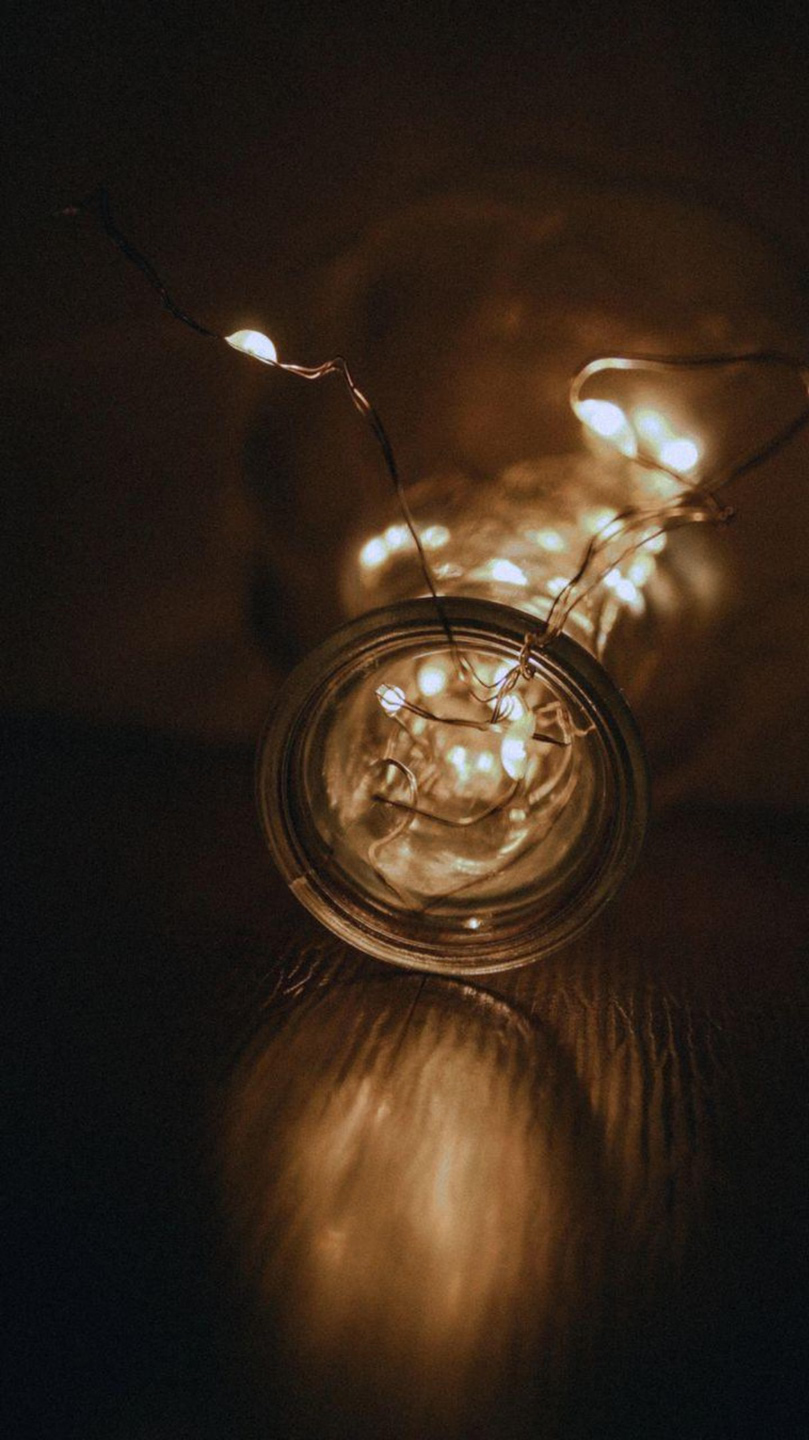
Our rule for the shelf: fairy lights on AA or USB power, with the battery box behind the jars, and no loose coin-cell pucks. Many mini “firefly” strings run on button cells in a tiny box, so check the battery type on the listing before you order. If you suspect a child swallowed a battery, call the National Battery Ingestion Hotline at 800-498-8666.

innotree 6 Pack LED Fairy String Lights, Battery Operated with Timer
Six 10-foot warm white strands, each on 2 AA batteries rather than coin cells, with a 6-hours-on timer. One strand per bottle, battery boxes tucked behind the back row.
Frequently Asked Questions
Are the potion labels really free? Yes. The potion bottle labels and the ingredient labels are free PDFs, each with a print-ready version.
Can I stain sticker paper with tea before printing? Test a scrap first. Sticker stock is coated and may curl or refuse to feed once wet. For sticker paper, the seal-first route is safer: print, spray both sides with clear acrylic sealer, then finish with Antique Matte.
What’s the safest “potion” liquid for a display? Water with food coloring, in bottles that cap tightly, kept on the display shelf and away from the bar. Never mineral oil, baby oil or lamp oil on a party shelf; if you keep an oil bottle at all, glue the cork in, keep it out of reach, and only at a party with no bar.
Can I use real dried herbs? Yes, with two conditions. Keep them well away from any flame or hot bulb, per the NFPA, and keep lavender out of reach of cats and dogs.
Are LED puck lights safe inside bottles? Only if the battery compartment screws shut or needs two independent and simultaneous movements to open. Loose coin-cell lights like the Akavivo set are what the CPSC warned about in 2026. AA or USB fairy lights avoid the question.
What should go on a blank label? Hand-letter it in brown ink with a Latin abbreviation from the table above. Real apothecaries wrote on blank cartouches when they changed a jar’s contents.
Related Resources
Print the potion bottle labels and ingredient labels first. For the full party around the shelf, the Witch’s Apothecary blueprint has the menu, activities and shopping list. The Victorian Gothic decor gallery shows the room the shelf belongs in, and our indoor decorating guide covers lighting the rest of the house. For a smaller version by the sink, see Halloween bathroom decor.