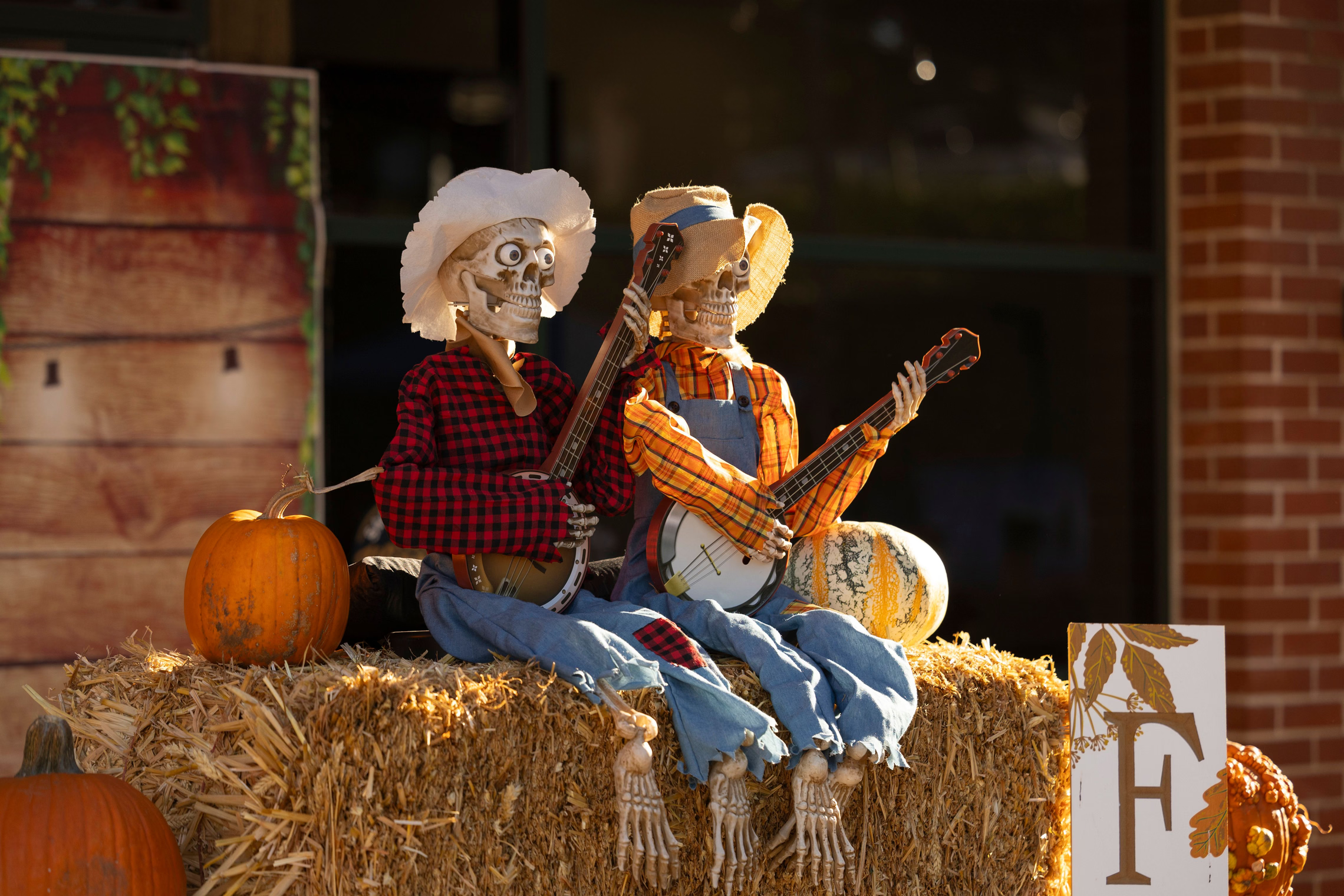
A skeleton standing bolt upright in the middle of the lawn, arms at its sides, looks like it is waiting for a bus. The ones people slow down for are doing something: dozing on the porch bench, halfway over the fence, holding a bad hand of cards.
The other half of the job is less fun. A poseable skeleton is a light plastic frame with a lot of surface area, and its joints are built to move. Left alone on a windy night, it moves.
Check The Box Before It Goes Outside
“Life-size poseable skeleton” describes a lot of different products, and they don’t share a weather rating:
| Skeleton | What the seller says |
|---|---|
| Spirit 5 Ft Pose ‘N’ Stay | “for indoor use only”; “Recommended for use in covered areas” |
| Costco 7-ft Poseable Skeleton (Costco.ca) | “For indoor use” |
| Home Accents Holiday 5 ft LED Ultra Pose-N-Stay (Home Depot) | “perfect for indoor or outdoor use” |
| Crazy Bonez Original Pose-N-Stay, 5 ft (Amazon) | “decorating indoors or out” |
Sources: Spirit, Costco.ca, Home Depot.
So an indoor-rated skeleton belongs on a covered porch or behind a window, and the lawn is for one whose maker says it can live outside. Spirit’s page also says its Pose ‘N’ Stay “cannot stand on its own” and has to lean against something to stay upright, which decides a lot of poses before you start.
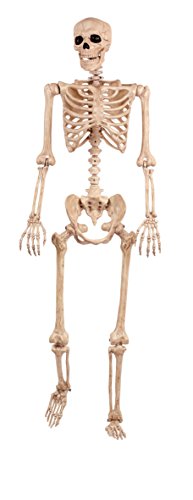
Crazy Bonez Original Pose-N-Stay Halloween Skeleton, 5 FT
Sixty inches tall, with a movable jaw and joints Seasons USA says lock and hold position. The listing says you can decorate 'indoors or out' and calls the plastic weather-resistant, though it doesn't name the resin. The same company sells a matching stand.
Poses That Read From The Street
From the sidewalk, a skeleton is a white silhouette. Pick a pose that says what it is doing in outline alone, and give the hands a job, because empty hands hanging at the sides are what make a skeleton look like a prop.
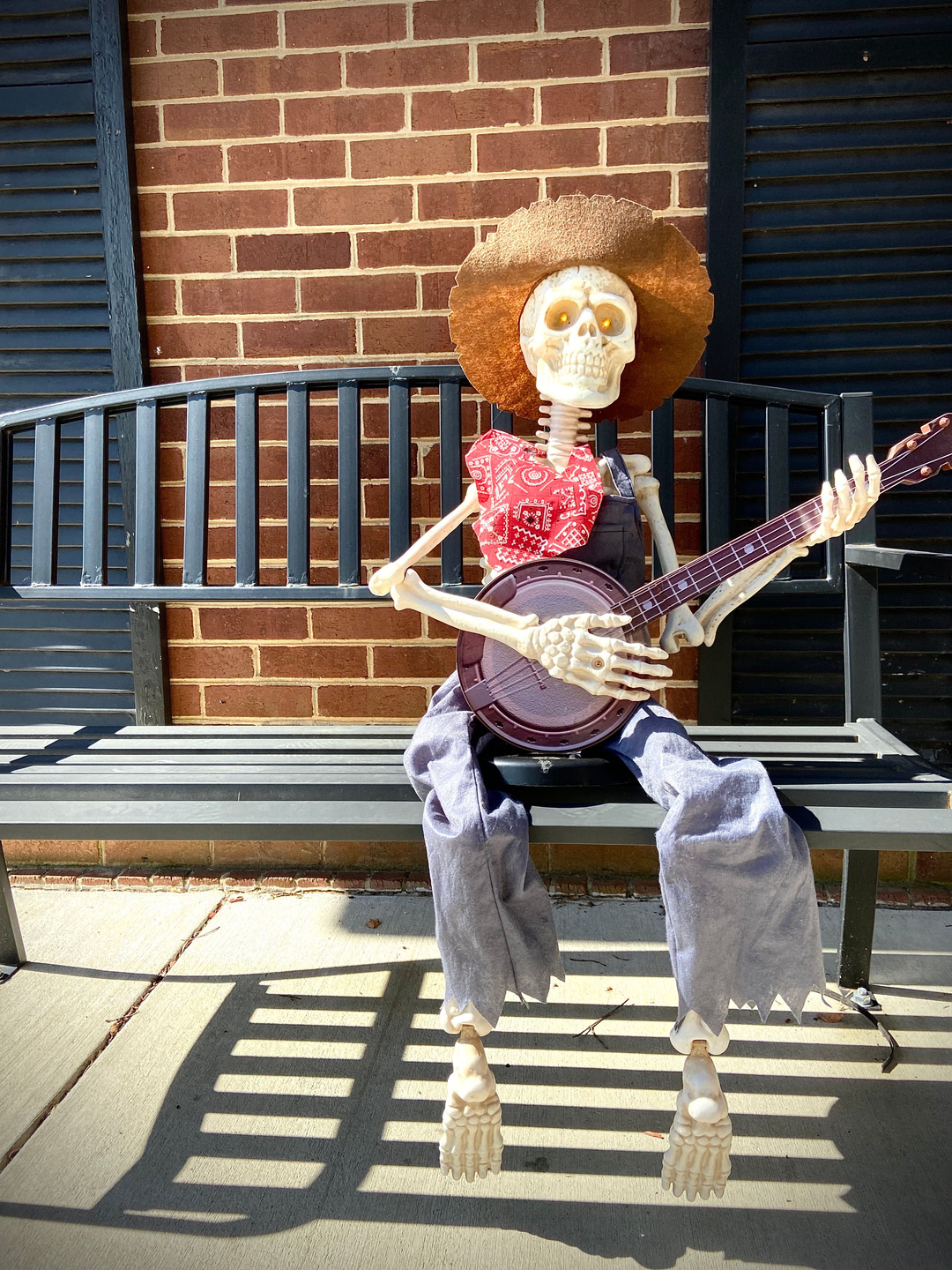
- The bench sitter. The easiest pose there is, because the bench carries the weight. Spirit lists its Pose ‘N’ Stay at 60 inches standing and 32.5 inches sitting, so a seated skeleton is about half as tall. If a hedge or railing stands between it and the street, raise the seat or move it.
- The card game. Two or three skeletons around a small table, cards in hand, one slumped back as if it just lost. Molded hands grip badly, so tape or zip-tie the cards to the fingers rather than hoping they’ll stay.
- The fence climber. One leg hooked over the top rail, both arms over it, the skull turned toward the street. Keep the trailing leg under the body (see the hip numbers below).
- The skeleton family. A big one, a middle one, and the small ones, all facing the same way, reads as a household. Group them tightly, the same way a front-yard graveyard groups stones into family clusters.
- The grave climber. Buried to the ribs between a headstone and its footstone, reaching for the lawn. Our graveyard guide covers the grave climber in detail.
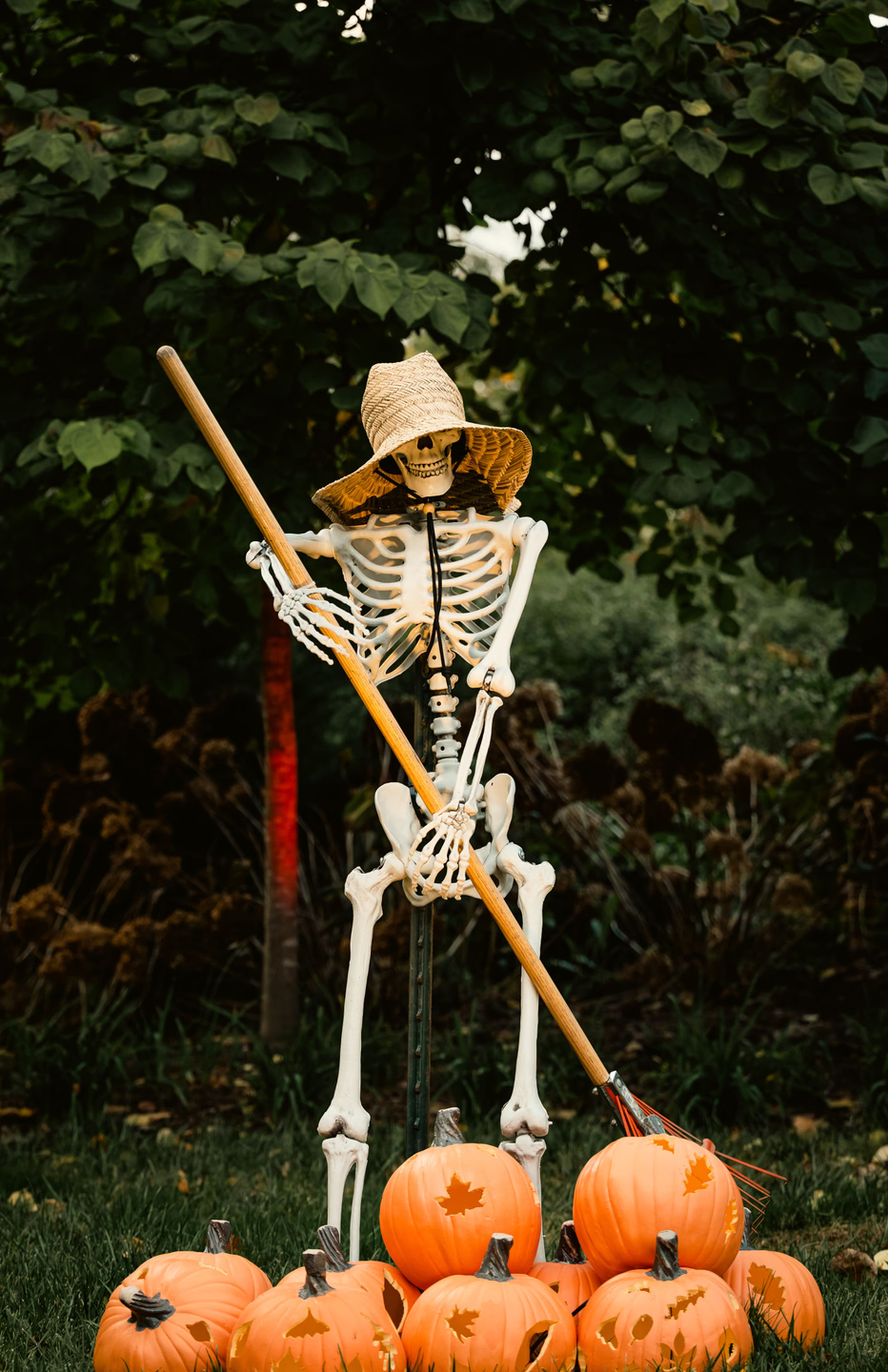
- The yard chore. Raking leaves, pushing a wheelbarrow, carving a pumpkin. Chores need no explanation, and the tool gives both hands something to hold.
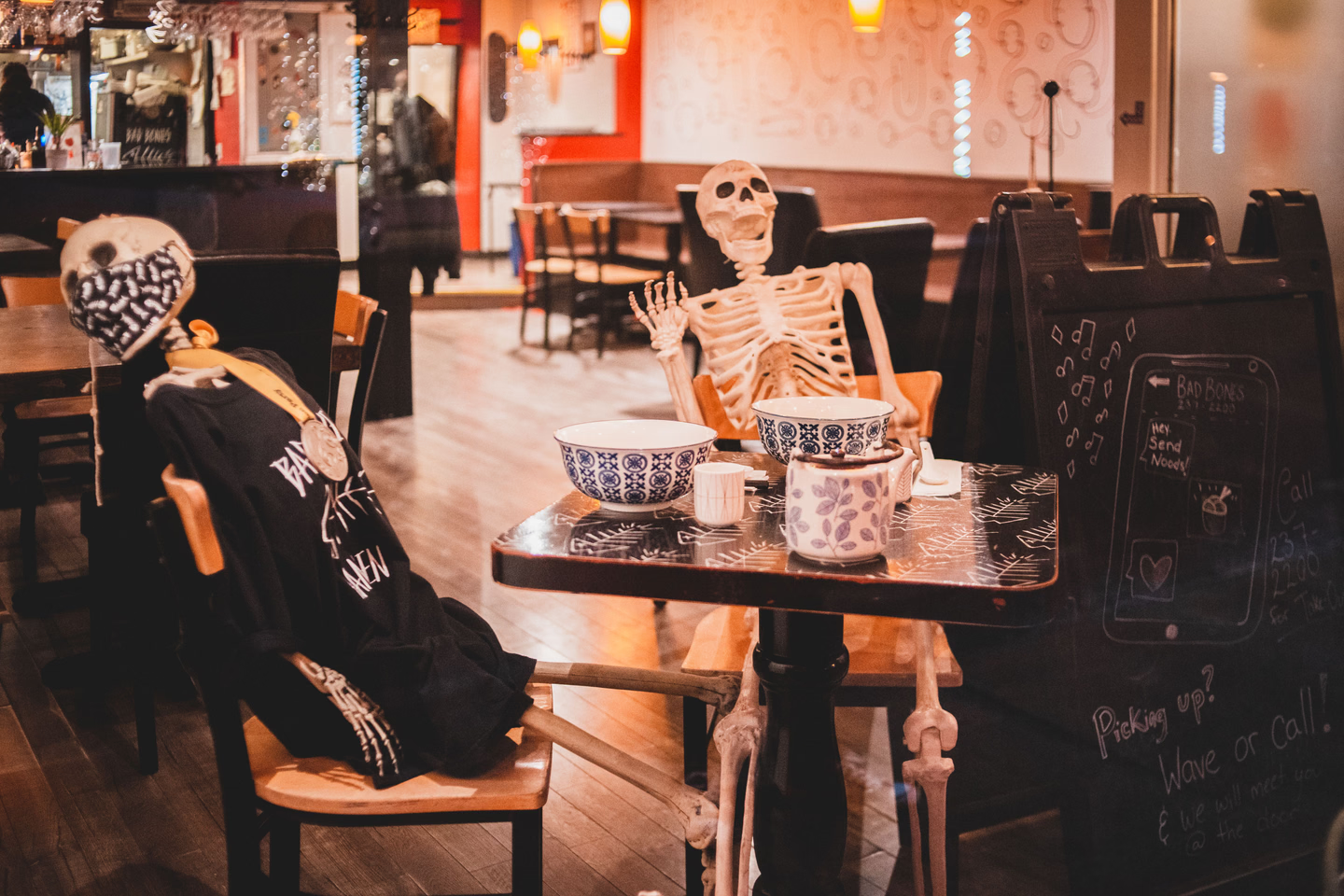
Anatomy That Makes A Pose Look Real
Most unconvincing poses have a joint bent in a way no living body can bend. The CDC’s Normal Joint Range of Motion Study measured more than 600 people between November 2003 and July 2006, and its reference values for adults 20 to 44 are a useful posing guide:
| Joint | Women | Men | What it means for the pose |
|---|---|---|---|
| Knee extension | 1.6° | 1.0° | A knee barely straightens past flat. Bent backward, it reads as broken |
| Knee flexion | 141.9° | 137.7° | Deep kneels and crouches are fine |
| Hip extension | 18.1° | 17.4° | A leg can swing only a little behind the body |
| Hip flexion | 133.8° | 130.4° | Sitting, climbing and high steps are all in range |
| Elbow extension | 4.7° | 0.8° | Elbows barely straighten past flat either |
| Shoulder flexion | 172.0° | 168.8° | Arms can reach nearly straight overhead |
The practical rules:
- Never bend a knee or elbow the wrong way. Poseable joints often let you. A real body can’t, and that is exactly what the eye catches.
- Lead with the front leg. A climbing or walking skeleton with its back leg kicked far behind the hip looks like a dropped doll. Bend the back knee instead.
- Reach high for climbing. Arms nearly straight overhead are natural, so a fence or tree climber can stretch.
- Sit on the pelvis, not the tailbone. A seated person rests on the sit bones at the bottom of the pelvis. Push the skeleton’s pelvis all the way back in the seat so the spine rises from it, rather than perching it on the front edge where it slides down.
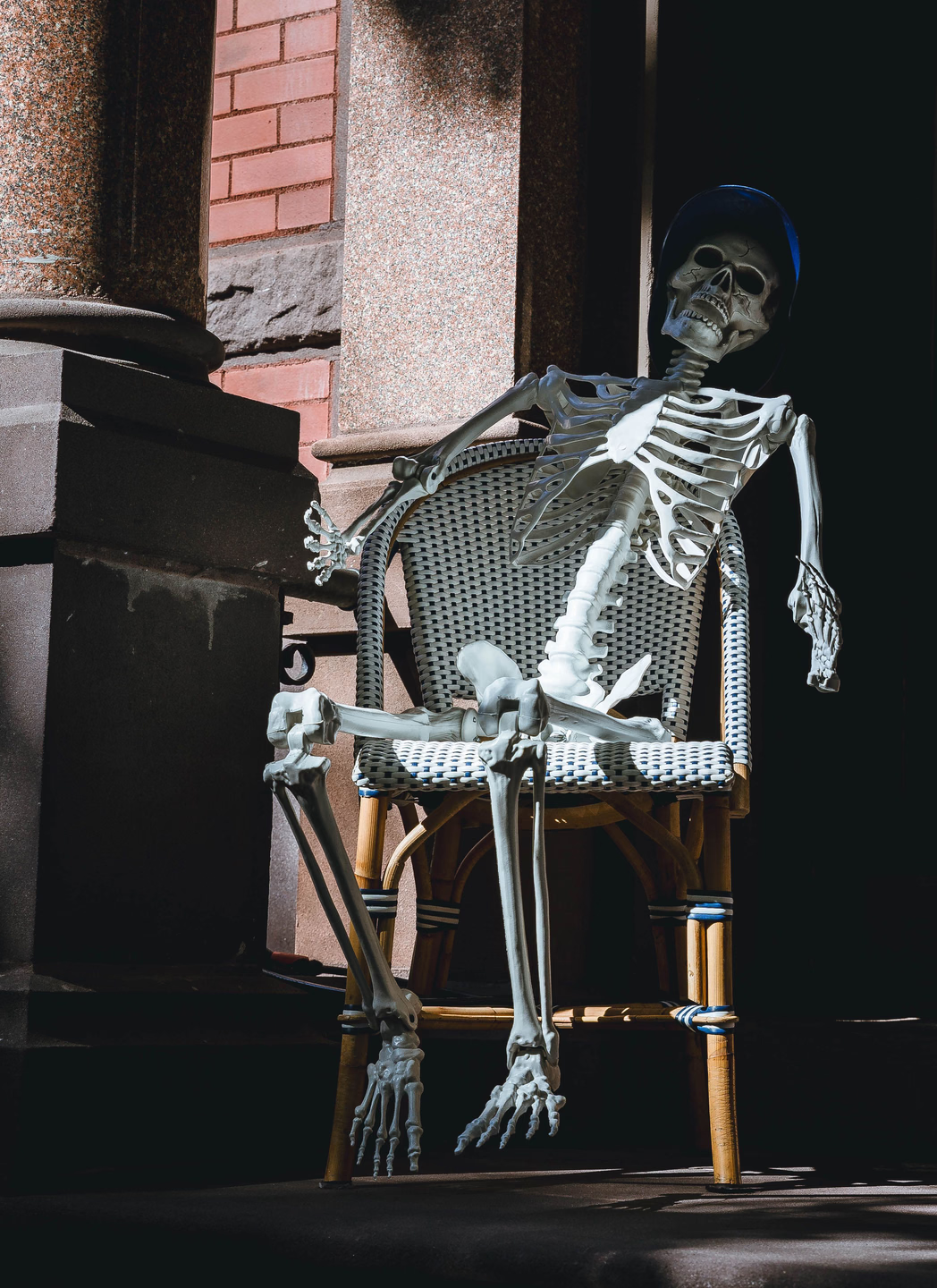
Locking The Joints
Screw joints: tighten, but not too far
Some poseable skeletons have a screw at each joint, and that screw is the maker’s own locking method. Spirit describes its Pose ‘N’ Stay as plastic “with metal hinges to hold skeleton in place” and says to “Adjust joints to desired position using a phillips head screwdriver. Be careful not to overtighten.” Snug a drooping joint a little at a time until the limb holds its own weight, and stop there. Stripping the plastic around a screw leaves you with a joint that won’t hold at all.
Zip ties: the UV-stabilized grade
A zip tie at the elbow, shoulder or knee holds a pose through wind and curious kids. Outdoors, the tie also has to survive a month of sun.
HellermannTyton, a cable tie maker, sells two black 12-inch, 50-pound ties side by side. The standard one is plain nylon 6/6 (PA66). The UV-stabilized one is PA66UV, which the maker says “contain[s] an inhibitor which prolongs the life of the tie in UV exposures” and “provides additional protection against UV radiation for long-term outdoor use.” Both pages list an operating range of -40°F to 185°F.
Strength varies more than length does. HellermannTyton’s 8-inch standard tie is rated at 18 pounds. Its 8-inch UV-stabilized T50R0UVC2, below, is listed on Amazon at 50.

HellermannTyton T50R0UVC2 Cable Ties, 8 Inch, 50 lb, UV-Stabilized PA66UV, Black, 100 Pack
HellermannTyton's 8-inch tie in its UV-stabilized PA66UV grade, rated at 50 pounds tensile strength. A hundred ties locks a whole skeleton family's elbows, shoulders and knees, plus the cards in their hands.
Loop the tie through the gaps in the joint so it pinches the two bones together, pull it snug without crushing anything, and clip the tail flush so there’s no sharp stub for a small hand to find.
Hot glue won’t hold
Hot glue looks like a quick fix for a loose joint or a prop that won’t stay in a hand. Spirit lists its Pose ‘N’ Stay as “85% PP, 15% METAL,” and PP is polypropylene. Gorilla says its hot glue sticks are not recommended “for use on polyethylene or polypropylene plastics.” Most skeleton makers don’t disclose their plastic, so assume glue won’t grip and use a tie.
The 12-foot Skelly’s arms
The giant’s arms are the one part of it you pose. The Home Depot manual for the 12 ft Giant Sized Skelly is specific:
- “Apply firm steady pressure on the upper arm.”
- “Do not apply pressure at the hand or forearm to adjust arm height, this may damage the parts.”
- “Loud ‘clacking’ is normal as the arm moves.”
- “Please pose arms before standing up, otherwise a ladder will be needed.”
The same manual’s warnings say: “Do not add to or modify unless accessory is designed for product,” and the 12.5 ft Deadwood skeleton’s manual says replacements don’t cover “repairs or alternations made outside source.” So the zip ties and straps in this guide are for 5-foot poseables. Hold a giant with what its manual lists: the tether, the stakes, sandbags on the base and guy wires (see giants below), not ties on its joints.
Anchoring To Chairs, Fences, And Trees
A posed skeleton needs something to hold it up and something to hold it down. The chair, fence or tree holds it up.
Standing on its own
Most 5-foot poseables can’t. For a standing pose with nothing to lean on, Seasons USA sells a stand for its Crazy Bonez skeleton that attaches “midway up the back and at the bottom of the spine” and curves along the spine, hip and leg to stay out of sight. The listing doesn’t say how the stand meets the ground, so keep it out of reach of passersby and check it after the first gusty night.

Crazy Bonez Pose-N-Stay Skeleton Stand
A 42-inch bone-colored metal stand made for the Crazy Bonez skeleton. It clips to the back and the base of the spine and follows the leg down, so the skeleton can stand without a wall behind it.
Chairs and benches
No skeleton maker we found says how to strap one to furniture, so this is our method. Sit the pelvis all the way back, then run a strap around the pelvis and the seat and a second around the rib cage and the chair back. Cinch them snug, not tight enough to bend the plastic. A light patio chair with a skeleton in it catches a lot of wind, so tie the chair to the railing or a porch post as well.
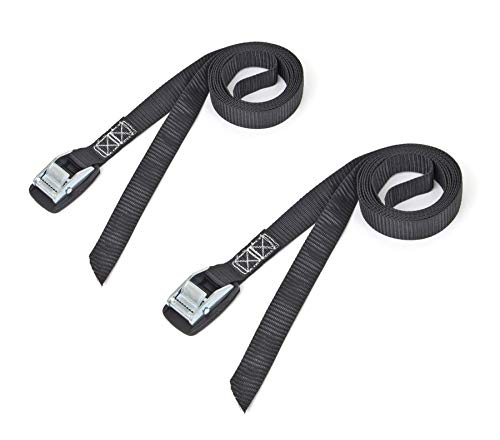
PowerTye MFG 1 Inch x 4 Ft Cam Buckle Lashing Straps, 2 Pack
Flat one-inch polyester webbing with a rubber pad under the cam buckle, so the buckle doesn't scratch a painted chair or a tree. PowerTye rates them at 200 pounds working load. Four feet goes around a seat and pelvis, or a mid-size trunk.
Fences
A fence climber hangs from the top rail, so tie it there: UV-rated ties around the rail at both wrists and at the hooked knee, plus one around the pelvis if the fence has a middle rail. We found no data on what ties do to fence finishes, so on a painted fence, check the finish where the ties sat when you take the display down.
Trees
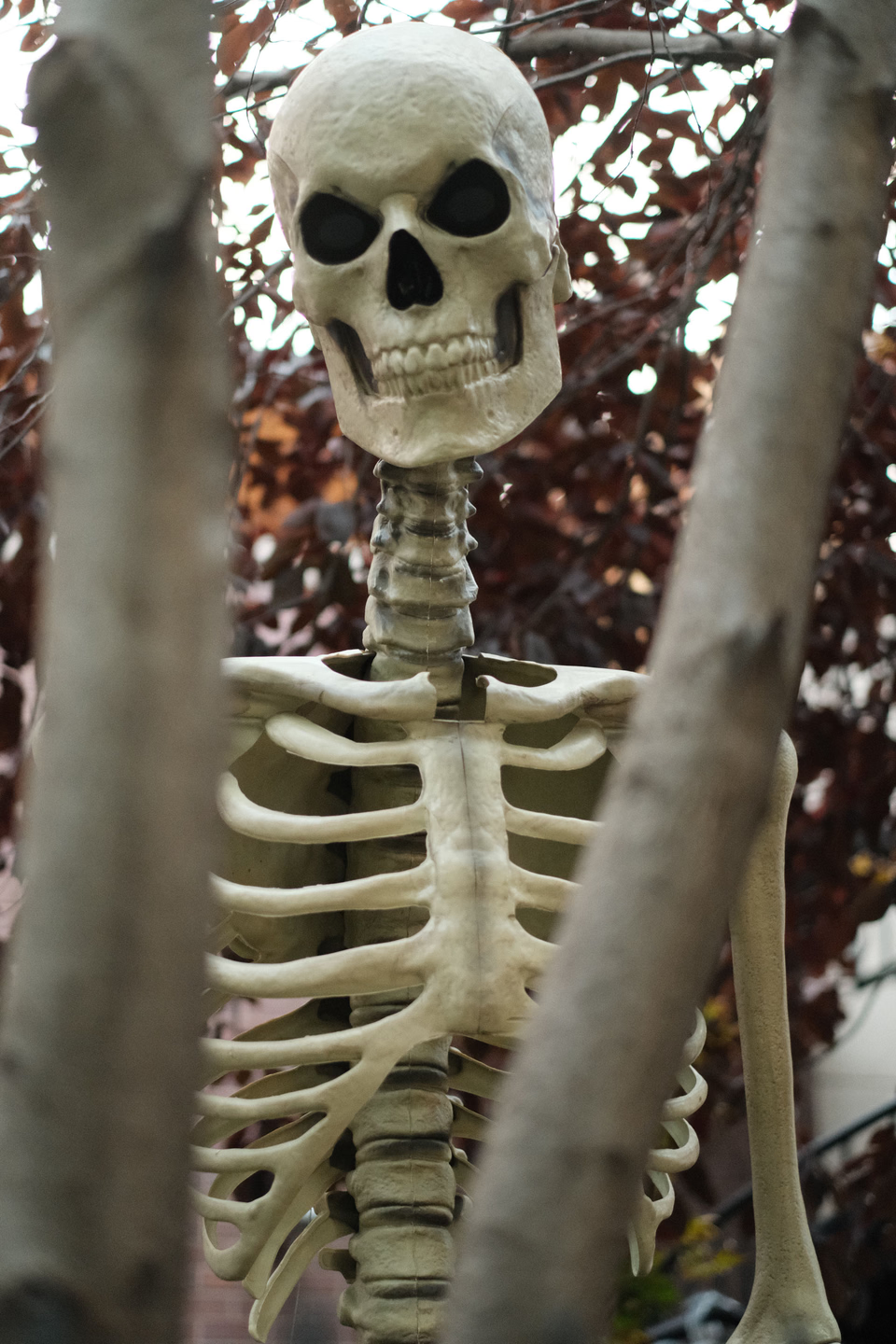
Whatever touches the bark matters more than what holds the skeleton. The University of Minnesota Extension’s tree staking guidance is written for young trees, not decorations, but the rules carry over:
- “Any material contacting the stem should have a broad and smooth surface.” Its list: wide canvas strapping, strips of old carpeting, bicycle inner tubes, burlap.
- “Do not insert ropes or wires through sections of garden hose and wrap them around the tree stem. It doesn’t work for very long, and abrasion and compression of the stem will soon occur.”
- “Always attach the stem to the stakes or anchors loosely, with some flexibility at the point of attachment…”
The extension is talking about a full growing season, and a skeleton is up for a few weeks. Keep the strap broad and loose around the trunk, tie the skeleton to the strap rather than cinching it against the bark, and take it all off in November.

Adjustable Tree Support Straps, 23.6 Inch, 5 Pack
Soft 0.9-inch plastic bands that loop and twist to lock, sold for tying trees to stakes. Long enough to circle a limb about six inches across, so a skeleton's forearm can hang from a branch without anything thin biting into the bark.
On the lawn
For a skeleton lying, kneeling or climbing out of the ground, a landscape staple pushed over the pelvis and down into the turf holds it without leaving anything rigid sticking up. Don’t leave bare rebar or stakes standing: our graveyard guide explains why rebar caps don’t make them safe.
Giants: level ground only
The Home Depot manuals for the 12-foot Skelly and the 12.5-ft Deadwood skeleton both say to “Assemble and place the product on level surfaces only,” and the 6.5-ft Ultra Skelly’s says the surface must be “flat and level.” That rules out a pitched roof by the makers’ own terms. The Skelly’s tether, the short stakes in the box, spiral ground anchors and sandbags are in our store guide’s section on keeping a giant standing. For more hold, the Skelly manual suggests sandbags on top of the base or guy wires, neither of them included. Standing one indoors, where the stakes can’t go in, is its own job: see how to weight and anchor props indoors. To put a skeleton in clothes that fit, or to build a more human figure on a mannequin or dress form, see mannequins and dressed props.
Ladders
The Skelly manual says to “pose arms before standing up, otherwise a ladder will be needed,” so pose on the ground. Tying a skeleton into a tree still means a ladder. The CPSC’s 2023 Halloween release counts an average of 3,200 Halloween emergency room injuries a year, with 25 percent from “falls while putting up or taking down decorations, tripping on costumes or walking while trick-or-treating.”
OSHA’s portable ladder QuickCard is written for workers and applies just as well in a front yard:
- “Always maintain a 3-point (two hands and a foot, or two feet and a hand) contact on the ladder when climbing.” Carrying a skeleton limb up the ladder breaks that, so hand it up or pose from the ground.
- “Do not use the top step/rung of a ladder as a step/rung unless it was designed for that purpose.”
- “Use a ladder only on a stable and level surface, unless it has been secured (top or bottom) to prevent displacement.” A soft October lawn often isn’t either.
- “Avoid using a metal ladder near power lines.” Look for overhead lines first, and don’t lean a ladder against a trunk you can’t tie it to.
Wind
No skeleton maker we checked publishes a wind rating. The 12-foot Skelly manual’s instruction is simply “Lay product down before a storm or strong winds.”
The National Weather Service’s Beaufort scale describes what each wind speed looks like: at 25 to 31 mph, “Large branches in motion; whistling heard in telegraph wires; umbrellas used with difficulty,” and at 32 to 38 mph, “Whole trees in motion.” If the branches over your tree climber are swinging, so is the skeleton.
Then there’s your local Wind Advisory. The NWS says each office issues it “based on local criteria,” so there is no national mph number, and the advisory itself says: “Objects that are outdoors should be secured” (NWS wind alerts). When your office issues one, bring light props in and lay the giants down, as the Skelly and Deadwood manuals say to do “before a storm or strong winds.”
Cold, Rain, And Storage
- Cold. The 12-foot Skelly manual warns: “CAUTION DAMAGE COULD OCCUR IN TEMPERATURES LESS THAN 0 DEGREES FAHRENHEIT.”
- Dry before boxing. The Deadwood manual says to “allow 12.5 ft Giant Deadwood Skeleton to fully dry before putting back in the box.” Do the same with a 5-footer that’s been out in the rain.
- Store it the maker’s way. The Skelly manual says to store it “in its original packing. Keep away from heat and moisture.” Keep the box.
- Cut ties with flush cutters, not a knife held against the plastic.
- Everything else for the off-season, from batteries to mice to shelf loads, is in how to store Halloween decorations.
Frequently Asked Questions
Can I leave a Pose ‘N’ Stay skeleton outside? Spirit says its Pose ‘N’ Stay is “for indoor use only” and recommends covered areas. Other brands differ: Home Depot calls its LED Ultra Pose-N-Stay “perfect for indoor or outdoor use,” and Crazy Bonez says indoors or out. Check the listing or the box for your model.
How do I make a skeleton stand up by itself? Most 5-foot poseables can’t stand unsupported, and Spirit says so outright. Lean it against a wall or post and tie it there, or use a stand made for the model.
Why do my skeleton’s joints keep drooping? On screw-jointed skeletons, snug the Phillips screw at that joint a little at a time, and stop before you strip the plastic. For a pose that has to hold all month outdoors, add a UV-rated zip tie.
Can I zip-tie a 12-foot skeleton’s arms? Its manual says “Do not add to or modify unless accessory is designed for product,” and to pose the arms by pushing on the upper arm. Hold a giant with the tether, stakes, sandbags and guy wires its manual lists, and save zip ties for 5-foot poseables.
At what wind speed should I bring skeletons in? There’s no universal number. Use your local NWS Wind Advisory, and lay the giants down before a storm, as their manuals say.
Related Resources
Put a grave climber into a proper setting with the front-yard graveyard guide, and see the 2026 store animatronics guide before you buy a giant. For the rest of the display, read weatherproofing Halloween decorations, the outdoor decorating guide and the porch decorating guide. Sketch where each skeleton goes in the yard haunt planner, and browse the best Halloween props and best outdoor decor roundups for more pieces. For a skeleton or animatronic standing inside, see weighting and anchoring props indoors.