
A carvable foam pumpkin is the one jack-o’-lantern you carve once and put out again next October. The foam changes three things a real pumpkin never asks about: which tools are safe on it, what you’re breathing while you cut, and how much heat the light inside can make. The craft-store label and the tool makers don’t agree on the first one.
The light rules, rain and wind for foam are in the Foam Pumpkins section of our jack-o’-lantern guide. This page is the carving and finishing side.
Know Your Foam Before You Cut
Both big craft-store brands name the material, and it’s polyurethane. The specialist brand doesn’t name it at all:
- Michaels’ Ashland craft pumpkin. The details list reads “Paint it with any multi-surface paint,” “Carve it with any hot knife tool,” “Hollow interior - decorate inside and out” and “Polyurethane” (Michaels). It comes in 4, 6, 9 and 13 inches.
- Hobby Lobby’s Carvable Pumpkin. “This polyurethane hollow pumpkin boasts a bright color with realistic ridges and a short brown stem,” and “If you carve it, add in an LED light.” The spec rows say “Material: Plastic” and “Care & Safety: Indoor/Outdoor Use; Flammable” (Hobby Lobby). Polyurethane is a plastic, so the two lines don’t conflict.
- Fun-Kins, the specialist carvable pumpkin maker, doesn’t name the polymer. Its FAQ says “Fun-Kins are constructed of patented low density foam. About the same consistency of real pumpkins,” with walls “generally about one half of an inch thick” (Fun-Kins FAQ). Masterpiece Pumpkins, a carving shop that resells them, says “Fun-kins artificial carvable pumpkins are made of a low density polyurethane foam” (Masterpiece Pumpkins), and Hot Wire Foam Factory says pumpkins like these “are typically made out of polyurethane foam.”
Price tracks the brand. Fun-Kins lists its 13.25-inch Classic #8, which it calls “one of the all time favorite Fun-Kins, especially among professional carvers,” at $60.80 (Fun-Kins). Michaels had the 9-inch Ashland at $9.99 on sale from $19.99 when we checked. Fun-Kins sells direct, and the Fun-Kins listings we checked on Amazon were unavailable.
Blow-molded plastic pumpkins are a different material with their own rules; see our vintage blow mold guide. If your label says polystyrene, EPS or Styrofoam instead of polyurethane, the hot-wire tools in our Tombstone Workshop carving lesson apply, and most of this page doesn’t.
For a full-size pumpkin, Fun-Kins direct or a craft store is the place to look. On Amazon, the in-stock option with a named polyurethane material and a middling rather than poor rating is a small three-pack.

Seenelling Carvable Foam Pumpkins, 5.5 in, 3 Pack
Three small hollow carvable pumpkins, about 5.5 inches across; the listing gives the material as polyurethane and says to carve them with a knife. We found no maker site, so that is what the listing claims, along with a warning not to place them near 'a high temperature fire source such as a fireplace.' Small enough for a shelf row, too small for most stencils. Carve with saws and a rotary tool, never a hot knife.
Tools That Work, and the One That Doesn’t
Why not the hot knife
Michaels says to carve its polyurethane pumpkin “with any hot knife tool.” Hot Wire Foam Factory, which makes hot knives and hot wires, was asked directly: “Will your hot wire tools work on Michaels artificial foam pumpkins, or Funkins artificial pumpkins?” Its answer: “Those foam pumpkins are typically made out of polyurethane foam, which should not be cut with hot wire tools. Polyurethane needs a ton of heat, gives off toxic fumes, and leaves a lot of melted plastic wherever it is cut” (Hot Wire Foam Factory FAQ). The safety notes on its Industrial Hot Knife say “Do not use with polyurethane foams, including furniture and acoustic foams” and “Always confirm foam compatibility with the foam manufacturer before cutting” (Hot Wire Foam Factory).
The tool maker’s safety note governs over a retailer’s product copy, so we don’t recommend a hot knife on any pumpkin labeled polyurethane. Hot Wire Foam Factory’s alternative: “We recommend that the polyurethane foams only be cut with a blade or saw.”
Saws and hand tools
Fun-Kins: “Carve Fun-Kins just like you carve pumpkins. You can use any tool you would use on a pumpkin in almost the exact same way on a Fun-Kin.” Masterpiece Pumpkins says the foam “carves with ease using standard saw-type carving tools.” The serrated saws, poker and loop tools in a pumpkin carving kit are the whole hand toolkit.
Our method: cut the access hole in the base instead of a lid around the stem. The stem stays on, and the pumpkin sits over a puck light on the table.
Rotary tool
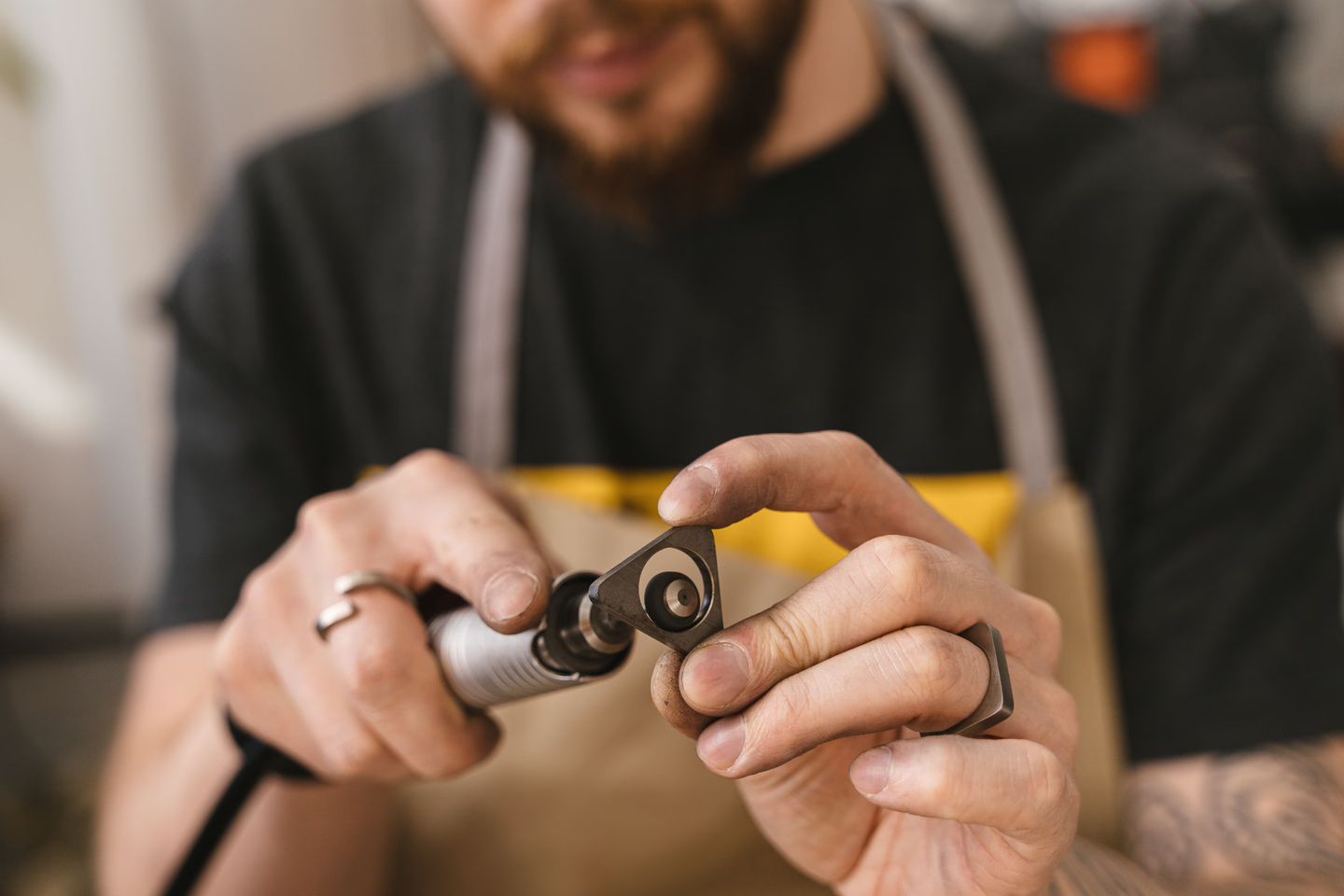
A rotary tool is how shaded portraits get made. Joey Edwards, a portrait carver Fun-Kins profiles, uses “knives, pins, and rotary bits to carefully remove surface material” (Fun-Kins).
The Dremel Lite 7760’s manual has no speed row for foam. It has a rule for plastics: “Certain materials, however, (some plastics and precious metals, for example) require a relatively slow speed because at high speed the friction of the accessory generates heat and may cause damage to the material.” Its test: “When working with plastic, for example, start at a slow rate of speed and increase the speed until you observe that the plastic is melting at the point of contact. Then reduce the speed slightly to get the optimum working speed” (Dremel Lite 7760 manual).
Dremel’s page for the 561 multipurpose cutting bit gives “Plastic (15,000-20,000 RPM)” (Dremel). The Lite’s four settings are 8,000, 14,000, 21,000 and 25,000 RPM, so that range falls between settings 2 and 3. Run the manual’s test on the inside of the lid, starting at setting 1, and use the highest setting that cuts without leaving a melted, stringy edge.
Four more rules from the same manual that matter on a hollow pumpkin:
- “Use clamps to support workpiece whenever practical. Never hold a small workpiece in one hand and the tool in the other hand while in use.” Set small pumpkins in a towel-lined bowl or box so both hands are on the tool.
- “Allow for sufficient space, at least 6”, between your hand and the spinning bit.” Your other hand braces the outside of the pumpkin, well away from the face you’re cutting.
- “Usually, it is best to make a series of passes with the tool rather than attempt to do all the work in one pass.”
- “Do not touch the bit or collet after use.”

Dremel Lite 7760-N/10 4V Cordless Rotary Tool Kit
Cordless, four speed settings from 8,000 to 25,000 RPM, and a manual with a clear melt test for plastics that melt at low temperatures. No cord to drag across a pumpkin sitting on a turntable.

Dremel 561 Multipurpose Cutting Bit, 1/8 in
A 1/8-inch spiral cutter Dremel lists for wood, plastic, drywall, laminate, aluminum and vinyl siding, with a recommended speed for plastic of 15,000 to 20,000 RPM. Dremel recommends using it with its 565 Multi-Purpose Cutting attachment, which helps hold a set depth. For cutting clean openings through a foam wall; shade with engraving or sanding bits.
Dust and Fumes
Saws and rotary bits make dust. Heat makes fumes.
A polyurethane foam maker’s safety sheet, Cushion Source’s for its flexible and rigid foams, covers both. On dust: “INHALATION OF FOAM DUST MAY BE HARMFUL,” and “EYE PROTECTION AS DUST MAY CAUSE MECHANICAL IRRITATION OF EYES.” It lists sawing, grinding and buffing among the processes that call for local exhaust ventilation. On heat: “TEMPERATURES OVER 200°F MAY PRODUCE IRRITATING OR TOXIC FUMES,” and for “DUST OR FUMES FROM HOT PROCESSING” it specifies “RESPIRATORY EQUIPMENT DESIGNED FOR ORGANIC VAPORS AND ISOCYANATES” (Cushion Source SDS, rev. 10/2009). The same sheet gives a melting point of “300-400°F.” It’s a generic polyurethane sheet, not a pumpkin maker’s, and no carvable pumpkin brand we found publishes one.
OSHA lists “the thermal degradation of polyurethane products” among the ways people are exposed to isocyanates, and says “The main effects of hazardous exposures are occupational asthma and other lung problems, as well as irritation of the eyes, nose, throat, and skin” (OSHA). That’s a workplace page, and we found no measurement of one evening with a hot knife on a craft pumpkin.
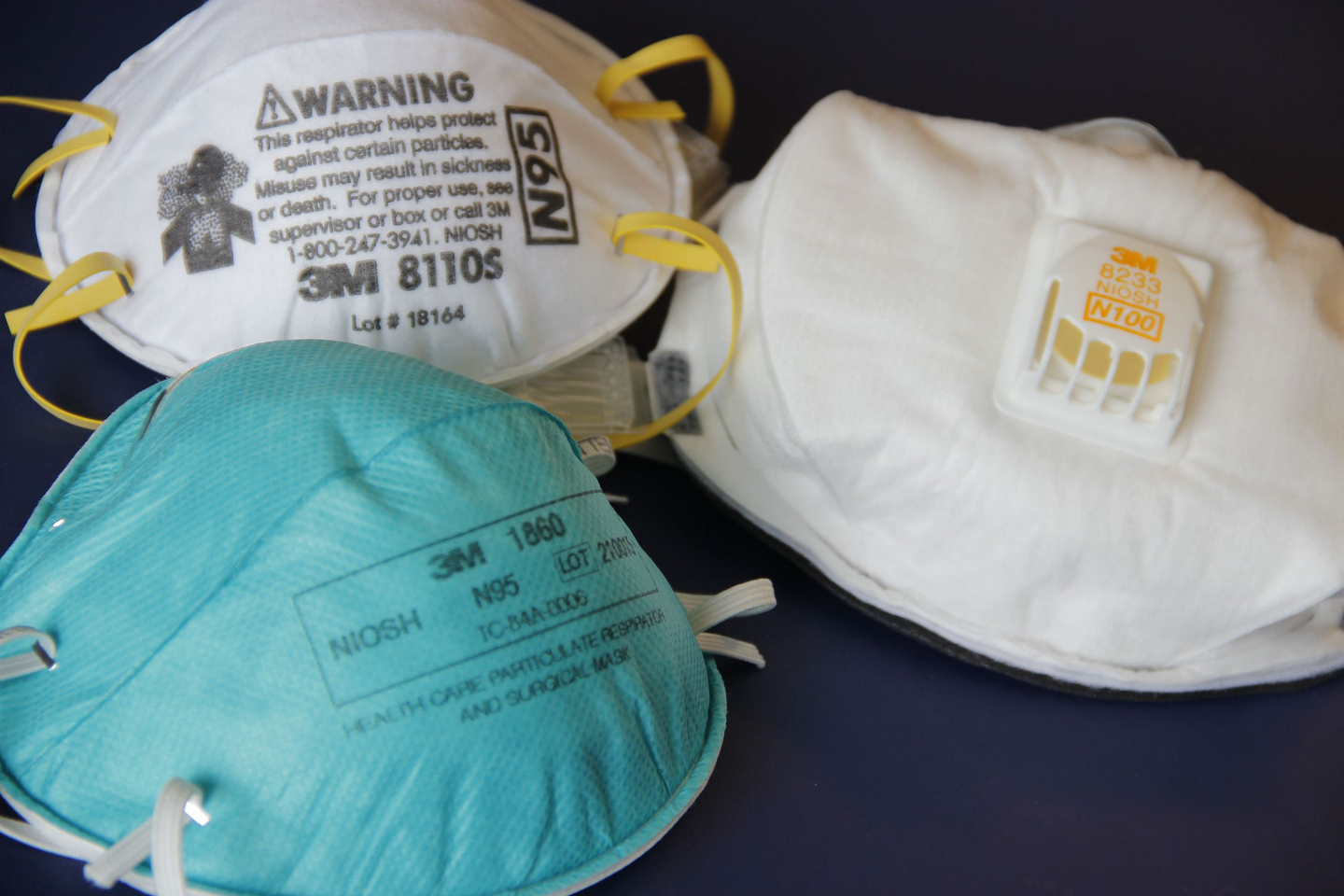
For the dust, an N95 is the right mask. NIOSH says filtering facepiece respirators “filter out particles such as dust, mist, and fumes,” and N95s filter “at least 95%” of airborne particles. The same page is blunt about the limit: “FFRs do not provide protection against gases or vapors.” Check the mask for “NIOSH” and “a testing and certification (TC) approval number (e.g., TC 84A-XXXX),” and do a user seal check each time you put it on (NIOSH). Dremel’s manual asks for the same thing in its words: “The dust mask or respirator must be capable of filtrating particles generated by your operation,” plus eye protection and “Use only in well-ventilated area.”
Our tombstone fume lesson covers organic vapor respirators for polystyrene smoke; the polyurethane sheet asks for gear rated for isocyanates too.
Our method for the mess: carve outdoors or in an open garage, wear safety glasses, and vacuum the dust instead of sweeping it into the air.

3M 8511 N95 Respirator with Cool Flow Valve, 10-Pack
NIOSH-approved N95 with an exhalation valve that 3M says directs exhaled air downward. For sawing, drilling and rotary dust. NIOSH says filtering facepiece respirators like this one give no protection against gases or vapors.
Getting the Stencil On
Fun-Kins suggests a shortcut in its FAQ: “One novel approach is to use a full-sheet label and carve right through it.” Print a stencil onto a full-sheet sticker label, stick it on, and cut straight through paper and foam. Foam is dry, so the label holds where it would slide off a wet rind.
Our method for plain paper stencils: tape the sheet on with painter’s tape, slide graphite transfer paper under it and trace. On a real pumpkin you dry the rind first; foam is already dry, so the graphite takes on the first pass. Pouncing along the lines with a pushpin works too, though on foam the holes stay forever, so pounce only on lines you’ll cut out.
Our free classic pumpkin stencils fit 8- to 12-inch pumpkins with bold full cuts. The advanced stencils use full cuts, half-depth shaving and surface scratches, which suit a rotary tool on foam.
Carving for Glow: Cut-Through vs Shaded
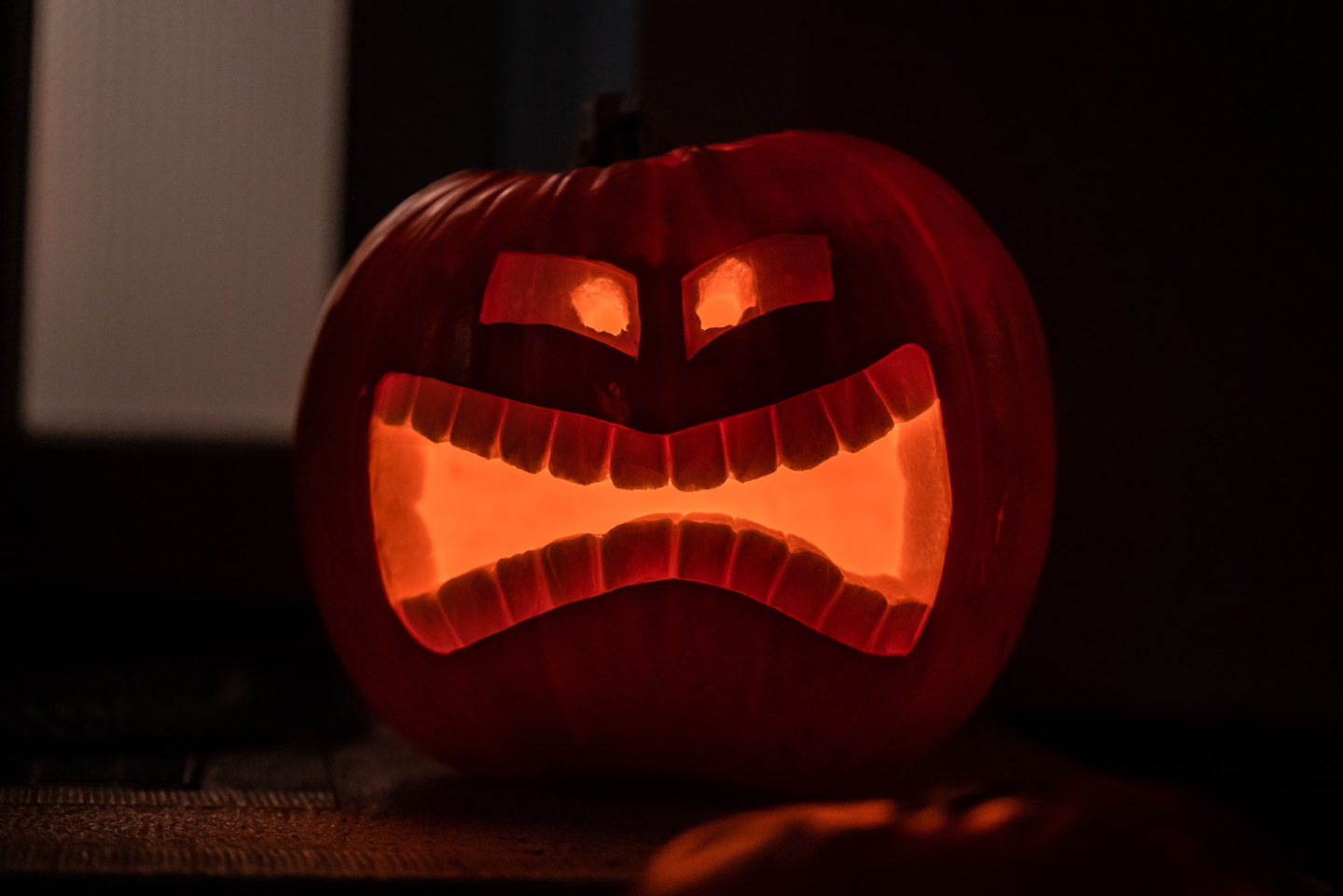
A cut-through face lets the light straight out. Shading removes surface material and leaves a thin skin for light to glow through. On a real pumpkin you have an inch or more of flesh to shave into. On a Fun-Kin you have “about one half of an inch,” and Fun-Kins says it runs “a little less for the really small ones.”
Our reading: that half inch is the whole depth budget. A half-depth shave from the advanced stencils is about a quarter inch on foam, and a slip that goes through can’t be patched the way you’d pin a piece of real pumpkin back. Masterpiece Pumpkins says each Fun-Kin is “painted with a weather resistant child-safe paint, and tinted orange inside and out,” so a shaded area glows orange rather than showing bare white. Craft-store pumpkins don’t say whether they’re tinted through; cut into the inside of the lid to find out.
Our method:
- Cut the smallest and most interior shapes first, as the carving kits guide says for real pumpkins, so the wall stays stiff while you do the fine work.
- Shade in light passes and check with the light on inside between passes. You can take more off; you can’t put it back.
- Keep a finished offcut. It’s your test piece for paint and speed next year.
Lighting It
Fun-Kins’ ceiling is “any electric light you can think of under 5 watts,” and “Never use real flames inside Fun-Kins, this could result in fire.” Its own options are a battery tealight “which has nifty little feet on the bottom” and a corded Pumpkin Light, and neither Fun-Kins page we read gives a wattage. Masterpiece Pumpkins lists the “FUN-KINS Pumpkin Lite” with a “5 watt light bulb,” and its own corded pumpkin light with a “5-7 watt C7 white light bulb” (Masterpiece Pumpkins). Read literally, “under 5 watts” rules out both: 5 watts is at the limit, not under it. With plug-in bulbs, check the watts printed on the bulb, not the box art.
The reason is heat. ENERGY STAR says “incandescent bulbs release 90% of their energy as heat” (ENERGY STAR), and the polyurethane safety sheet says not to store foam near “exposed electrical or gas heating elements, open flames and exposed lights.” The USFA’s candle rule is “Keep candles at least 12 inches away from anything that burns” (USFA). A candle inside a foam pumpkin has zero inches, and the SDS says burning polyurethane “CAN MELT INTO A BURNING LIQUID THAT CAN DRIP AND FLOW.”
None of the battery lights below states a wattage in its listing. They run on small batteries, and we treat them as inside the ceiling; a plug-in bulb is where you need to check. Timers matter more on foam than on a real pumpkin, because a foam pumpkin stays out for weeks.

CANDLE CHOICE Battery LED Jack-O-Lantern Pumpkin Lights with Remote, 3 Pack
Three battery pumpkin lights with a remote that sets a daily timer and switches between flicker and steady. The listing names both real and fake pumpkins. No wattage stated. Set the timer once and the pumpkin lights itself every evening.
For a brighter, even glow behind shaded work, a battery puck light lying on the floor of the pumpkin lights the whole wall. The BLS six-pack of puck lights in our lighting guide is dimmable with an auto-off timer; the Homemory 6-hour timer tealights suit small pumpkins, and Homemory limits them to “covered dry porches.” Our method: turn the puck so its switch faces the lid opening, and put a strip of the included adhesive under it so it doesn’t slide when you move the pumpkin.
Painting Cut Foam
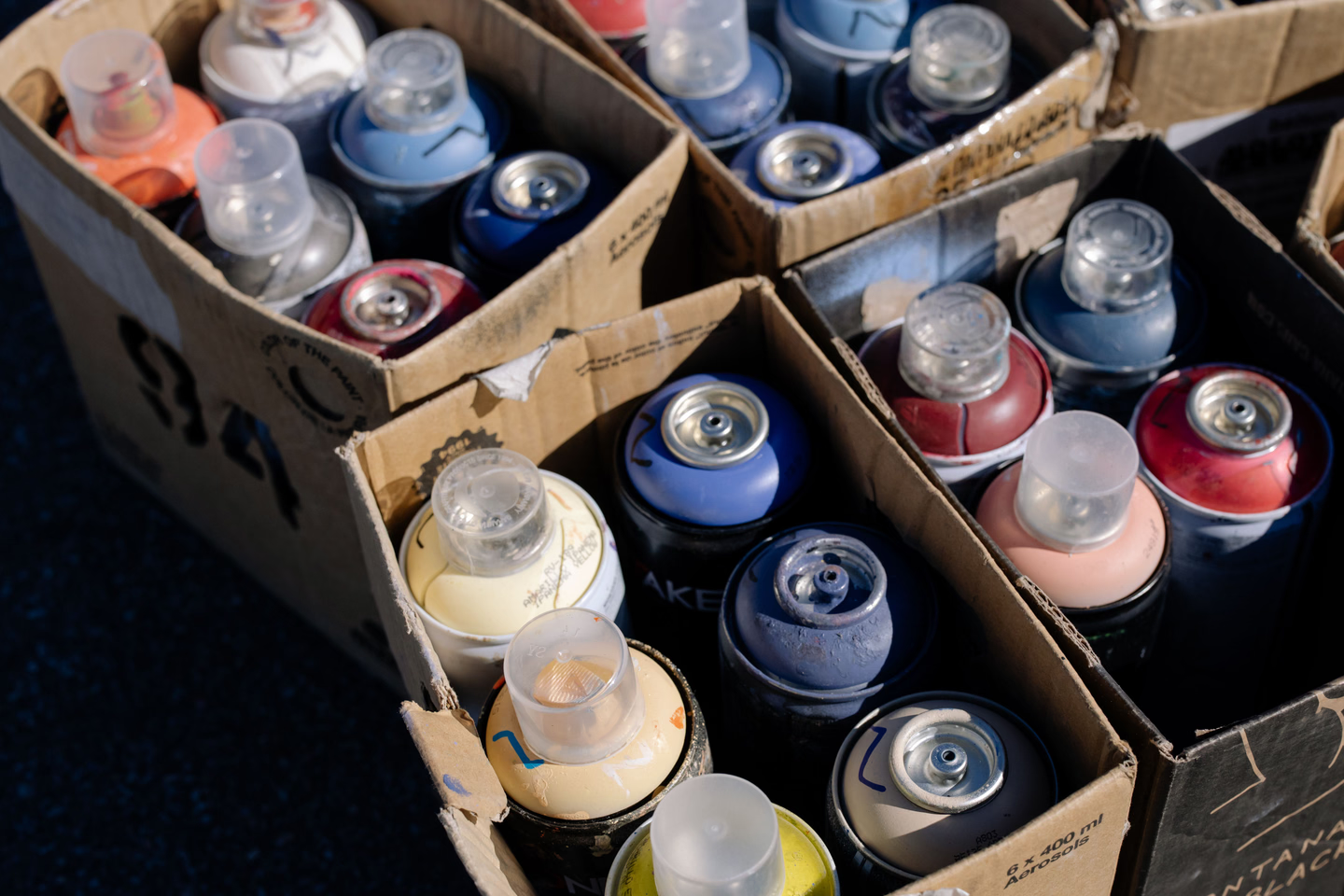
Michaels says to paint its pumpkin “with any multi-surface paint.” Hobby Lobby lists painting among the things to do with its pumpkin. Neither says anything about spray paint.
The spray-melting problem people warn about is documented for polystyrene. Krylon makes a primer for it: “Using this primer helps to ensure that a true and even paint color is achieved on surfaces such as Styrofoam®,” and it “Protects craft foam from melting or damage.” Krylon’s details: best results at “55° F to 75°F and humidity is below 60%,” dry to handle in an hour, “allow 48 hours for primer to cure before applying colored top coat,” and an indoor/outdoor rating of “Interior” (Krylon). None of the pumpkin makers says whether solvent sprays attack their polyurethane, and we haven’t found a source that settles it.
Our method: brush water-based multi-surface acrylic, which the Michaels label points to, and before you spray anything, test it on the inside of the cut lid or a saved offcut and let it dry overnight. If the test spot puckers, softens or goes tacky, prime with a foam primer first, or stay with brush-on paint. Touching up cut edges to match is cosmetic; no maker says bare cut foam needs sealing.

Krylon Craft Foam Primer, 12 oz, Light Gray
Krylon's primer for Styrofoam and other craft foam, which it says protects foam from melting under paint. Light gray so you can see missed spots. Krylon rates it for interior use and wants 48 hours of cure before the color coat. Use it if your lid test shows the spray paint attacking the foam.
Outdoors and Storage
Fun-Kins says its pumpkins are “resistant to all kinds of weather including rain, sleet, snow, sun, cold,” and that “they are much lighter than pumpkins,” so weight them if wind is a concern. The craft-store versions are more cautious. Michaels suggests “a tabletop or covered entryway.” Hobby Lobby lists “Indoor/Outdoor Use” and “Flammable” in the same line. Our reading: put store-brand foam under a porch roof, and keep any pumpkin you’ll reuse away from the path where it gets kicked.
Our method for weighting: a zip bag of pea gravel on the floor of the pumpkin, beside the light, or a strip of museum putty under the base on a table.
For storage, the polyurethane sheet says “Do not store foam near any ignition sources such as exposed electrical or gas heating elements, open flames and exposed lights.” That rules out the shelf next to the water heater or furnace. Our storage guide covers clearances around those, and its heat figure is for a different foam: Owens Corning’s 165°F rating is for XPS board, and no pumpkin maker we found publishes a temperature limit for its foam. Our method: pull the batteries out of every light, wrap the pumpkin in a pillowcase so the carved edges don’t catch, and store it in a tote in a closet, not the attic.
For a pumpkin that’s foam inside and paper outside, see vintage paper mache pumpkins.
Frequently Asked Questions
Can I use a hot knife on a foam craft pumpkin? Not on one labeled polyurethane, which covers Michaels and Hobby Lobby’s store brands. Michaels’ copy says any hot knife works; Hot Wire Foam Factory, which makes hot knives, says polyurethane “should not be cut with hot wire tools” and should “only be cut with a blade or saw.”
Is a dust mask enough for carving foam? For sawing and rotary dust, a NIOSH-approved N95 is the right mask. NIOSH says these masks “do not provide protection against gases or vapors,” so an N95 doesn’t cover hot-tool fumes.
What speed should a Dremel run on a foam pumpkin? Dremel’s manual has no foam row. Start at the lowest setting, raise it until the foam starts to melt at the bit, then back off slightly. Dremel’s page for the 561 bit gives 15,000 to 20,000 RPM for plastic.
Can I put a candle in a foam pumpkin? No. Fun-Kins: “Never use real flames inside Fun-Kins, this could result in fire.” Use a battery light, or a plug-in bulb under 5 watts.
Related Resources
For real pumpkins, our jack-o’-lantern lighting and preservation guide covers candles, LED runtimes and rot. The pumpkin carving kits roundup covers saws, transfer paper and the rotary tool on real pumpkins, and the Halloween lighting guide compares the lights you’d put around your pumpkins on the porch.