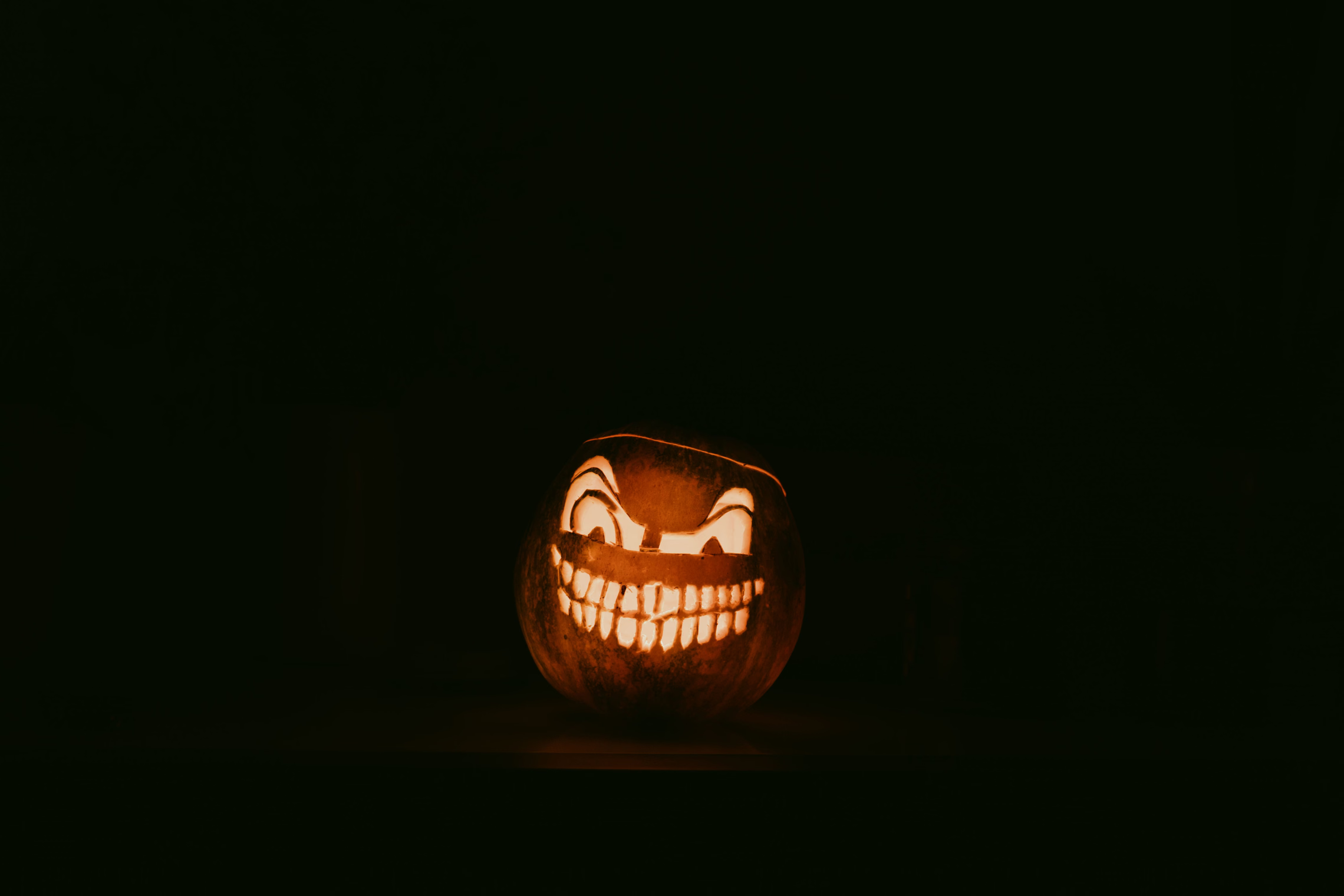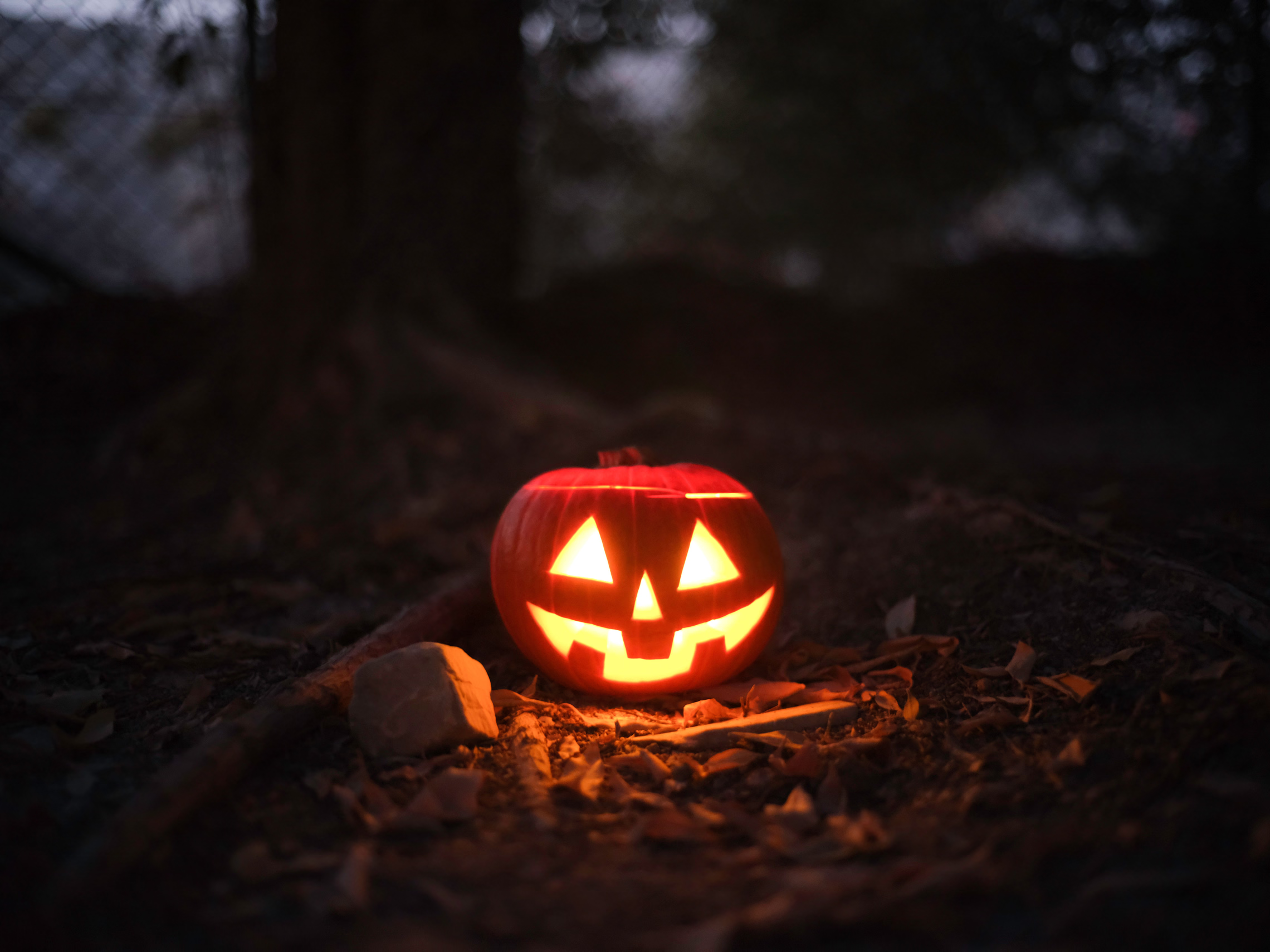
A jack-o’-lantern has two jobs on Halloween night: stay lit until the last knock, and still have a face when it gets there. Most fail one or the other. The candle gutters out at eight, or the pumpkin carved two weekends ago has folded in on its own grin.
Heat from a candle cooks the flesh from the inside, according to extension horticulturists in Illinois and South Dakota, so the light you pick also decides how long the pumpkin lasts.
How Long Your Night Actually Runs
Count the hours before you pick the light. Check whether your town sets official trick-or-treat hours, then add an hour on each side for setup and stragglers. Lit at five and left on until eleven, that’s six hours, and that’s the number every option below has to beat.
The early evening is also when the fires happen. The U.S. Fire Administration’s Halloween fire snapshot counted an average of 9,200 fires a year over October 30 to November 1 (2017 to 2019), peaking between 6 and 7 p.m., right in the middle of trick-or-treating. October 30 is also the old prank night, which Detroit knew as Devil’s Night.
Candle, LED, or Puck Light

| Wax tealight | LED tealight | Waterproof puck light | |
|---|---|---|---|
| Runtime | Varies by candle; Bolsius rates its long-burn one at 8 hours | Makers claim 150 to 200+ hours per coin cell | Depends on batteries and brightness |
| Heat inside the pumpkin | Yes, and it cooks the flesh | No flame | No flame |
| Rain | Snuffs it | Varies; check the listing | Built to be submerged |
| Timer | No | Many have a daily 6-hour cycle | Remote; some have shutoff timers |
| Main hazard | Open flame | Coin cell | None beyond ordinary AA or AAA cells |
Wax tealights. Burn time is printed on the box, and it varies. Bolsius rates its long-burn tealight at 8 hours, which covers the six-hour night with room to spare. Its product notes say to use them “in a suitable holder with sufficient ventilation” and to “keep them away from combustible materials.” A jack-o’-lantern with the lid on is a poor chimney, so if you burn one, leave the lid off or propped.
LED tealights. The runtime claims are the maker’s own. Homemory’s Amazon listing for its 24-pack (our top pick below) claims “200+ hours” on a 240 mAh CR2032 coin cell, without saying how it tested. Luminara, which sells a pricier tealight, publishes the clearest conversion we found for its own candles: its battery-life table in its help center turns a 200-hour rating into about 40 evenings on a 5-hour timer, but only 8 days left on continuously. The same arithmetic works for any brand: divide the rated hours by your hours per night.

Homemory 24-Pack Flickering Flameless LED Tea Lights, 200+ Hours
No timer, so someone has to switch them off, but the maker lists Halloween pumpkins as a use and says they handle light rain and splashes (not submersion). The battery compartment is a two-step design Homemory says was tested to UL 4200A, the Reese's Law standard. Less than half the price per light of the timer set below.
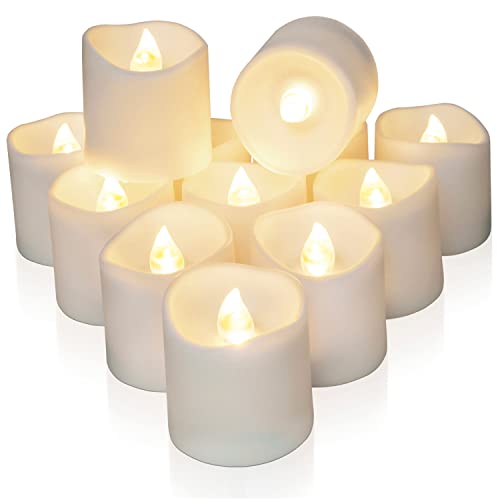
Homemory 6H Timer Flameless LED Votive Tealights, 12 Pack
Switch them on at five once and they run 6 hours, sleep 18, and come back on at five the next day. Homemory rates them at 150+ hours, or 20 to 25 days of daily use. The battery door has a two-step child lock and needs a small tool. The maker limits them to covered, dry spots, so use them in foam pumpkins or indoor displays, not a wet carved one.
Puck lights. A single tealight looks fine in a small pumpkin and dim in a big one. BLS’s Amazon listing rates its battery puck light at up to 40 lumens; none of the tealight makers we checked publishes a lumen figure at all. Check the weather rating before you put a puck inside, though. Ordinary battery puck lights are sold for kitchen cabinets and closets: the BLS puck lights we recommend for indoor uplighting list only indoor locations and carry no water rating, and a carved pumpkin on a porch is wet inside and out. For real pumpkins outdoors, use a submersible one.
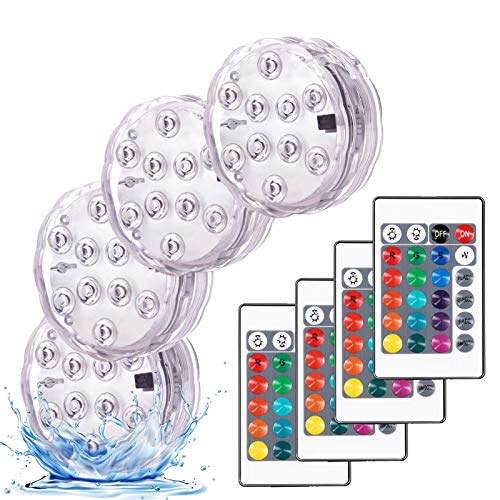
YiaMia Submersible LED Lights with Remote, 4 Pack
Sealed and submersible, so pumpkin juice and rain can't reach the batteries, and the maker lists 'inside a carved pumpkin' as a use. Runs on AAA cells rather than coin cells. The remote sets 16 colors, so a warm orange in the carved faces and a sickly green in the one by the gate. No stated runtime, so pack spare AAAs.
String lights and glow sticks. A short battery string coiled in the cavity spreads light more evenly than a single point, which helps shaded, shallow-relief carvings. Glow sticks are what the CPSC and the NFPA both name alongside battery lights.
The Coin Cell Problem
The LED tealight solves the flame and brings a different hazard: the coin cell inside it. The CPSC counts 27 deaths and an estimated 54,300 emergency room injuries from swallowed or inserted button and coin batteries between 2011 and 2021. A swallowed one “can burn through a child’s throat or esophagus in as little as two hours.”
Reese’s Law, enacted in August 2022, now requires coin-cell battery compartments to need either a tool, such as a screwdriver or coin, or “at least two independent and simultaneous movements to open by hand.” The CPSC applies those rules to products made or imported after March 19, 2024.
That leaves the Halloween bin. Tealights made or imported before spring 2024, including older stock still sitting on store shelves, may open with a thumbnail. Test each one: if the battery drops out with one push, retire it or keep it somewhere small children and pets can’t reach, which rules out a jack-o’-lantern on the front step. Bag the dead cells at the end of the night instead of leaving them on the porch rail.
Fire Safety on the Steps
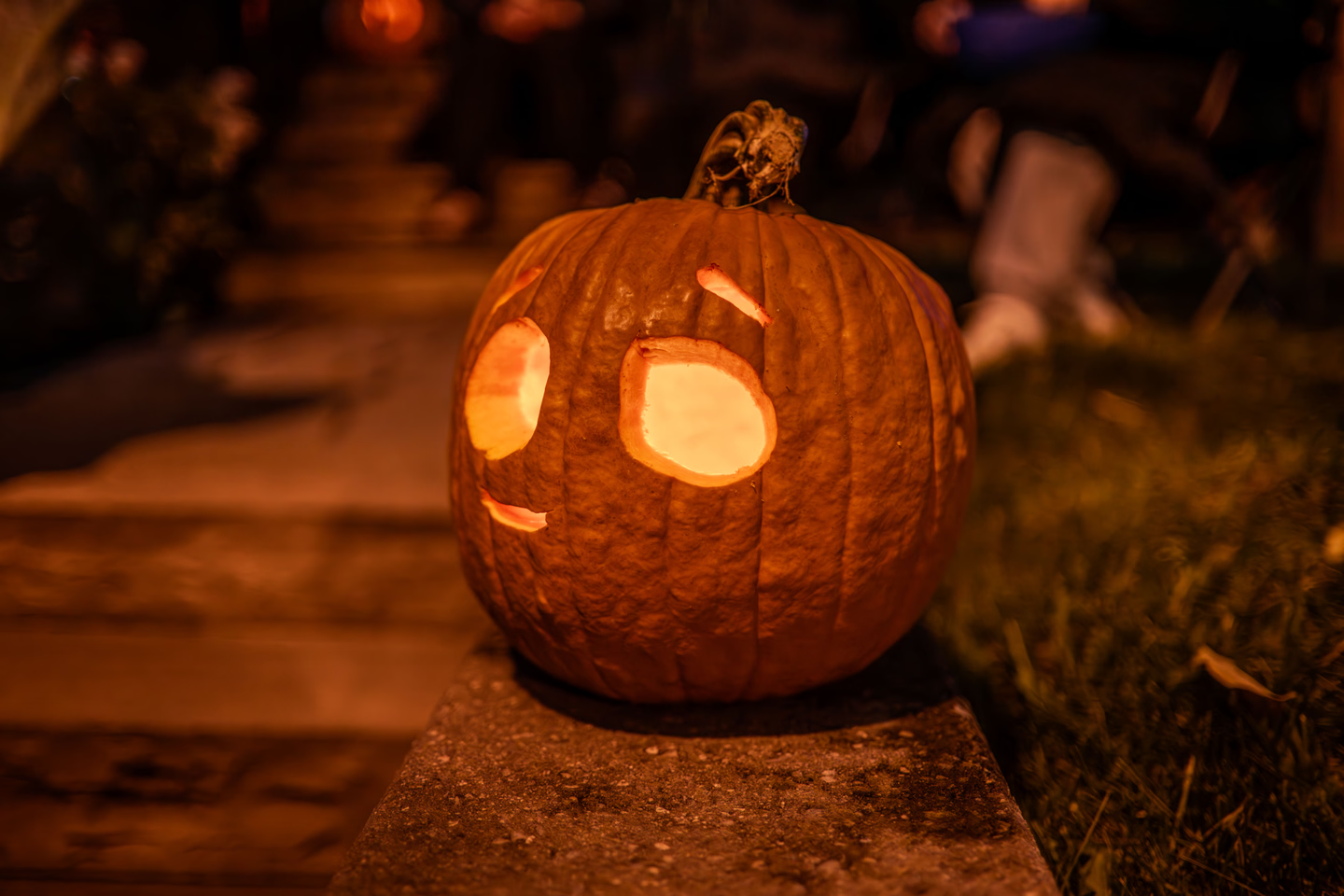
The CPSC has been specific about this since at least 2013: “Outside your home, use flameless candles or keep burning candles and jack-o’-lanterns away from landings and doorsteps, where trick-or-treaters’ costumes could brush against the flame” (CPSC, 2013). Its October 2022 advice for jack-o’-lanterns is to use “battery-operated lights or glow sticks rather than an open-flame candle.”
The NFPA’s Halloween tip sheet says decorations are the first thing to ignite in more than 800 reported home fires each year, and nearly a third of those were started by a candle.
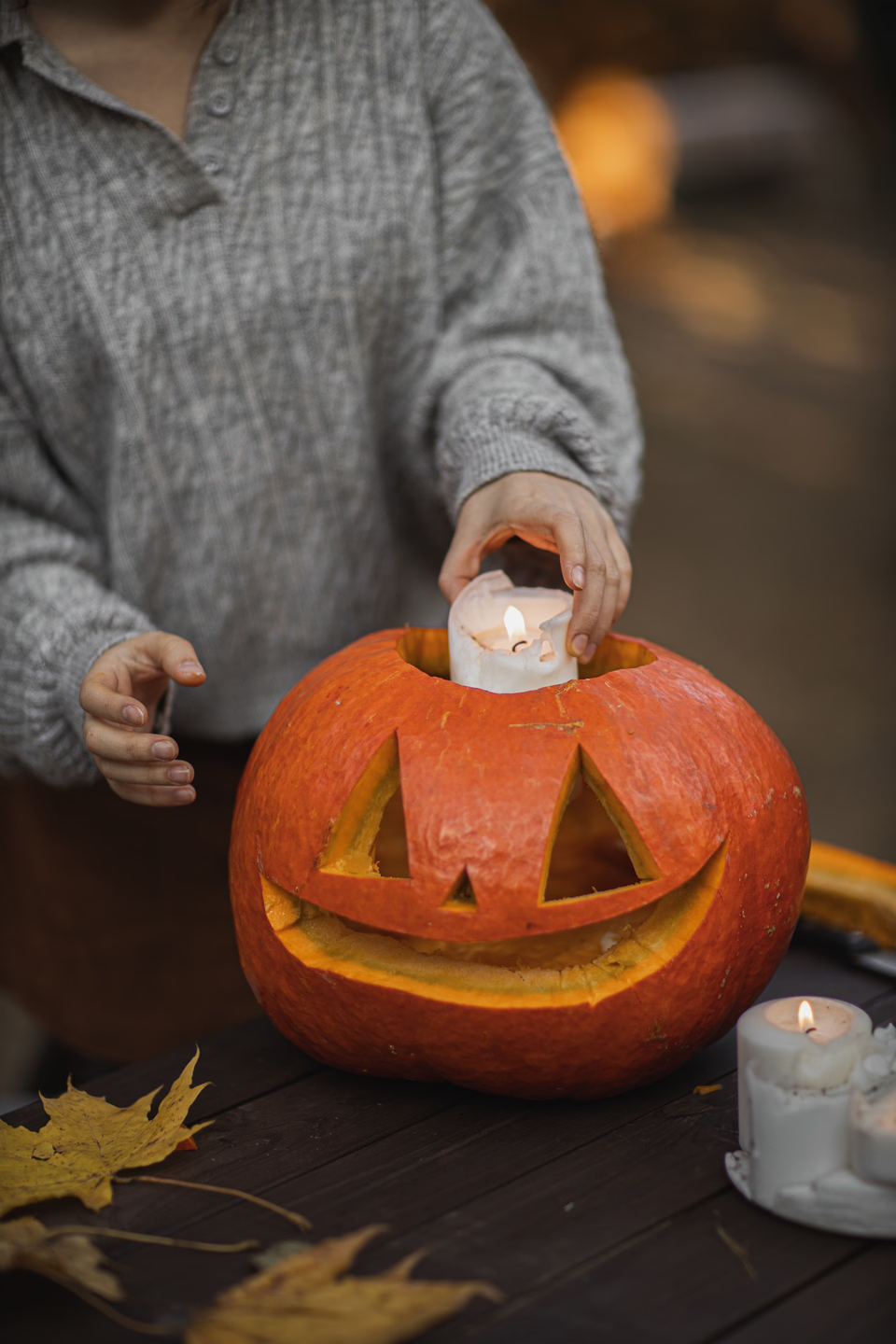
If you still want flame:
- The NFPA says to place lit pumpkins “well away from anything that can burn and far enough out of the way of trick-or-treaters, doorsteps, walkways, and yards.” A flame on the top step is at hem height for every kid in a cape.
- Keep the harvest props clear. “Dried flowers, cornstalks, and crepe paper catch fire easily,” per the NFPA. A porch built around cornstalks and hay, like the one in our Sleepy Hollow Harvest party, gets LED pumpkins only.
- Light with a long match or a utility lighter, the NFPA says, not a short match with your hand inside the pumpkin.
- Skip the petroleum jelly or oil on candle pumpkins. NC State Extension recommends Vaseline or vegetable oil to seal cuts and warns in the same breath that “these products are flammable, do not use a real candle” (NCSU Beaufort County Extension).
- Never leave a burning candle unattended, per the CPSC. A candle in a pumpkin on the porch after you’ve gone inside is unattended.
The injury data points at the knife more than the flame. The CPSC’s October 2022 release counts an average of 3,200 Halloween-related emergency room injuries a year, and 55 percent were from pumpkin carving. Most of the people hurt, 54 percent, were adults. Use a carving kit’s saws rather than a kitchen knife; our pumpkin carving kit roundup covers why.
Keeping a Carved Pumpkin Alive
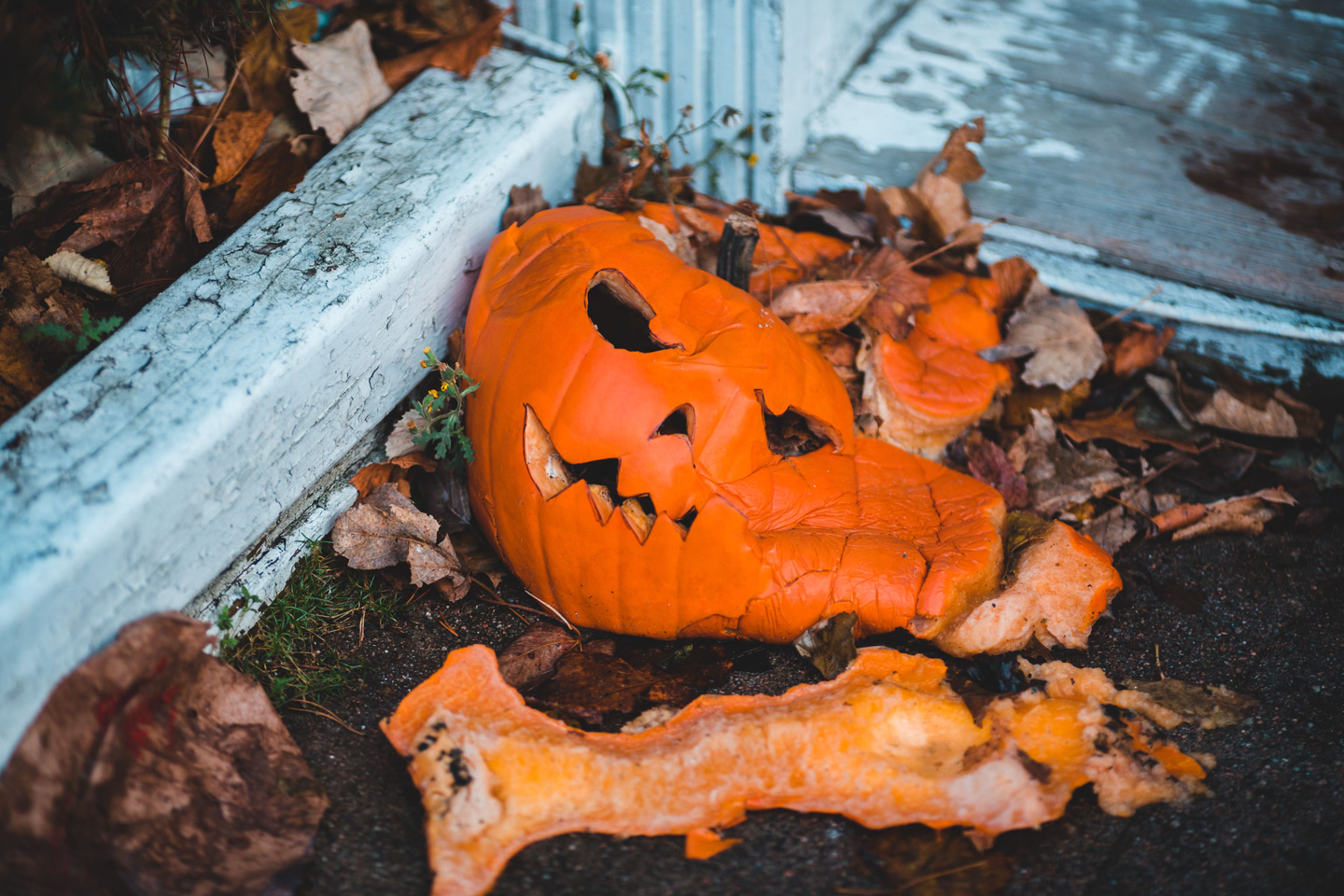
Once you cut a pumpkin, its insides are open to mold spores in the air. Utah State’s Nick Volesky lists the usual interior molds as Cladosporium, Penicillium, Aspergillus and Alternaria, and says that “often just a few days later, the pumpkin creation may start to wither and rot” (USU Extension).
How long you get depends on who you ask and on your weather:
| Source | Carved pumpkin lifespan |
|---|---|
| Illinois Extension | “seven to 10 days depending on weather conditions” |
| NC State Extension, Beaufort County | “between 8 and 11 days” if properly maintained |
| Thomas Andres, via Smithsonian | Rots within a week or so |
In a warm, wet October, plan for the short end: carve the weekend before Halloween, not two weeks out.
Before You Carve
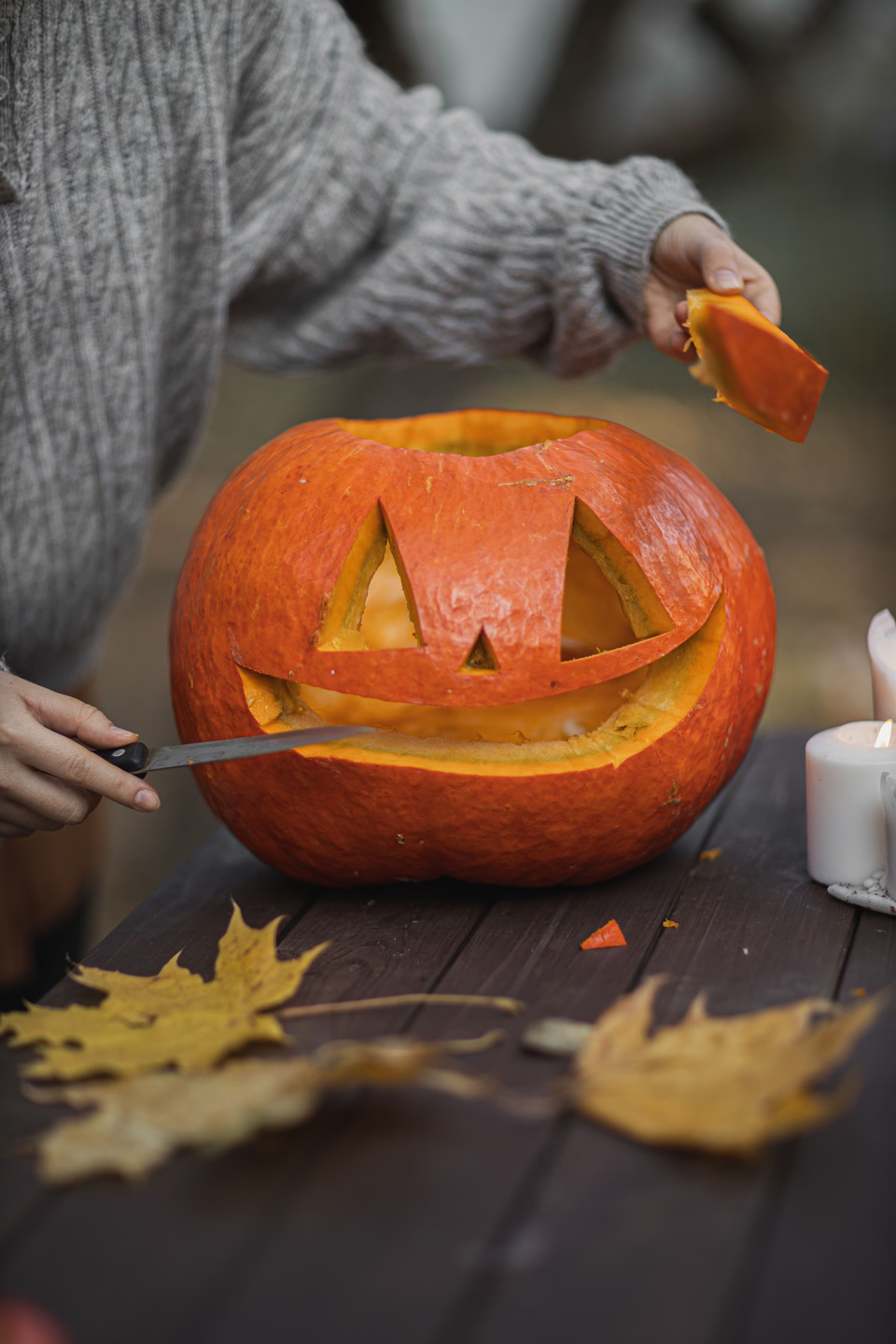
Pick a sound pumpkin. Illinois Extension says to choose one “with a stem at least 1 to 2 inches long,” never carry it by the stem, and “avoid pumpkins with holes, cuts or soft spots. These areas will decay.”
Wash the outside. NC State’s recipe starts before the first cut, with a bleach wash of the rind (strength below).
The Bleach Question
Every extension source we found recommends bleach, and they don’t agree on how much or how long:
| Source | Strength | Method |
|---|---|---|
| Utah State and South Dakota State | 10 percent bleach solution | “Dip, wash or spray” the finished carving |
| NC State, Beaufort County | 10 percent (9 parts water to 1 part bleach) | Wash before carving, submerge the carved pumpkin for 24 hours, dry completely, then spray daily |
| Clorox | 3 teaspoons in 3 gallons of water | Spray the inside |
The bleach maker’s own recipe is the weakest by far. One teaspoon per gallon works out to roughly one part bleach in 770, against one in 10 from the extension offices. None of these sources cites a controlled trial, so we can’t tell you which one wins. The 10 percent spray is the middle path: stronger than Clorox’s and a lot less work than a 24-hour soak.
Two warnings apply whichever you pick. Never combine bleach with vinegar, another popular pumpkin rinse: Clorox’s own bleach safety page says vinegar “forms chlorine gas” with it. And Illinois Extension says “do not give gourds washed with bleach to farm animals since it is toxic” (Illinois Extension, 2025). The same page calls a white vinegar solution “a safe alternative” that “will not be effective if the pumpkin is already showing signs of molding.”
Seal the Cuts
The one treatment every extension source agrees on is a greasy one. Utah State says petroleum jelly on the cut areas “helps lock in the moisture and slow the drying process,” and South Dakota State gives the same advice. Illinois says to coat “the inside of the pumpkin and the cuts,” and NC State accepts Vaseline or vegetable oil. We found no authority source claiming it speeds mold.

Vaseline Original Petroleum Jelly, 13 oz
The pumpkin sealant four extension services recommend, and the lowest-priced item on this page. Rub it on every cut face and the inside wall after the bleach dries. A 13-ounce jar covers a lot of pumpkins. Candle-free pumpkins only.
Where It Sits Between Nights
- Keep it cool, not frozen. South Dakota State puts the best range at 50 to 60°F. Below 32°F the tissue freezes, and “frozen tissue decays quickly” after it thaws. Andres, speaking to Smithsonian, gives the upper 50s to lower 60s.
- Refrigerate the showpiece. Andres suggests you “could put it in the refrigerator when it is not on display” if it fits. If it has been bleached or greased, use a garage fridge, or bag it on a shelf away from food.
- Get it out of the sun and rain. A covered porch beats an open stoop. If you have a garage in that 50 to 60°F range, bring it in during the day.
- Lemon juice on the face. Andres suggests squirting lemon juice on the pumpkin, which blocks the enzymes that brown the flesh when it meets oxygen.
South Dakota State’s advice is to “use an electric light or glow stick instead of a candle. This prevents the pumpkin from ‘cooking’ on the inside.” Andres puts it more bluntly: candles “really do shorten the lifespan of the pumpkin, since the heat from the flame ends up cooking the flesh.”
If You Still Want a Real Flame
Some people won’t give up the moving shadows of a real flame. Keep it where someone is watching: a table display at a party, a pumpkin on a wall well back from the path. Use a long-burn tealight so you aren’t reaching into a hot pumpkin at nine to relight it, leave the lid off, and skip the petroleum jelly on that one.

BOLSIUS Unscented Tealights in Clear Cups, 48 Count, 8 Hours
Rated at up to 8 hours, which outlasts the whole trick-or-treat window. Only for pumpkins someone can see all night, away from steps, walkways and cornstalks.
Foam Pumpkins
A foam pumpkin never rots, so you can carve it in September. It also has its own rule. Fun-Kins, which makes carvable foam pumpkins, is blunt in its FAQ: “Never use real flames inside Fun-Kins, this could result in fire.” Its light guidance is “any electric light you can think of under 5 watts.”
Fun-Kins says its walls run about half an inch thick and hold up to “rain, sleet, snow, sun, cold,” but the foam is “much lighter than pumpkins,” so weight it down if wind is a concern. Foam stays dry inside, so under a porch roof it can take an ordinary battery puck light that a wet real pumpkin can’t; check the light’s wattage against that 5-watt ceiling. For craft-store foam from other makers, read the label, and treat any foam pumpkin as LED-only unless its maker says otherwise. The same goes for a foam pumpkin covered in papier-mache to make a vintage-style paper mache jack-o’-lantern. Carving one is its own job: see how to carve foam craft pumpkins for why the hot knife stays in the drawer and which mask covers the dust.
When It’s Over
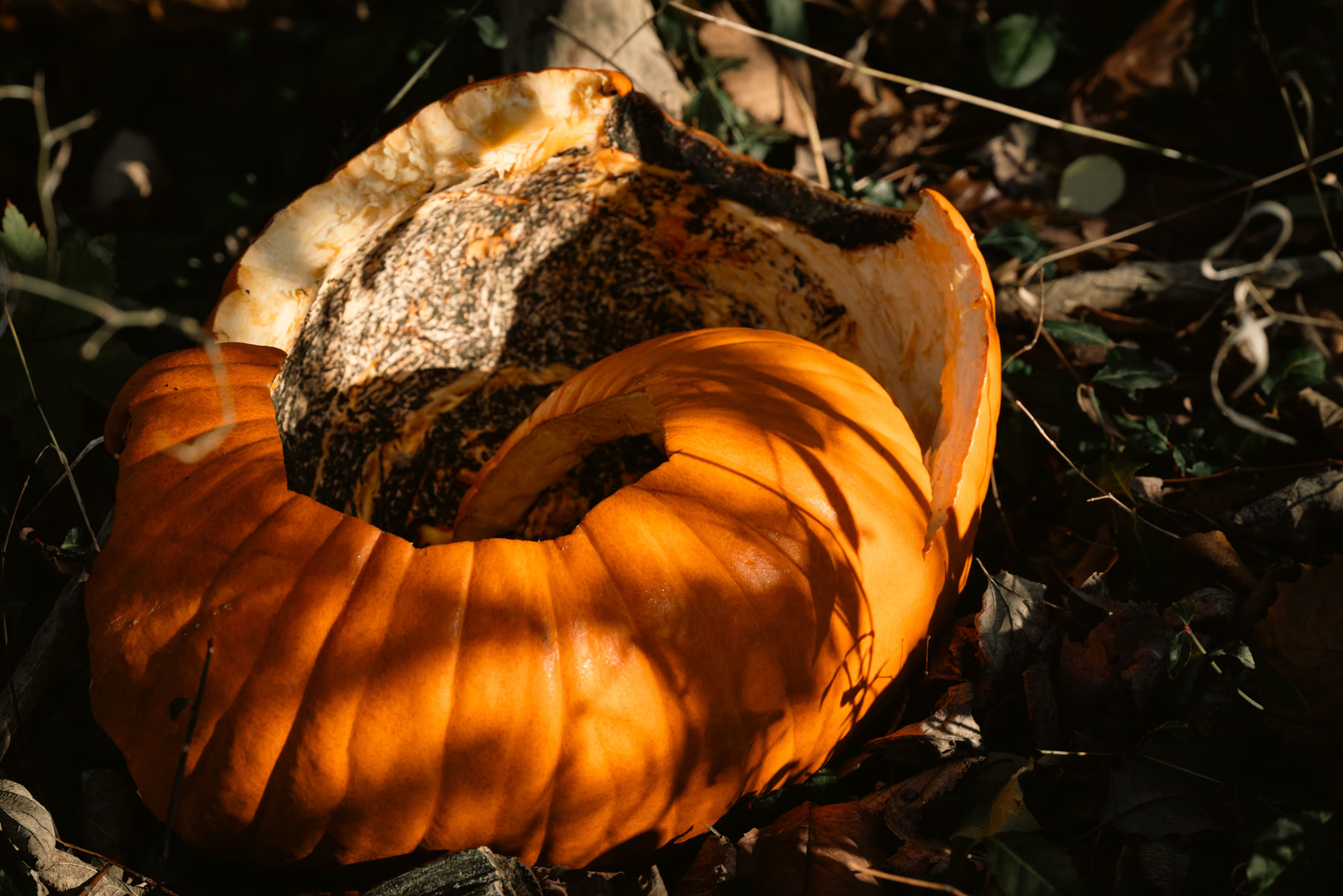
A collapsed pumpkin belongs in the compost, not the woods. Illinois Extension asks you to “remove any decorations, paint, or non-compostable materials” first, which includes the LED tealight and its coin cell hiding in the mush. Pull bleach-treated pumpkins out of any pile meant for livestock.
Frequently Asked Questions
Does bleach actually keep a jack-o’-lantern from rotting? Three extension services recommend it, at strengths that differ from the bleach maker’s own recipe by more than 70 times, and none cites a controlled trial. It is cheap and safe to use if you never mix it with vinegar or ammonia, so a 10 percent spray is worth doing. Carving closer to Halloween helps either way.
Can I put a regular puck light in a real pumpkin? No, unless it’s rated for water. Most battery puck lights are sold for cabinets and closets and list no water rating. Use a submersible light in a real pumpkin, and save the cabinet lights for foam.
How far ahead can I carve? Illinois Extension says seven to 10 days depending on weather, and NC State says eight to 11 with proper care. Carve the weekend before Halloween, seal the cuts, keep it cool, and light it with an LED.
Are LED tealights safe around kids? The flame problem goes away, but the coin cell doesn’t. Newer tealights sold under Reese’s Law need a tool or two simultaneous movements to open. Check older ones before they go anywhere a toddler can reach.
Can I leave a foam pumpkin out in the rain? Fun-Kins says its foam handles rain and snow. The light inside is the weak point: use one rated for outdoor use, or keep the pumpkin under the porch roof.
Related Resources
If you’d rather have a pumpkin that never rots, build a papier-mache one modeled on the c. 1940 lanterns in the Smithsonian. Pick a design from our free classic pumpkin stencils or, for shaded relief work that needs a brighter light, the advanced pumpkin stencils. Get the saws and transfer paper from the best pumpkin carving kits, and browse the pumpkin carving gallery for layouts.
For the rest of the front of the house, see the porch decorating guide, the outdoor decorating guide, weatherproofing Halloween decorations, and the Halloween lighting guide with its lighting setups gallery. Hosting indoors too? Our Halloween party safety tips cover candles around guests, and how much Halloween candy to buy covers the other half of the porch.